The long staircase
Up to the base.
Tafsir207 — CC BY-SA 4.0 · August Dominus — CC0 · Djibfall — CC BY-SA 4.0 · August Dominus — CC0 · Jjm2311 — CC BY-SA 4.0
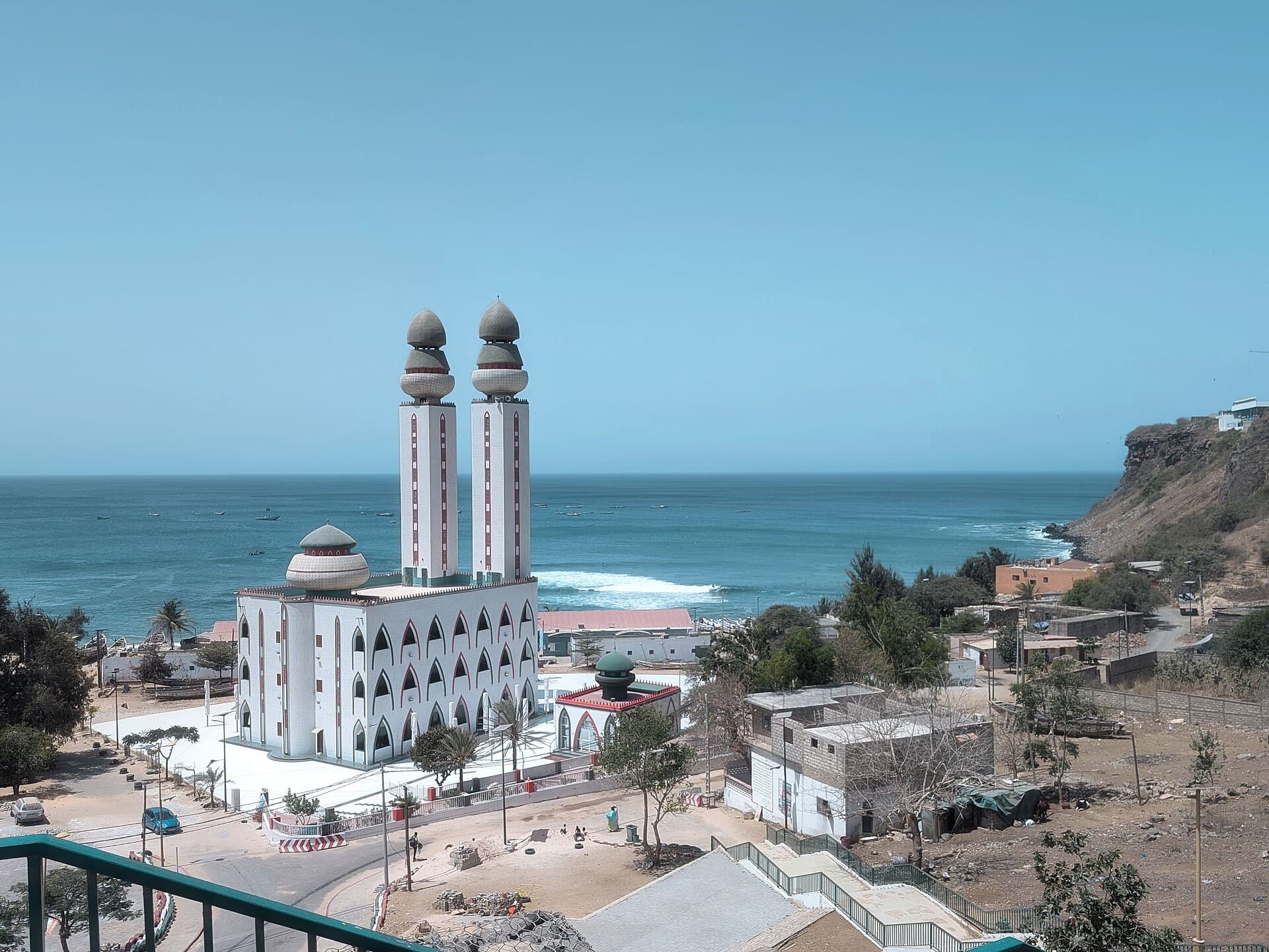
The African Renaissance Monument is a 50-metre bronze statue on one of the twin hills called the Collines des Mamelles, west of Dakar, overlooking the Atlantic. It shows a man raising a child on his arm and holding a woman with his other hand, and you can see it from far across the city. It is among the capital's best-known sights and most familiar images. It was designed by the Senegalese architect Pierre Goudiaby Atepa, from an idea put forward by President Abdoulaye Wade, and built by the North Korean company Mansudae. Site work on the 100-metre hill began in 2006 and the bronze statue in 2008. It was formally dedicated on 4 April 2010, the 50th anniversary of Senegal's independence. A long, broad staircase climbs from the bottom to the foot of the statue, and the monument grows with each step. Inside are exhibition rooms, a chamber of polished wood and a lift to the top. From the windows near the summit you see all of Dakar out to the sea, with the bronze head before you. The view is clearest on days free of desert dust. The Mosque of Divinity is less than 1 km away in a straight line, and visitors often see both, while central Dakar is about 6 km off. Walking around the base is free, and the fee is for going inside. The stairs are exposed and tiring in the heat, so go early in the morning or late in the day. Carry water, as there is no shade on the way up.
Up to the base.
All Dakar to the sea.
Man, woman and child.
Collines des Mamelles, Ouakam, Dakar, Senegal
Yes, by a lift inside with the entry ticket, though it may sometimes stop for maintenance, so ask at the window.
No, walking around the base is free, and the fee is only for going inside.