Positano
The colour pyramid descending to the sea — the Mediterranean's photographed icon.
Charlie Dave — CC BY 2.0 · Bruno Rijsman — CC BY-SA 2.0 · Bruno Rijsman — CC BY-SA 2.0 · Bruno Rijsman — CC BY-SA 2.0
The Amalfi Coast is fifty kilometres of beautiful impossibility: mountains falling sheer into lapis sea, coloured villages clinging to the clefts in stacked storeys, and a cliff-carved coastal road ranked among the world's great drives — a canvas UNESCO listed whole as a cultural landscape, distilled in three jewels: Positano, the colour-terraced photo icon; historic Amalfi with its Arab-Norman cathedral and maritime-republic memory; and Ravello suspended above all, with its villa gardens and the Terrace of Infinity. From Sorrento it is Italy's most famous day trip: SITA buses along the hanging road (sit right outbound!), the season's calmer ferries direct to Positano and Amalfi, or a private driver for free stops — the optimal formula: morning ferry to Positano, Amalfi at midday, the Ravello ascent in the afternoon, returning by land or sea. Lemons here are a civilisation: their terraces wall the road, and limoncello and granita are every stop's rite.
The colour pyramid descending to the sea — the Mediterranean's photographed icon.
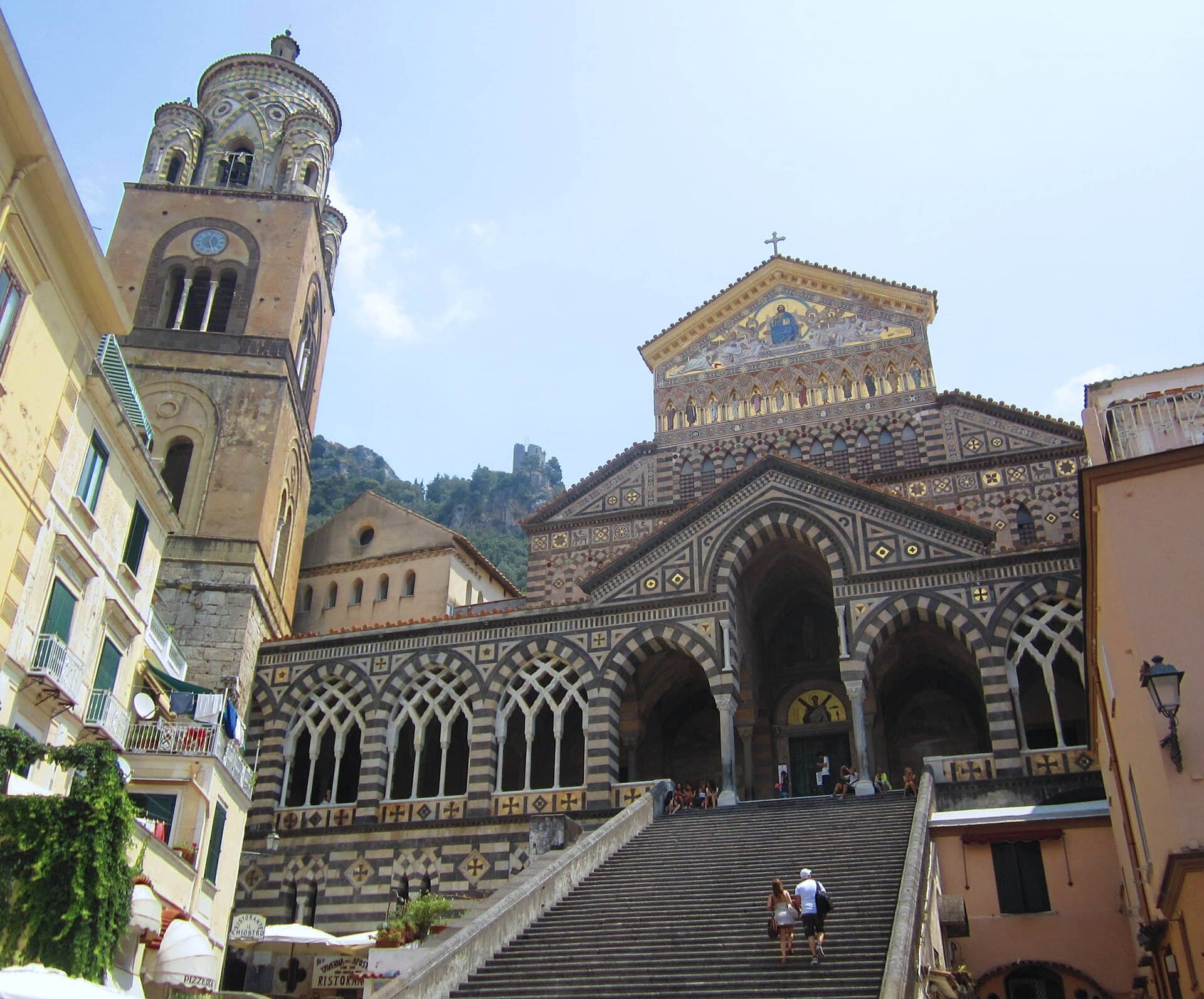
The grand stair, the Arab-Norman front, the sea republic's memory.
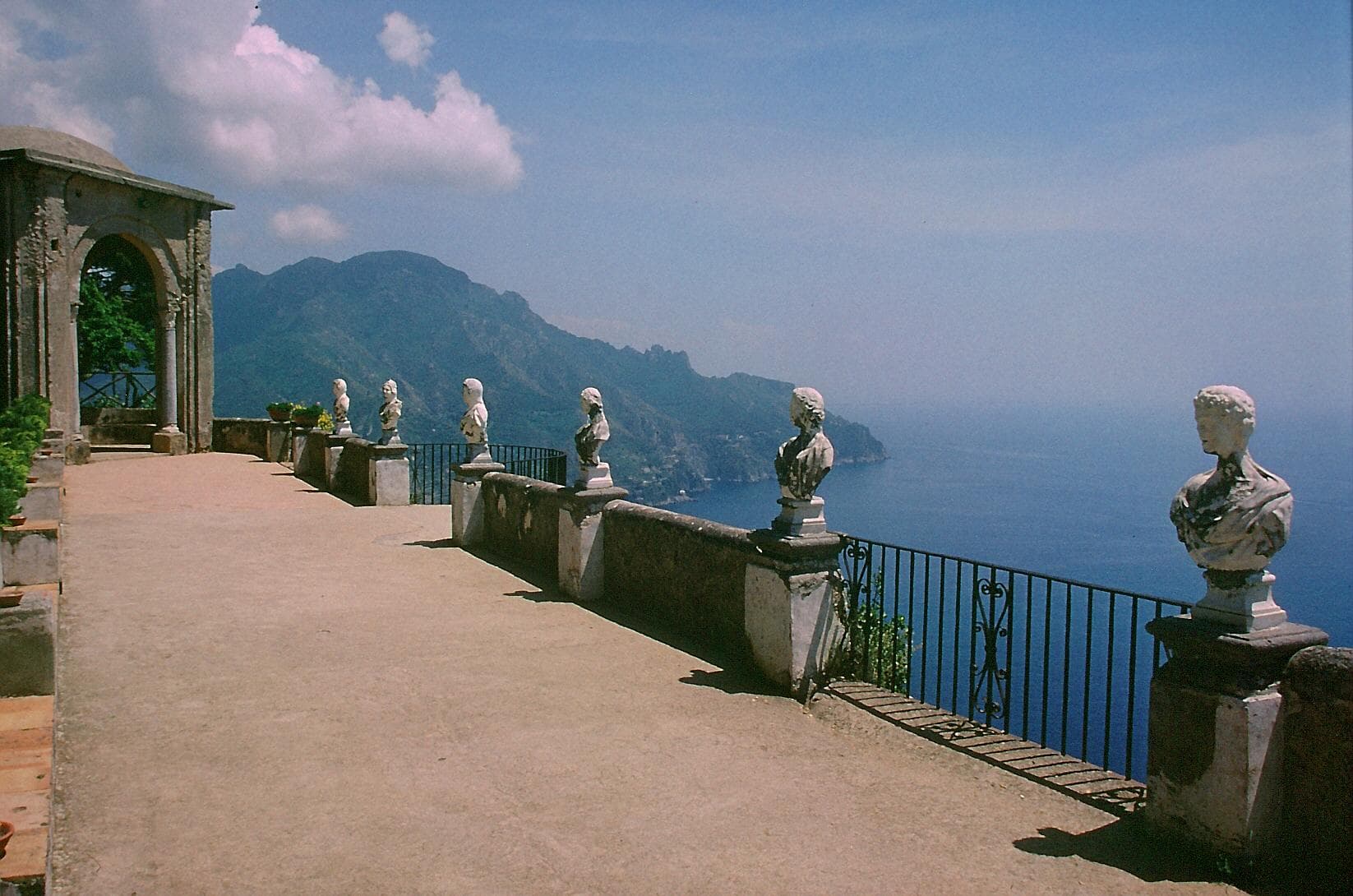
Ravello's Villa Cimbrone hung over the sea with its statues — Italy's most famous balcony.
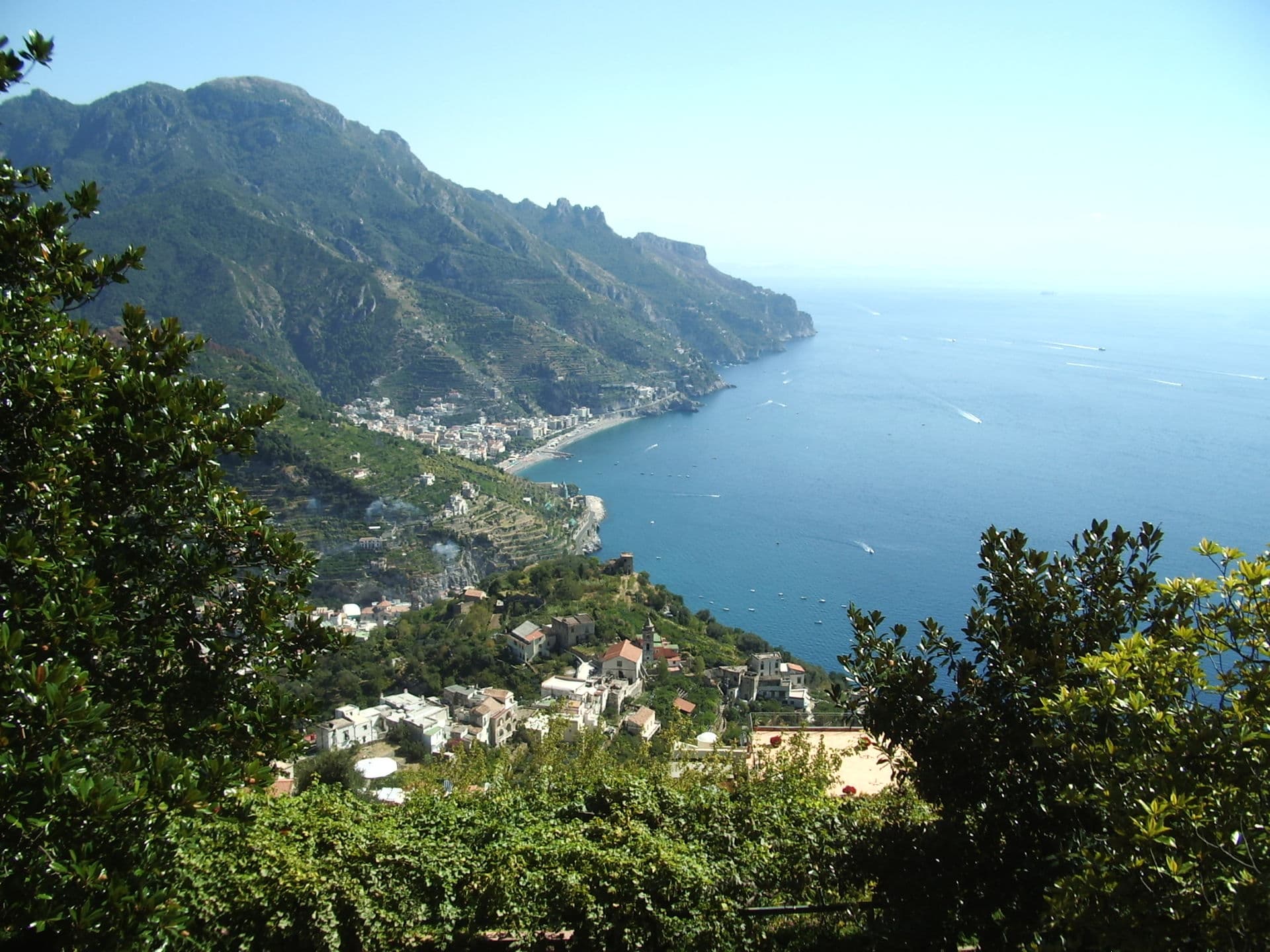
Route 163 carved in rock — driving as scenic art.
Costiera Amalfitana, Salerno
Three budgets: the bus cheapest, finest of view, harshest in crowds and curves; the ferry comfort and sea spectacle at higher seasonal price; the private driver full stopping freedom in the hundreds — the group and occasion choice. The winning majority mix: sea out, land back.
The rule of thirds: Positano for photos and the beach descent (two hours suffice — dearest and densest village), Amalfi for cathedral, lunch and lanes (two), Ravello for gardens and peace (two, by the connecting bus from Amalfi). The time-pressed cut the first, not the last — against instinct, with the veterans.
Sorrento is practically the best base: trains, ferries, middle distance — hence this page's home. Alternatives: Naples slightly farther, or sleeping on the coast itself for the evening magic after the day-trippers go — Positano by night is another planet, at another planet's prices too.