The earth masses
Worn orange columns.
Anasskoko — CC BY-SA 4.0 · Anasskoko — CC BY-SA 4.0 · Suleiman Umar, Aminu Abdullahi, Abubakar Yusuf, www.kanostreetsonosm.org.ng — CC BY-SA 4.0 · DipoTayo — CC BY-SA 4.0 · Anasskoko — CC BY-SA 4.0
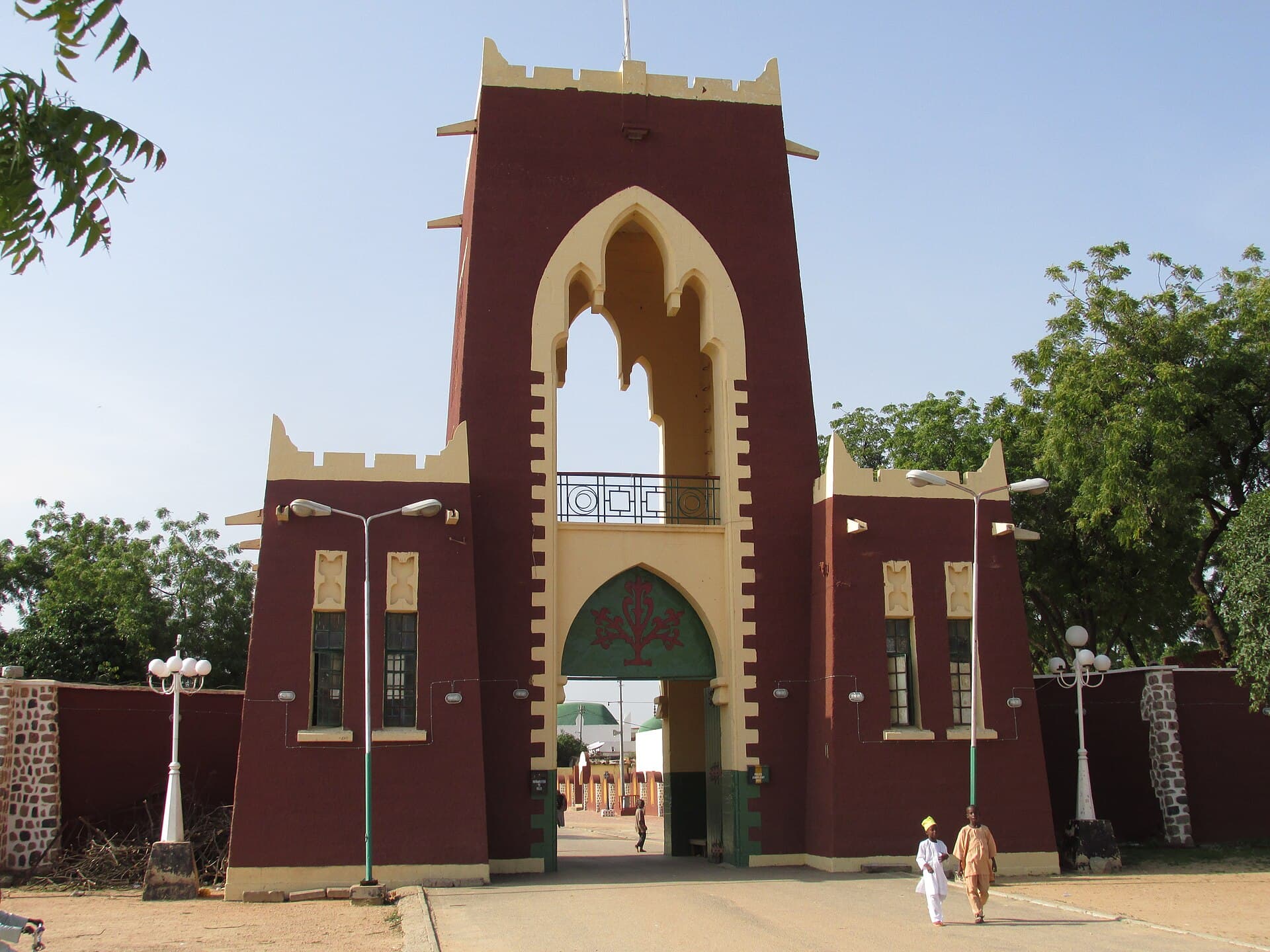
The Ancient Kano City Walls are earthen defensive walls built to protect the people of old Kano in northern Nigeria. They were described as «the most impressive monument in West Africa», and parts still stand among the neighbourhoods, along with historic gates that have been rebuilt. Kano is one of the oldest cities of West Africa, long rooted in trans-Saharan trade and with a deep Islamic history. The foundation was laid by Sarki Gijimasu, third king of Kano, who reigned from 1095 to 1134 according to the Kano Chronicle. The wall was completed in the mid-14th century under Zamnagawa and expanded in the 16th century. Frederick Lugard wrote in 1903 that he had «never seen anything like it in Africa». It once stood 9 to 15 metres high and about 12 metres thick at the base, with 15 gates. Today you see tall masses of orange earth, worn by rain into columns side by side, standing among houses and shops. At the gates are rebuilt structures with Arab-style arches and white and red patterns, such as Kofar Na'isa and Sabuwar Kofa. The old city also holds the famous Kofar Mata dye pits, dating to the 15th century. Gidan Rumfa is about 1 km away in a straight line. Take a local guide to find the stretches of wall, as they are scattered. Dress modestly, as the city is conservative, and ask before photographing people. The UK Foreign Office advises against all but essential travel to this state, so read the current advice before you plan.
Worn orange columns.
Arches and patterns.
In the old city.
Old City, Kano, Nigeria
No, scattered stretches remain, and some gates have been rebuilt.
The Kofar Mata dye pits and the Emir's palace are close.