A vaulted cistern
A huge water tank beneath the theatre gathering the quarter's rain.
Bernard Gagnon — CC BY-SA 3.0 · Zde — CC BY-SA 4.0 · Zde — CC BY-SA 4.0 · Zde — CC BY-SA 4.0
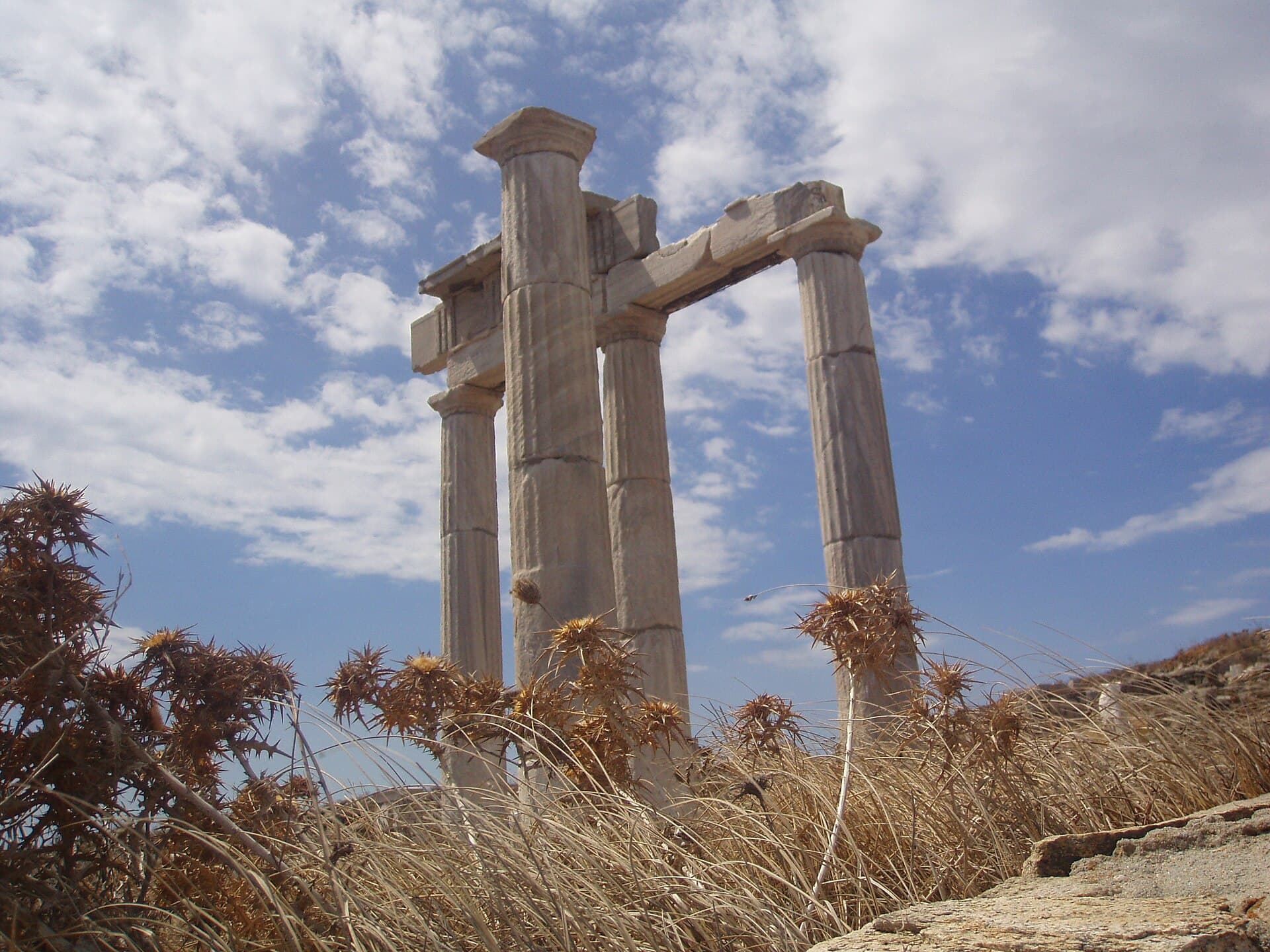
A Greek theatre of the third century BC on the island of Delos, seating about six and a half thousand, standing in the middle of a complete residential quarter of the Hellenistic city. Delos as a whole is an exceptional site: a small island, barren today, that was in antiquity the holiest place in the Aegean as the birthplace of Apollo and Artemis, and then became the largest trading port in the eastern Mediterranean. At its height about thirty thousand merchants of every nation lived there. What distinguishes the theatre is what surrounds it rather than the theatre itself: the quarter around it is preserved to a rare degree — houses with courtyards and floor mosaics in place, and a huge vaulted cistern beneath the theatre that gathered rainwater for the whole district. This makes Delos closer to Pompeii than to a temple: a complete city rather than a single building. Nobody lives on the island today, and it is visited only by boat from Mykonos on fixed sailings.
A huge water tank beneath the theatre gathering the quarter's rain.
House floors preserved where they were laid, not in a museum.
Delos is closer to Pompeii: a complete residential quarter.
The island of Delos, south-west of Mykonos
Because myth made it the birthplace of Apollo and Artemis: Hera pursued their mother Leto and no land would receive her, until this floating island accepted her and was then fixed in place with columns. It became the centre of Apollo's cult and a place of pilgrimage from across the Aegean. Its sanctity reached the point that birth and death were forbidden on the island: the sick and pregnant were taken to neighbouring Rinia. Even the old graves were removed from it in the fifth century BC.
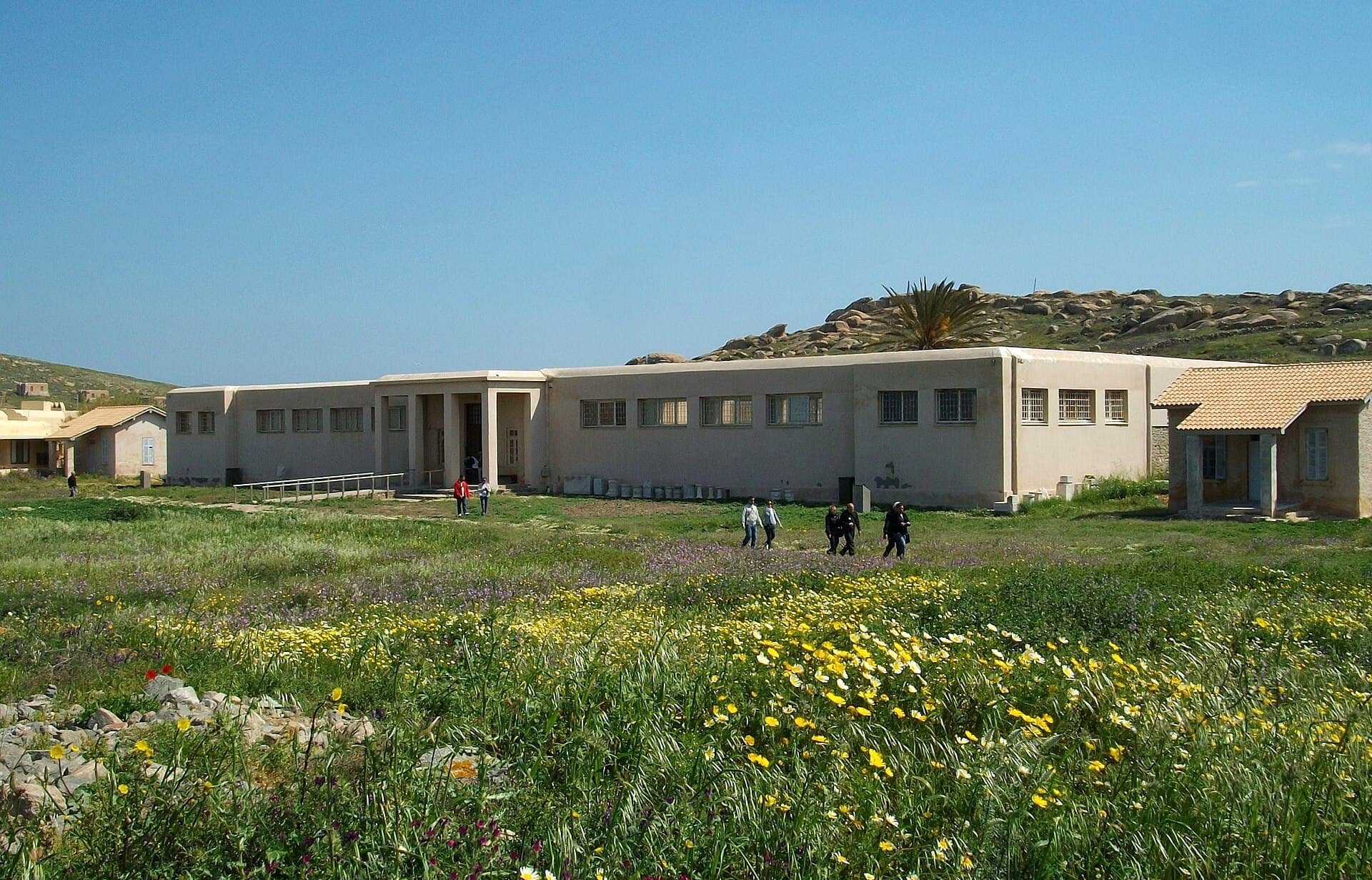
Boats leave Mykonos's old port in the morning and return after three to four hours — and the time on the island is fixed and not extended, so anyone who misses the return boat spends the night alone on a closed archaeological site. Three hours is enough for the theatre, the quarter, the temples and the small museum, but taking a guide is worthwhile because the site has little labelling. Go on the first sailing to avoid the midday heat.