
The bronze runner from Kyme
A bronze athlete lifted from the sea off Kyme, among the rarest and most alive pieces in the building.
sailko — CC BY-SA 3.0 · Robot8A — CC BY-SA 4.0 · Rəcəb Yaxşı — CC BY-SA 4.0 · Rəcəb Yaxşı — CC BY-SA 4.0
The star exhibit was never dug up; it was hauled out of the sea. A bronze runner, a young athlete of the late Hellenistic period lifted from the water off ancient Kyme north of İzmir, survived centuries on the seabed with the tension still in his limbs. Around him sit roughly six thousand pieces from the great cities of the Aegean coast: Old Smyrna at Bayraklı, Ephesus, Pergamon, Miletus, Klazomenai and Teos. The three-storey building opened in February 1984, but the collection is far older, begun in 1924 in Basmane, housed in the disused Aya Vukla church from 1927, then in Kültürpark from 1951 before the move here. The museum stands inside Bahribaba Park above Konak Square, ten minutes' gentle uphill walk from the Clock Tower and easy enough with children. The two upper floors are the galleries: the stone works hall of Roman marbles, joined by a bronze Demeter that, like the runner, came out of an Aegean wreck; a treasury room of Roman and Ottoman coins alongside fine gold jewellery; the Ekrem Akurgal ceramics hall arranged chronologically from the Bronze Age onward; and finds from the harbour settlement at Limantepe, centuries older than anything Greek. The celebrated marble Poseidon and Demeter from the Smyrna Agora are not here but in the History and Art Museum in Kültürpark. The front and rear gardens hold big sarcophagi and stone monuments you can read in the open air. Be honest with yourself: this is not the Ephesus Museum in Selçuk. The most famous Ephesian pieces went there, some of the labels here are terse, and the building looks its age. What it offers is the best single overview of the region's antiquities without leaving the city, done comfortably in under an hour and a half, and nearly empty even in high summer, which makes it a fair refuge from an August noon. At four euros for foreign visitors it is about as cheap as a state museum of this size gets. The Ethnography Museum in the old stone building next door, a nineteenth-century hospital, is temporarily closed for restoration according to the ministry, so do not plan around it. Pair the visit with Konak Square and the Kemeraltı bazaar below, or with the nearby Asansör lift for the sunset view over the bay.
A bronze athlete lifted from the sea off Kyme, among the rarest and most alive pieces in the building.
A bronze goddess recovered, like the runner, from a wreck in the Aegean, shown alongside him.
Roman and Ottoman coins in gold and silver, alongside fine jewellery in gold and gemstones.
Bahribaba Park, Konak, İzmir
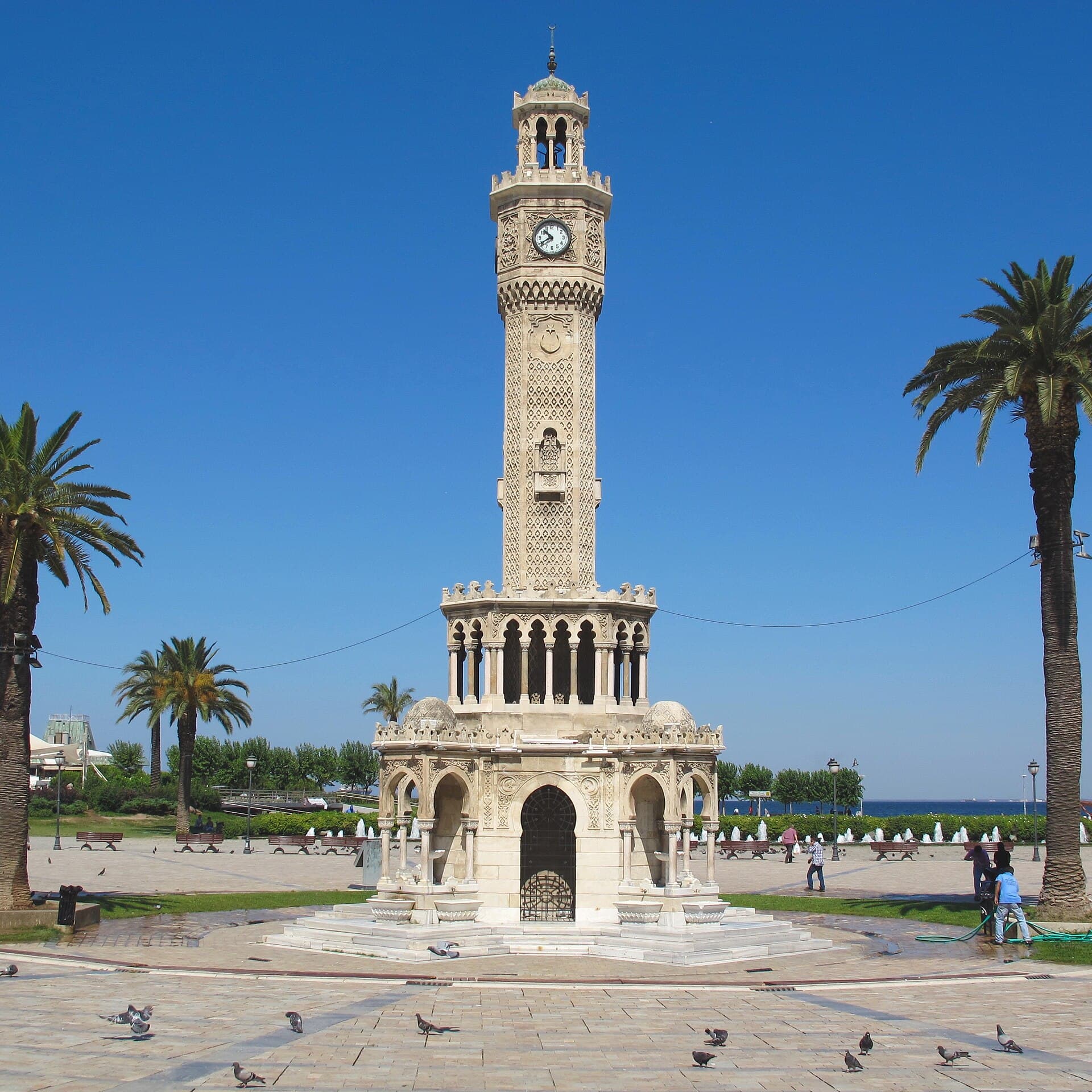 İzmir Clock TowerThis is the image İzmir chooses for itself: it is the emblem of the Metropolitan7 min walk4.8
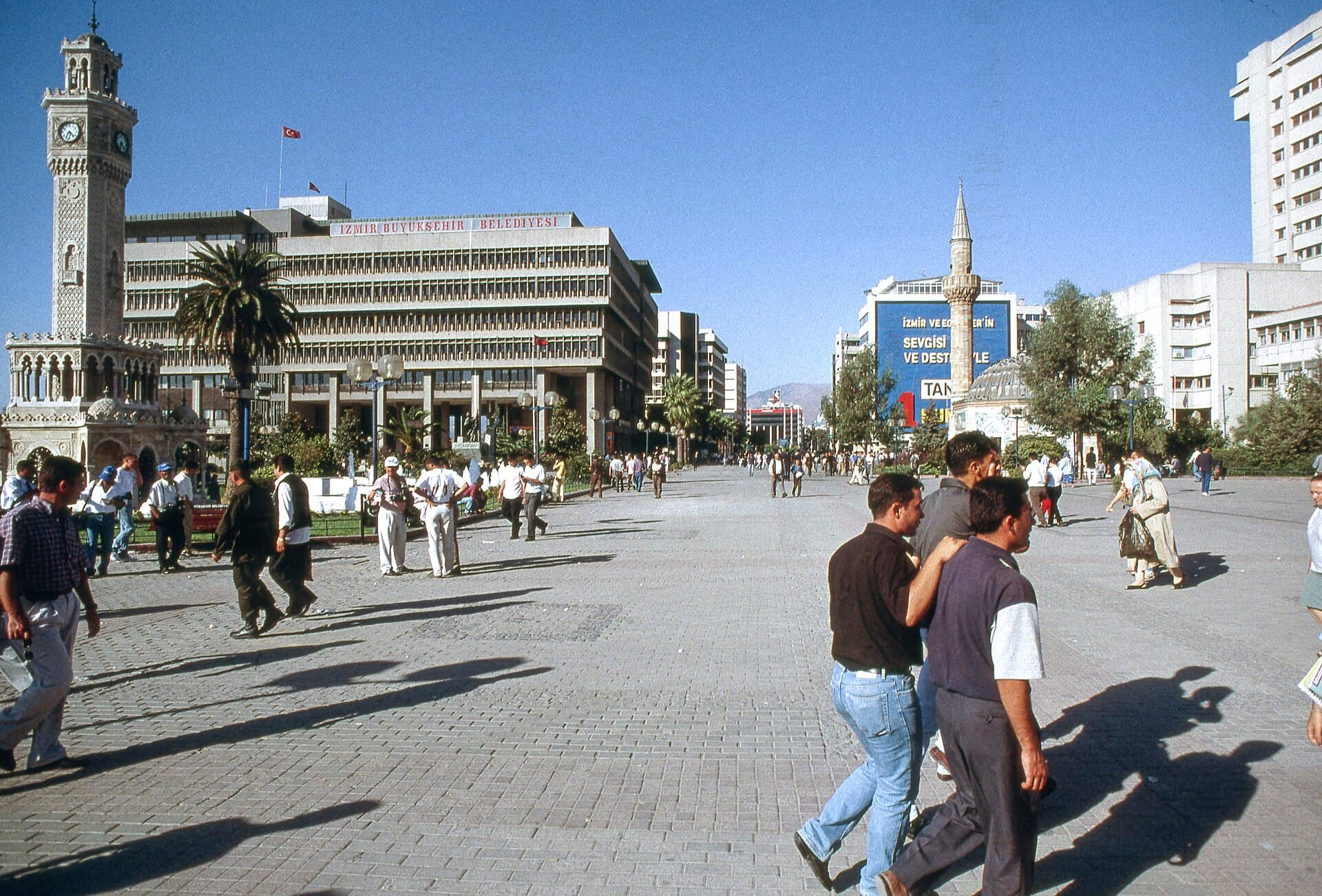 Konak SquareA 25-metre marble clock tower, put up in 1901 to mark twenty-five years of Sulta7 min walk4.5
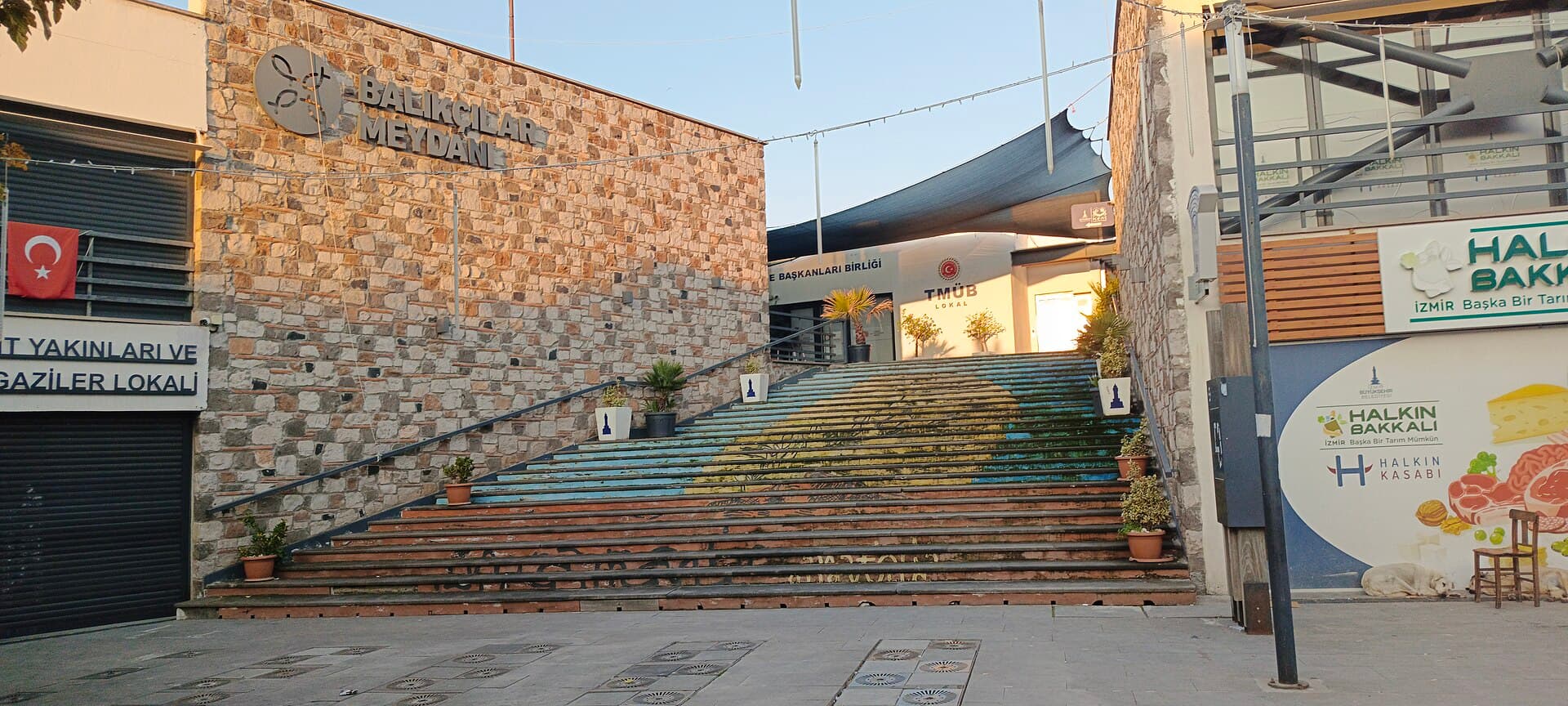 Kemeraltı BazaarThe lanes you thread today between gold shops and spice sacks were, four centuri8 min walk4.3
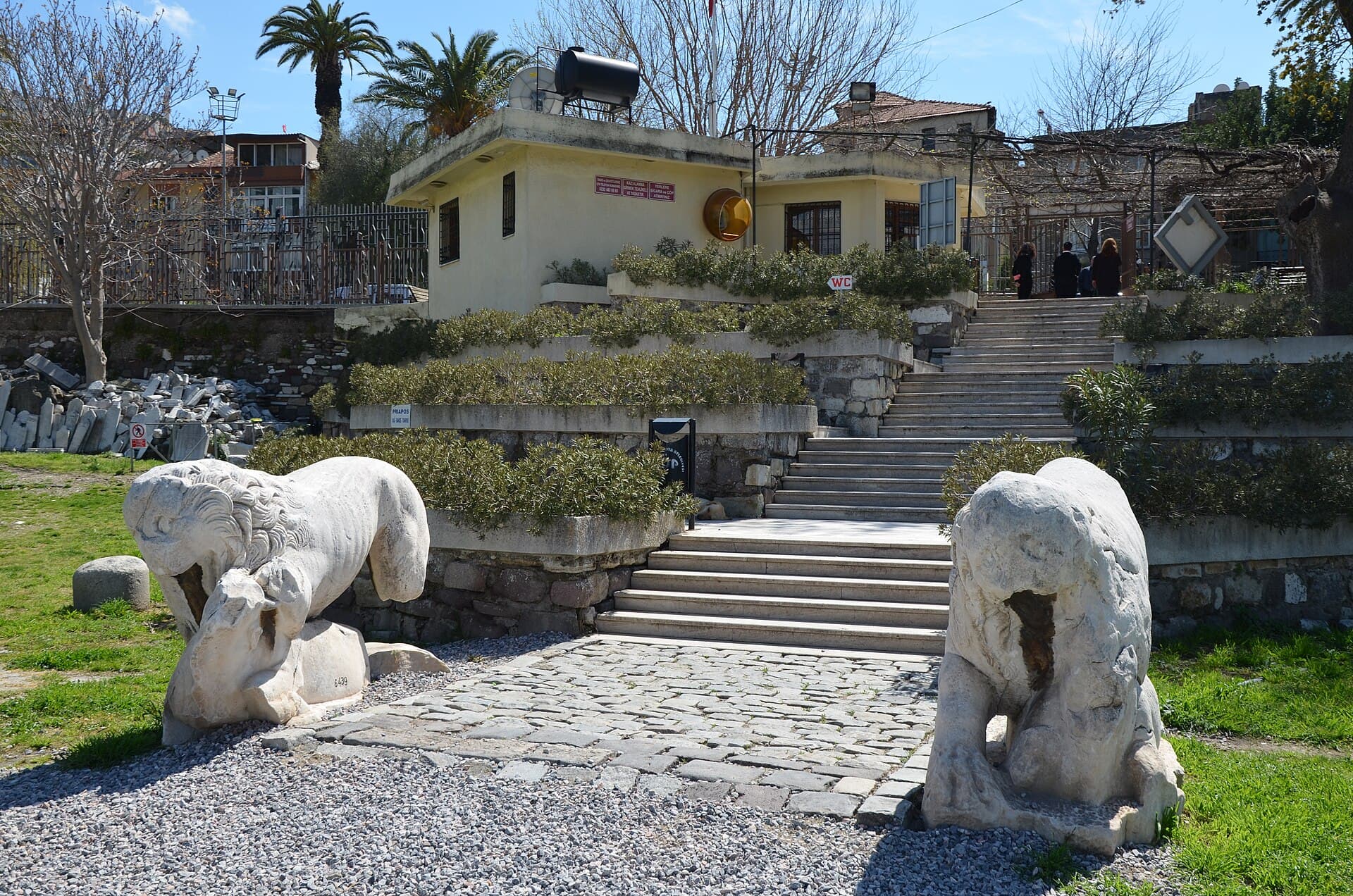 Agora of SmyrnaA few hundred metres uphill from Izmir's old bazaar, ten minutes on foot from Ko13 min walk4.6
 Asansör (Historical Elevator)This tower, as the story goes, owes its existence to a broken leg. At the turn o14 min walk4.5
No. If you are going to Ephesus anyway, the Selçuk museum is the more important one with the more famous pieces, and the Ephesian Artemis is there, not here. The İzmir museum suits someone staying in the city or wanting a cheap, quiet hour near Konak, not someone looking to skip the trip.
One hour is enough; the garden with its huge sarcophagi holds them better than the galleries, and the building is compact so a pushchair is manageable. Beyond that, the open-air Agora in the city centre is more fun for them.
Sign in to write your review of this place.
No reviews yet — be the first.