Jupiter's six columns
About 20 m tall.
yeowatzup — CC BY 2.0 · Jerzy Strzelecki — CC BY-SA 3.0 · Frank Kidner — CC BY-SA 4.0 · Vyacheslav Argenberg — CC BY 4.0 · Frank Kidner — CC BY-SA 4.0 · Carole Raddato — CC BY-SA 2.0 · Frank Kidner — CC BY-SA 4.0 · Carole Raddato — CC BY-SA 2.0
One of the greatest Roman sites anywhere, in the town of Baalbek in the Bekaa Valley, about 67 km northeast of Beirut. The Romans called the city Heliopolis, «city of the sun»; its temples rose between the first century BC and the third century AD, and the site has been on UNESCO's World Heritage list since 1984. The Temple of Jupiter was the largest temple to the god in the Roman Empire. Only six of its columns still stand, each about 20 m high and nearly 2.5 m across, among the biggest in the classical world. Its podium holds the «Trilithon», three colossal blocks of 750 to 800 tonnes each. Beside it stands the Temple of Bacchus, one of the best-preserved and grandest Roman temples, 66 m long and 31 m high, with 19 of its 42 columns still upright and a finely carved doorway. Outside the walls is the small round Temple of Venus. You enter through the monumental gateway into the Hexagonal Court and then the Great Court before the temples, all ringed by the walls of the medieval Arab citadel. Every summer the site hosts the Baalbek International Festival, held since 1956. Allow at least two hours.
About 20 m tall.
Nearly complete.
And its pools.
Central Baalbek, Bekaa Valley
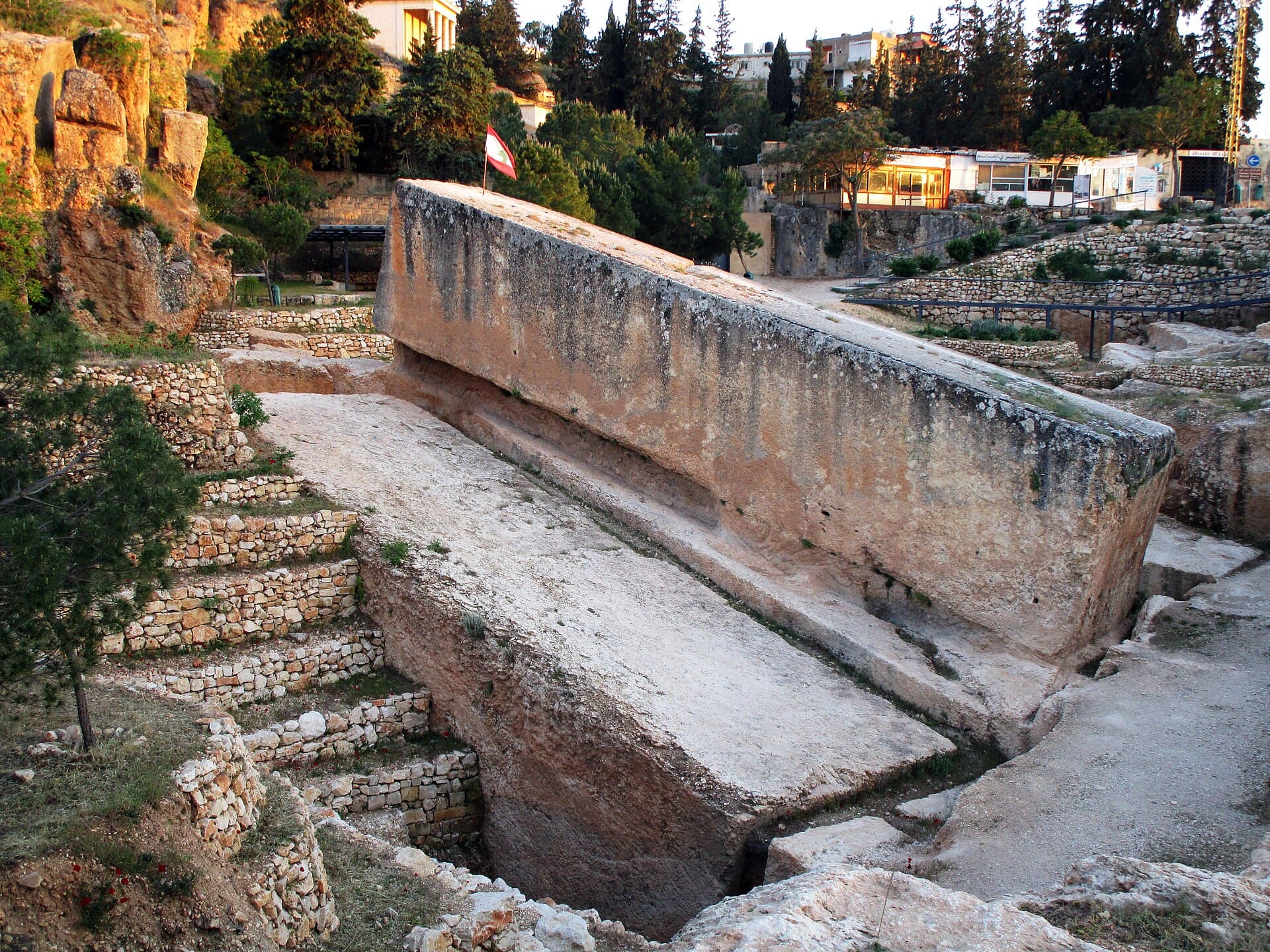
At least two hours for the gateway, the two courts and the temples of Jupiter and Bacchus, plus time for the nearby quarry of giant stones.