White Pagoda
About 17 metres tall.
xiquinhosilva — CC BY 2.0 · xiquinhosilva — CC BY 2.0 · Liuxingy — CC BY-SA 4.0 · Zhangzhugang — CC BY-SA 4.0 · Zhangzhugang — CC BY-SA 4.0 · Zhangzhugang — CC BY-SA 4.0 · xiquinhosilva — CC BY 2.0 · xiquinhosilva — CC BY 2.0
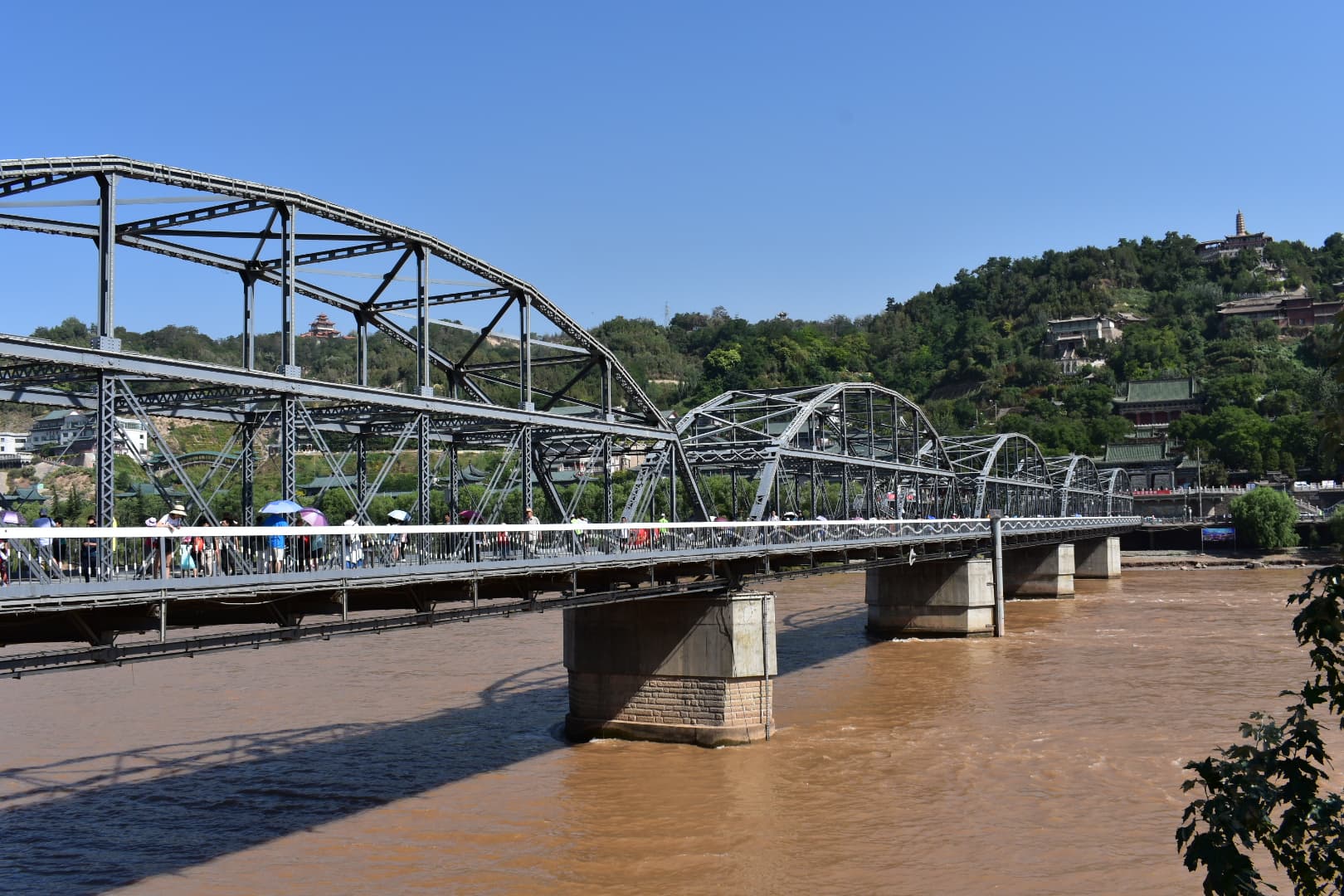
The hill rising straight above the northern end of Zhongshan Bridge, about 1,700 metres above sea level; its name means «White Pagoda Mountain», after the white pagoda crowning its summit, and together with the Yellow River below it formed a natural shield for the old city. The pagoda is octagonal, seven storeys and about 17 metres tall; first raised in the Mongol Yuan era, it was rebuilt under the Jingtai Emperor of the Ming dynasty in the mid-fifteenth century, the complex around it was enlarged in the early eighteenth century, and it shows white above the rocks from all over the city. At the foot of the hill climb the Three Terraces, a group of halls and pavilions built in a single year in 1958 by the architect Ren Zhenying, who reused timber, tiles and carved details salvaged from old buildings demolished in the city; the largest hall, on the third terrace, is 80 metres wide, with a roof of green glazed tiles and walls decorated with carved brick. The park is free and opens from early morning until evening, with longer hours in summer, per visitor guides. Paths and steps lead up through the pines, the sunset view over the river, the bridge and the city is the highlight, and a cable car with its own ticket also crosses the river to the hill.
About 17 metres tall.
Built in 1958.
Over the Yellow River.
North bank of the Yellow River, opposite Zhongshan Bridge, Chengguan District, Lanzhou
Yes, the park is free and opens from early morning until evening; the climb starts at the northern end of Zhongshan Bridge, while the cable car has its own ticket, per visitor guides.