
The great cube
A domeless form modelled on the Kaaba.
Wasiul Bahar — CC BY-SA 4.0 · Wasiul Bahar — CC BY-SA 4.0 · Wasiul Bahar — CC BY-SA 4.0 · Shahriar Amin Fahim247 — CC BY-SA 4.0 · Shahriar Amin Fahim247 — CC BY-SA 4.0
Baitul Mukarram is the national mosque of Bangladesh, set in the commercial heart of Dhaka. It holds more than 42,000 worshippers and is one of the largest and busiest mosques in the country. The mosque was designed by the architect Abdulhusein M. Thariani. The first prayers were held here on 25 January 1963 and the building was completed in 1968, on a plot of about 8.3 acres that had once been a pond and was filled in for it. The Islamic Foundation has managed the mosque since 1975, and it was extended in 2008. The building stands out for its large cube shape, modelled on the Kaaba, so the main hall has no dome. It rises from a high platform to eight storeys, about 99 feet. Two shallow domed entrance porticoes stand on the north and south sides, and white arcades and screened windows face the broad eastern courtyard. Dress modestly, take off your shoes before entering the prayer hall, and as a visitor avoid prayer times, especially Friday prayers. The mosque is about 1.1 km in a straight line from Curzon Hall and about 2.8 km from Lalbagh Fort.
A domeless form modelled on the Kaaba.
Entrances on the north and south.
Arches and screens around the courtyard.
Central Dhaka, Bangladesh
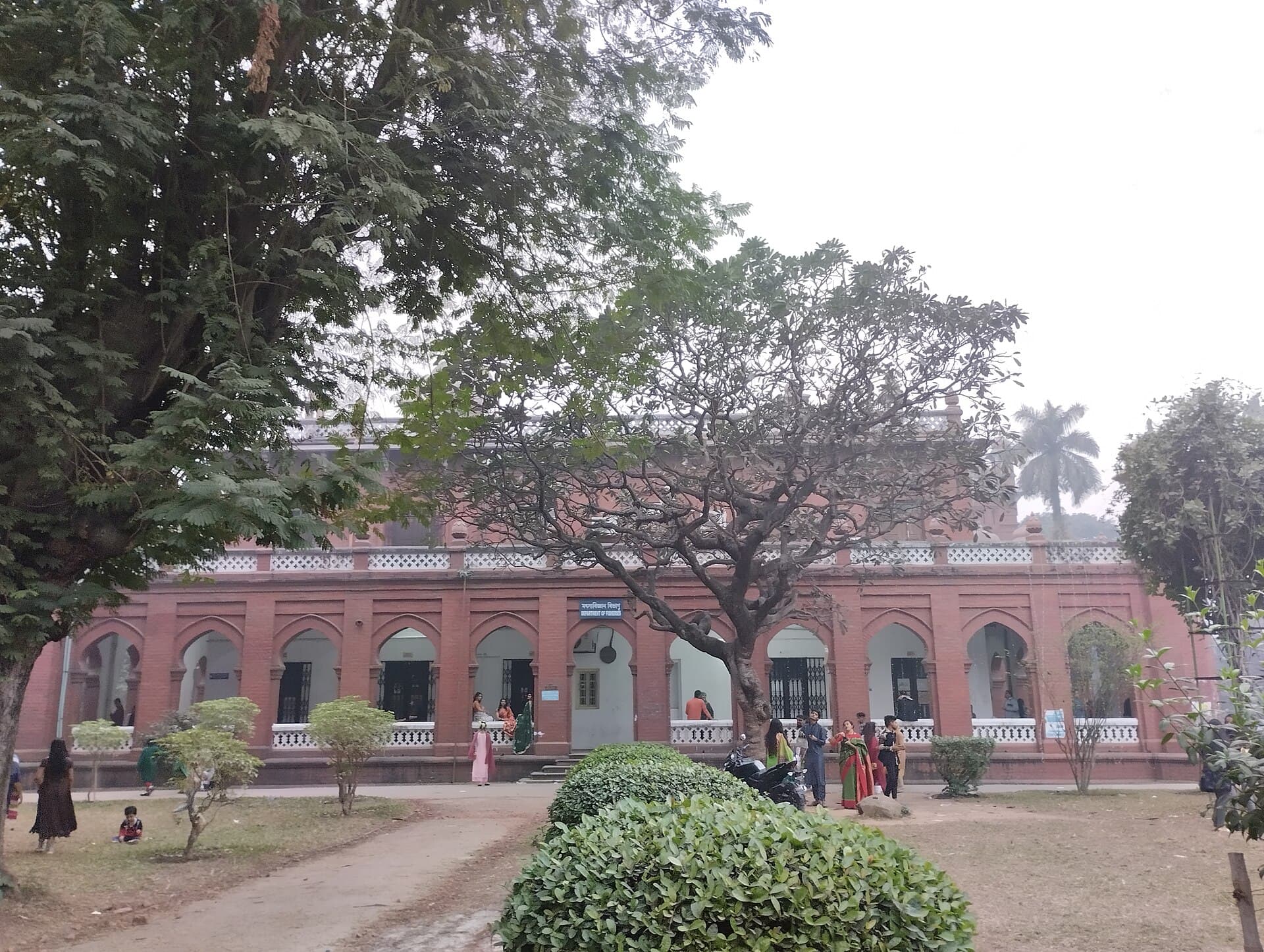 Curzon HallCurzon Hall is a red-brick landmark on the campus of the University of Dhaka and14 minutes walk
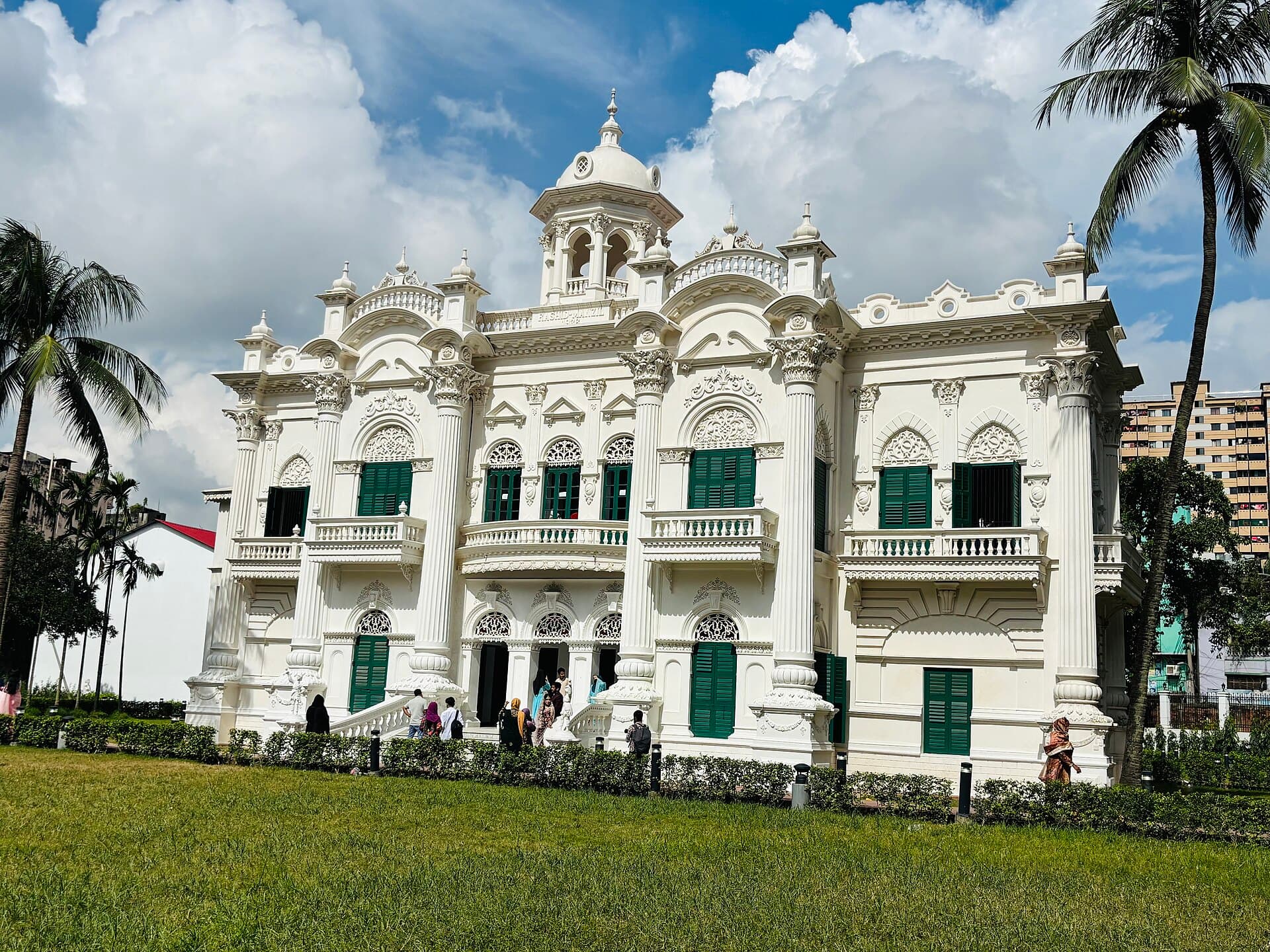 Rose Garden PalaceRose Garden Palace is an elegant white mansion from the late 19th century in the23 minutes walk
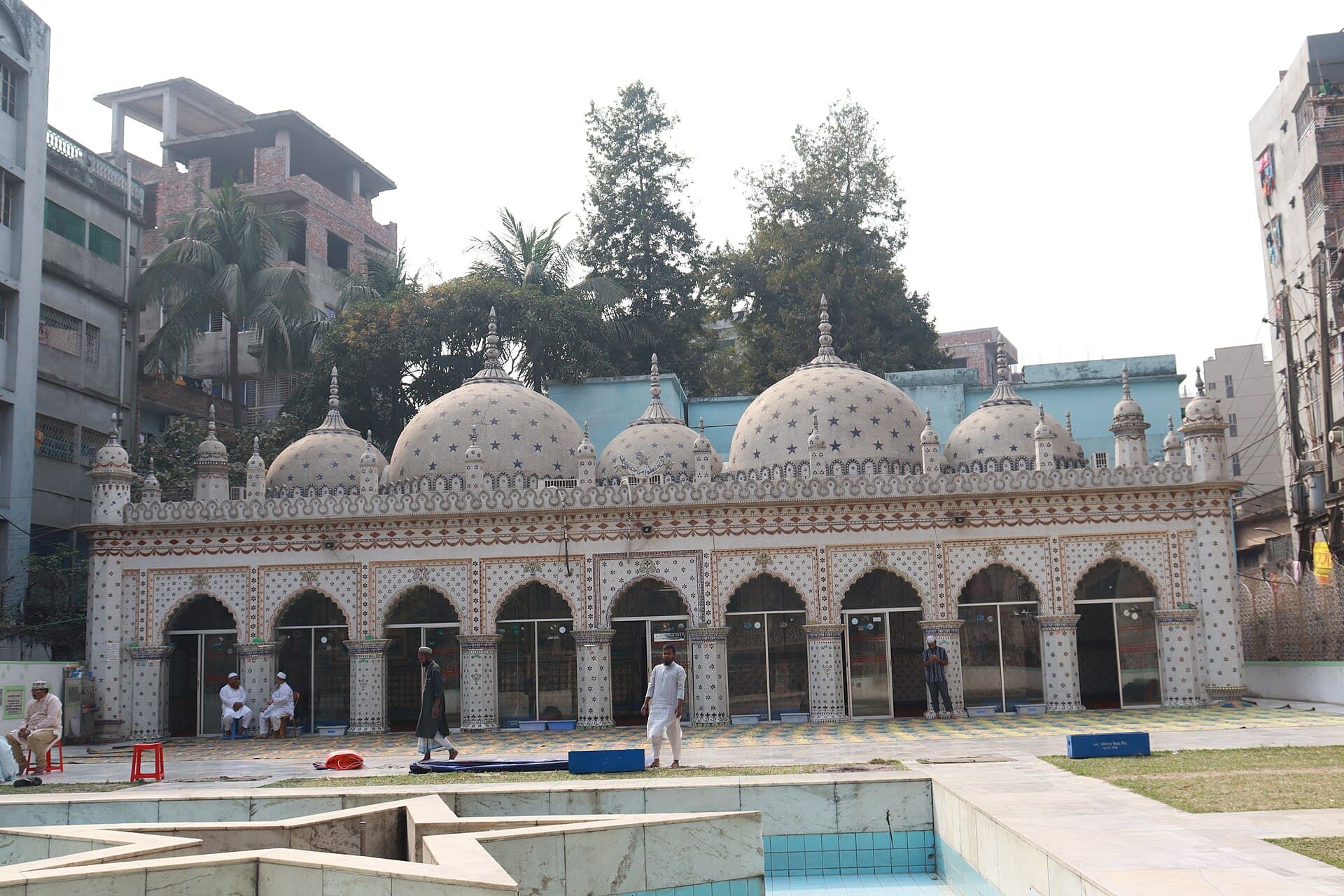 Star MosqueStar Mosque, also known as Tara Masjid, is a mosque in the Armanitola district o24 minutes walk
It was designed as a cube modelled on the Kaaba; the only domes crown the two entrances.
Outside prayer times, and avoid Friday midday when it is crowded.