Richard III's oriel window
Look up at the boar carved beneath the Great Chamber's oriel, then take in the Tees curling through the gorge below.
Robert Scarth from London, England — CC BY-SA 2.0 · Worldfootage — CC BY-SA 4.0 · Worldfootage — CC BY-SA 4.0 · Nick Bramhall from Aberdeen, UK — CC BY-SA 2.0
Carved under the projecting oriel window of the Great Chamber is a boar, the white boar badge of Richard, Duke of Gloucester, the man who became Richard III and one of Shakespeare's great villains. This was one of his favourite homes in the 1470s, and the window that carries his emblem still looks straight down on the River Tees winding through a wooded gorge below the cliff. That view is the best thing here, and worth standing at for a while. Everything else is ruin, not furnished rooms; anyone expecting a complete castle like Durham's will be surprised. Guy de Balliol began building soon after 1093 on land he was given by William II, and his nephew Bernard enlarged it and gave his name to castle and town alike. The Scots besieged it in 1216, a garrison of some seven hundred held out for eleven days against about 5,000 rebels in the Rising of the North in 1569 before surrendering, and in the seventeenth century Sir Henry Vane stripped the roof and carted the stone off to build up his seat at Raby. What survives is a round tower of about 1200, the shells of the great hall and great chamber rebuilt in stone in the early thirteenth century, and a large grassed outer ward where children can run freely. Allow an hour to ninety minutes without hurrying. The ground is grass and gravel paths, mostly level but bumpy in places, and the round tower is climbed by a narrow spiral stair, so a pushchair works in the ward but not up the towers, and the whole site is effectively outdoors; bring a rain jacket even in July. There is no cafe, only a small shop selling cold drinks, ice cream and snacks, and picnic benches looking over the gorge, but the small market town wraps around you, with cafes and shops a few steps away and the grand Bowes Museum, which looks like a French chateau dropped onto an English lawn, about ten minutes on foot. Pairing the two is what makes the trip out from Durham worthwhile. Getting there: the town has no railway station, so a car is the easy option, roughly 40 km south-west of Durham on the A688, 40 to 45 minutes. There is no parking on site, but town car parks, some of them free, are a few minutes' walk away. Without a car, take the train to Darlington and then the X75 or X76 bus for about 40 minutes. In summer the castle opens daily 10:00-17:00, last entry 16:30; from November to March it still opens daily but closes at 16:00, and it shuts over Christmas and New Year, so check the online calendar before you set off.
Look up at the boar carved beneath the Great Chamber's oriel, then take in the Tees curling through the gorge below.
A tower of about 1200 you can climb by a narrow spiral stair, the most striking survivor of the Balliols' castle.
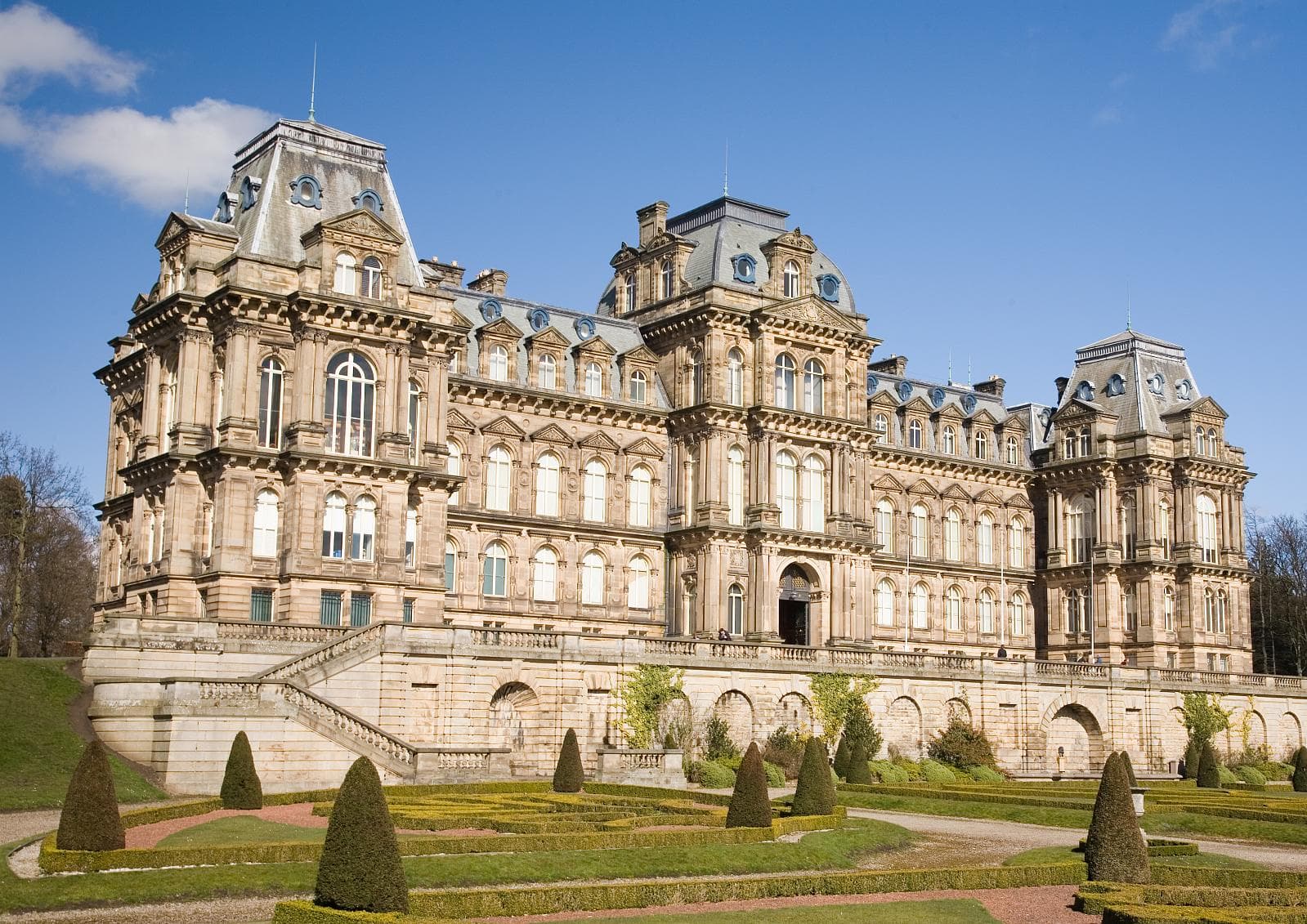
A French-style chateau with a serious art collection and a mechanical silver swan, ten minutes' walk, and what rounds the trip out.
Scar Top, Barnard Castle DL12 8PR
Not on its own; it is an open-air ruin you finish in an hour, and Durham Castle is more complete and richer. Pair it with the Bowes Museum and a wander round the little town, though, and it becomes a fine half-day in the countryside that justifies the drive, especially on a clear day. In winter it closes at 16:00, so start early.
The big grassed ward is ideal for them and a pushchair rolls across it easily once past the gravel at the entrance, but the tower has a narrow spiral stair and the site has deep ditches and walls high above the cliff, so hold small hands near the edges. There is no cafe, just a small shop with drinks and ice cream and a single toilet; the town is two minutes away.