The boats themselves
Batanas built the old way, some of them still sailing.
Roberta F. — CC BY-SA 3.0 · Roberta F. — CC BY-SA 3.0 · Roberta F. — CC BY-SA 3.0 · Roberta F. — CC BY-SA 3.0
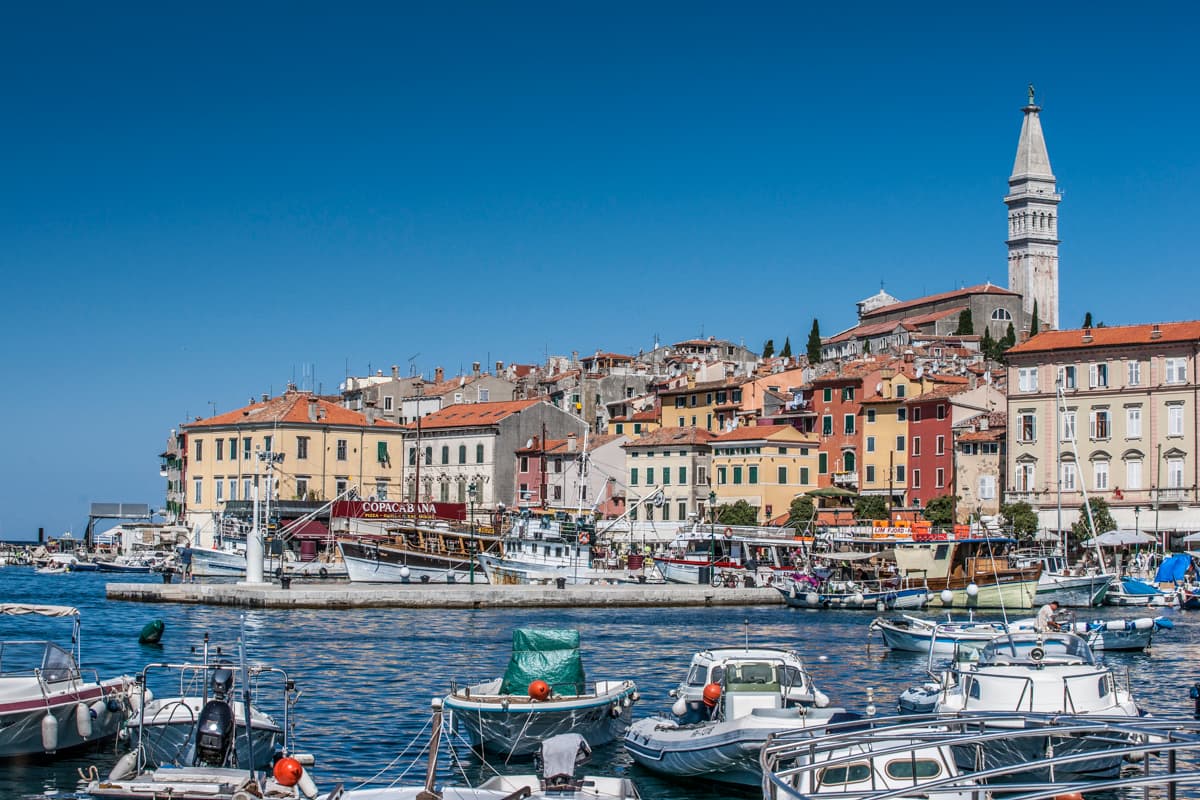
A small museum on Rovinj''s waterfront devoted to one thing: the **batana**, the flat-bottomed wooden boat the town''s fishermen built for themselves over centuries. The idea is larger than the boat. The batana was **the tool the town''s whole life rested on**: flat-bottomed to work the shallows between the rocks, light enough for one man to haul, and cheap enough that a fisherman built his own from whatever timber he had. Everything around it grew from that — a way of fishing, a vocabulary, and songs. The museum is on the **UNESCO register of good safeguarding practices for intangible heritage**, an unusual listing that recognises the method of preservation rather than the site: instead of showing a boat behind a rope, **new batanas were built** by the same old hands and put back in the water. The displays include recordings of the **bitinada** — Rovinj''s traditional singing, performed on the boats in the evening in the local Istro-Venetian dialect. Note: on summer evenings a sail in an original batana ends with dinner and singing in the old **spacio**.
Batanas built the old way, some of them still sailing.
Recordings of Rovinj''s traditional singing in its Istro-Venetian dialect.
In an original boat in summer, ending with dinner and song.
Obala Pino Budicin 2, Rovinj
Because it is a native language here, not a tourist one. **Venice** ruled the Istrian coast for five centuries (from the thirteenth to 1797), and Istria was then formally part of **Italy** between 1920 and 1947. After the war it passed to Yugoslavia and most of its Italian population left in a mass emigration, but **an Italian minority remained** and today has recognised constitutional status. The result is that the coastal towns — Rovinj, Poreč, Pula, Umag — are **officially bilingual**: signs and municipal documents in Croatian and Italian together, with Italian-language schools. ⚠ The dialect you hear in Rovinj is not standard Italian but **Istro-Venetian**, an old language variety in its own right, and the one the bitinada is sung in.