The palm walk
A broad pavement by the sea.
Wusel007 — CC BY-SA 3.0 · Vyacheslav Argenberg — CC BY 4.0 · Wusel007 — CC BY-SA 3.0 · Vyacheslav Argenberg — CC BY 4.0 · Wusel007 — CC BY-SA 3.0
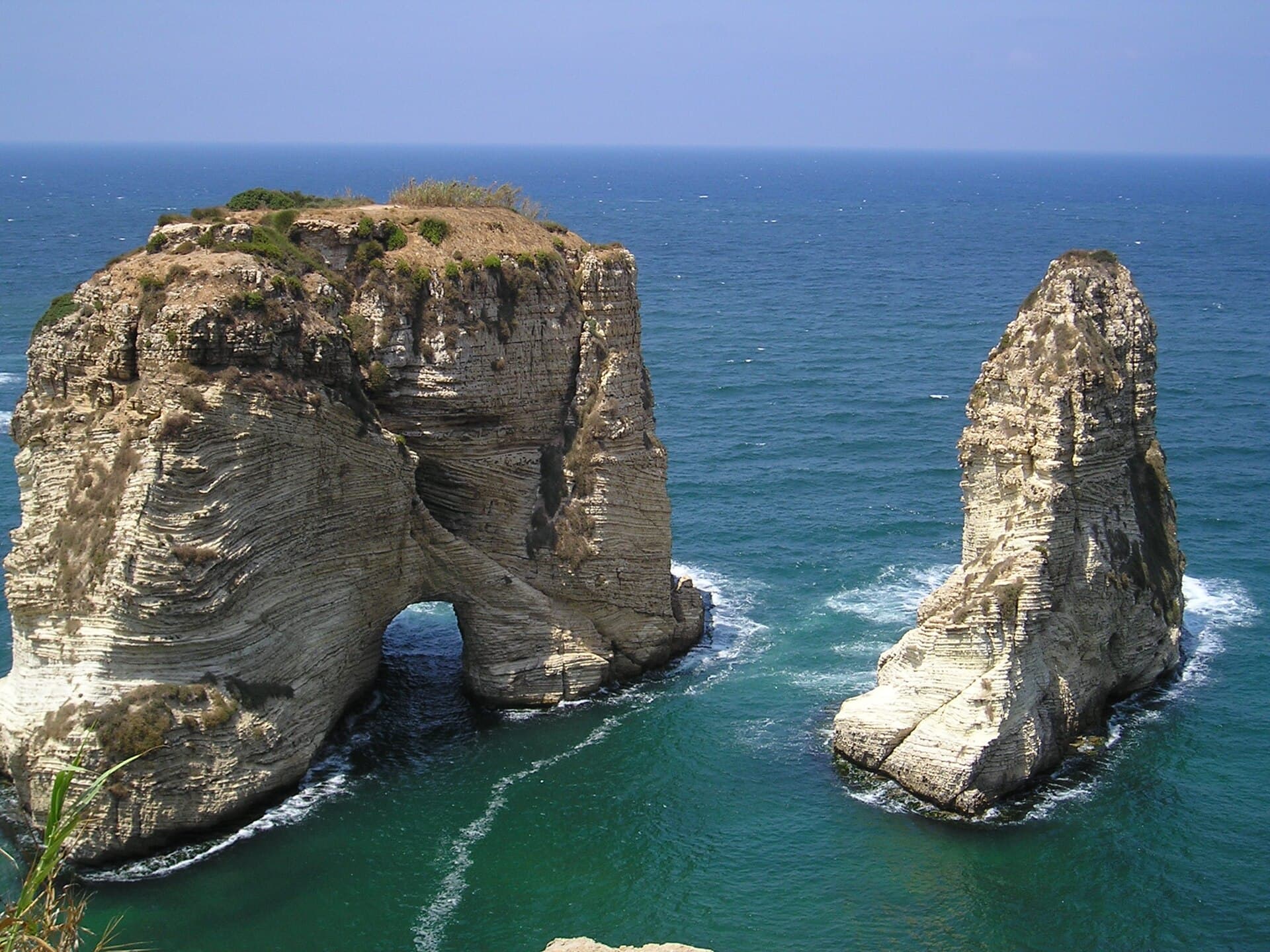
The Beirut Corniche is a long seaside promenade in the west of the capital, where city people come to walk, sit and watch the sunset. Palm trees and lamp posts line it, with residential towers rising behind. It is the simplest way to understand daily life in Beirut, costing you nothing but time. The promenade passes through the Ain Mraisseh and Manara districts, following the shoreline rocks, and links with the Raouche side and its famous Pigeon Rocks. It stands on no archaeological site, as its value is above all social, offering a rare open space for everyone in a crowded city. You walk on a broad pavement with a white railing as waves strike the rocks below, while people fish, jog and cycle. Vendors sell coffee and sesame bread, and families sit by the sea. At sunset the sky turns pink and orange, and the palms become black shapes above the sea. It is about 3 km in a straight line from central Beirut, and you can walk from Ain Mraisseh to Raouche in about an hour at an easy pace. Late afternoon and early evening are the best times. Watch for cyclists on the pavement, keep away from the edge in rough seas and check current travel guidance before visiting Beirut.
A broad pavement by the sea.
Pink and orange above the water.
Anglers, families and joggers.
Ain Mraisseh and Manara, seafront, Beirut
Late in the day, when the heat eases, people come out and sunset arrives.
Yes. You can walk from Ain Mraisseh to Raouche in about an hour.