The Pool Hall
A marble basin in the middle of the reception salon that cooled the sultan's summers before air conditioning.
User:Roweromaniak — CC BY-SA 2.5 · Photograph by Mike Peel (www.mikepeel.net). — CC BY-SA 4.0 · Photograph by Mike Peel (www.mikepeel.net). — CC BY-SA 4.0 · Photograph by Mike Peel (www.mikepeel.net). — CC BY-SA 4.0
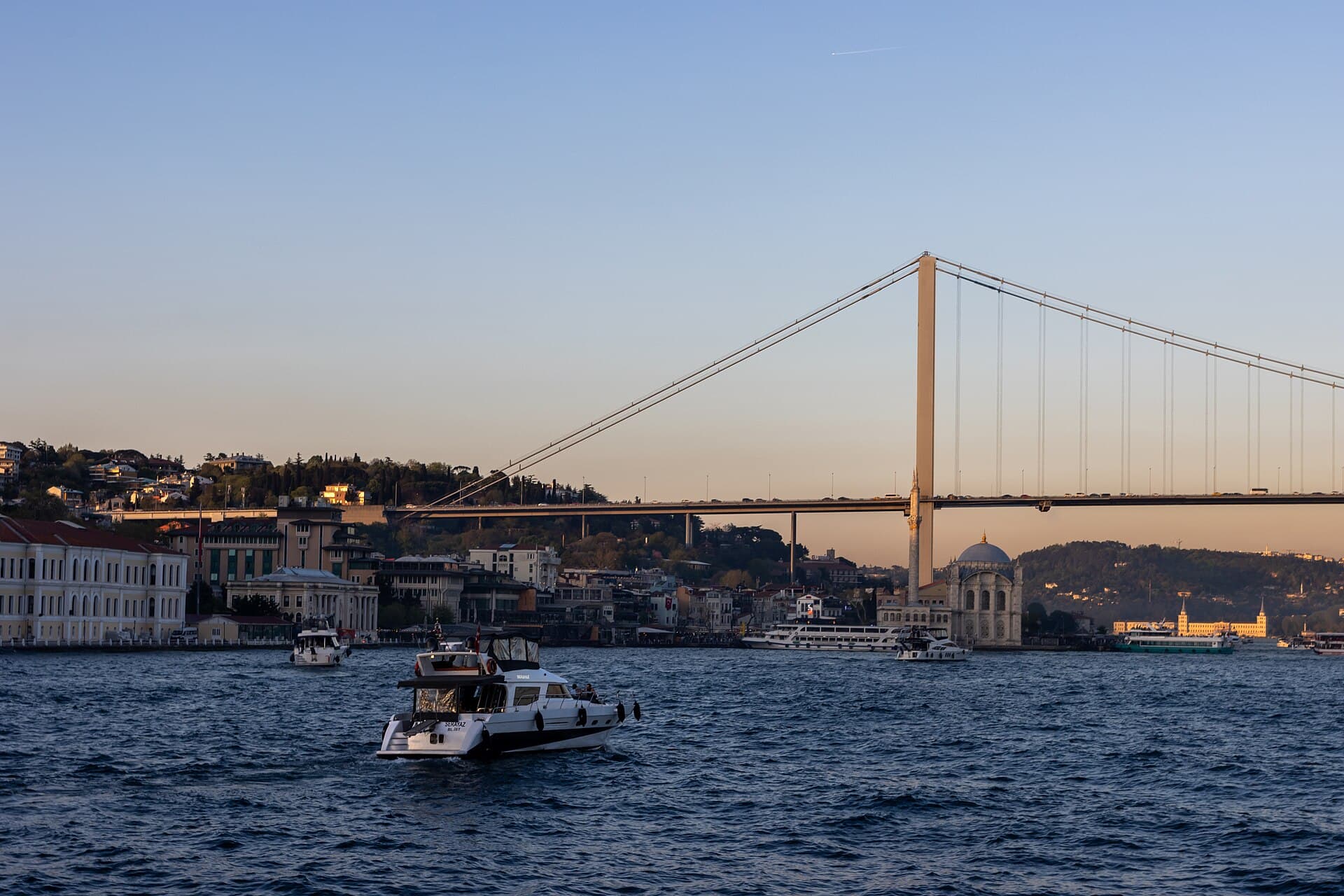
Right beside the Asian foot of the Bosphorus Bridge stands a white marble palace that Sultan Abdülaziz built in the early 1860s, finished in 1865, as a summer seat and a guesthouse for Europe's crowned heads, and which ended as a gilded prison: Sultan Abdülhamid II spent his last six years here under house arrest until his death in 1918. That reversal, a palace born for receptions that became a house of exile, is what makes a short visit weigh more than its size suggests. The interior is far smaller than Dolmabahçe, twenty-four rooms and six halls, but the taste is more coherent and less shouty. Egyptian reed matting lies under Hereke carpets, the chandeliers are crystal, and some of the woodwork is attributed to Abdülhamid II himself, a skilled carpenter who is said to have passed part of his exile here at the workbench. The best room is the ground-floor Pool Hall, where a large marble basin in the middle of the salon cooled the summer air long before air conditioning. Upstairs the rooms look at the water through tall windows until the Bosphorus feels like part of the furniture. Note that photography inside is restricted and flash is banned, so ask at the entrance before you reach for your phone. The gardens climb the slope behind the palace in terraces linked by stairs and ramps, shaded by magnolias and chestnuts and pierced by an old tunnel that once carried the coast road. The Marble and Yellow pavilions and the two sea pavilions on the quay are mostly admired from outside: what is open is the main palace, its Mabeyn and Harem wings, while the upper gardens and pavilions are often closed. A cheap garden-only ticket exists if you just want a seat by the water without going in. For families the tour is short and flat inside, a pushchair rolls easily through the lower gardens, and only the terrace stairs mean carrying it. Do not expect crowds; even in August it stays far quieter than Dolmabahçe, and the shade and sea air take the edge off the heat. Getting there is easier than it looks: a ferry to Üsküdar and ten minutes on bus 15 along the shore, or a taxi over the bridge from the European side. The ideal plan pairs it with nearby Çamlıca Hill in one Asian-side half day.
A marble basin in the middle of the reception salon that cooled the sultan's summers before air conditioning.
The apartments where the deposed sultan lived out his last years, a prisoner in his uncle's palace.
Magnolia terraces behind the palace and an old tunnel that once carried the coast road beneath them.
Beylerbeyi Mah., Abdullahağa Cad., Üsküdar, Asian shore of the Bosphorus
Dolmabahçe is grander and more famous and remains the first choice for a first visit to Istanbul. Beylerbeyi is smaller, much cheaper and quieter, and suits those who have already seen Dolmabahçe or who prefer an easy hour by the water without queues. Do not try both in one day unless the Asian side is already in your plan.
The tour is short and flat and ends in shaded gardens by the water, so yes if the children can manage a quiet hour; but it is not a place that dazzles small kids on its own, and the fun part for them is the quay and the garden rather than the rooms.
Sign in to write your review of this place.
No reviews yet — be the first.