Tile remains
Blue, white and gilt.
Hussein Talal — CC BY-SA 4.0 · Valen1988 — CC BY-SA 4.0 · Frode Ramone from Oslo, Norway — CC BY 2.0 · F4fluids — CC BY-SA 3.0 · Valen1988 — CC BY-SA 4.0
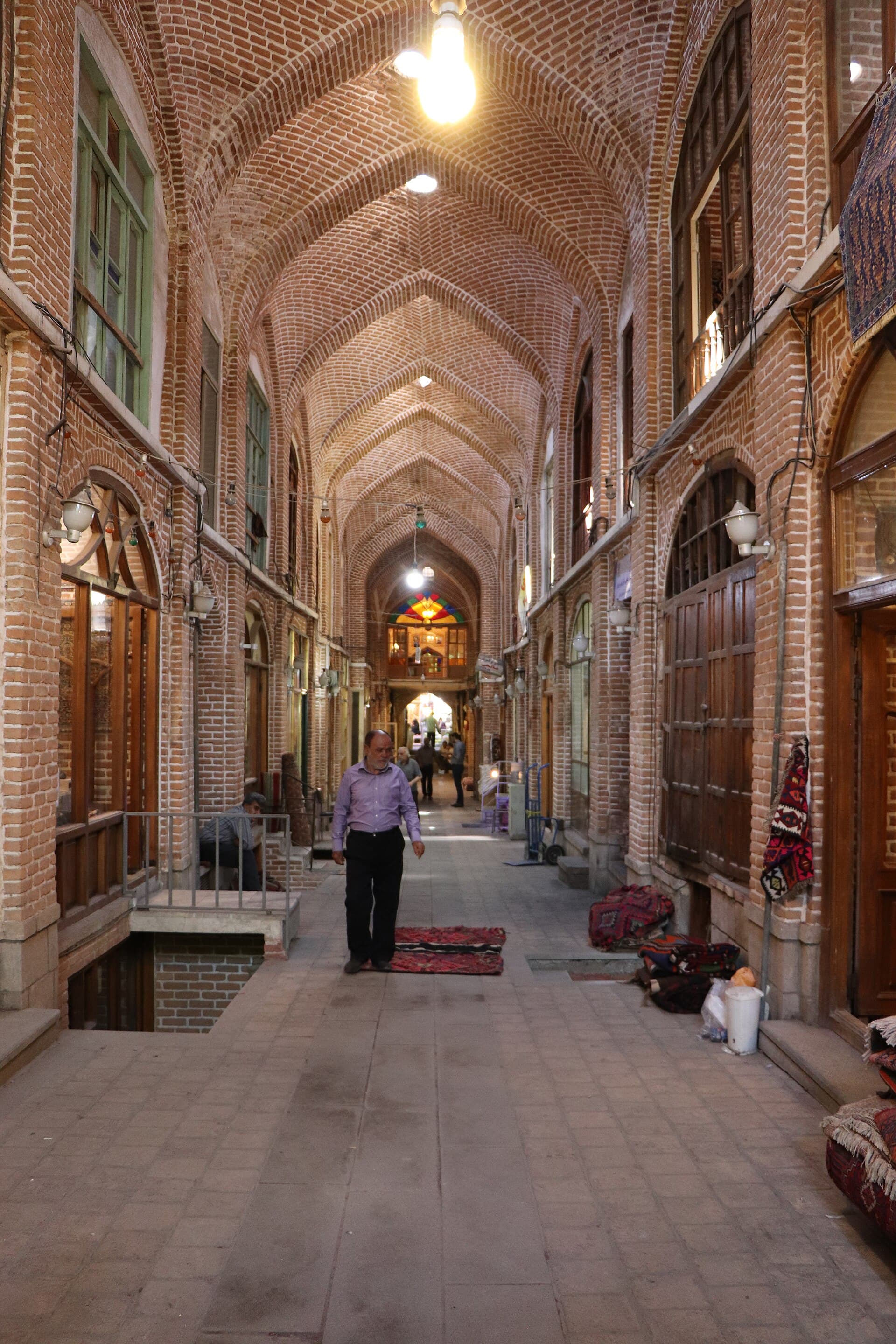
The Blue Mosque, or Masjed-e Kabud, is a former mosque and mausoleum complex in Tabriz, partly preserved as a museum. It is the last surviving example in the city of Turkmen architecture and decoration, about 1.1 km in a straight line from the Tabriz Bazaar. Building began under the Qara Qoyunlu and was completed in 1465, and the mausoleum to the south was added under the Aq Qoyunlu into the 1480s. An earthquake in 1780 left only the iwan standing, and reconstruction began in 1973. The mosque was famed for its blue-and-white and gilded tiles, remains of which still cling to the iwan and inner walls. Outside, the building shows two red-brick domes, and inside are brick-arched halls and fragments of deep blue mosaic. The building is now a museum, so check opening hours. Combine it with the nearby Tabriz Bazaar. The UK Foreign Office currently advises against all travel to Iran and warns that British nationals risk detention, so check official guidance before making any plans. We could not confirm the current state of this site.
Blue, white and gilt.
Red brick.
What survived 1780.
Central Tabriz, East Azerbaijan, Iran
For its famous blue ceramic tiles.
Damaged in 1780 and rebuilt from 1973.