A global geological reference
Some boundaries in Earth's timescale are defined by rock sections from here.
cs:ŠJů — CC BY-SA 3.0 · Petr Vodička — CC BY-SA 4.0 · T. Kebert — CC BY-SA 4.0 · Janmanak — CC BY-SA 4.0
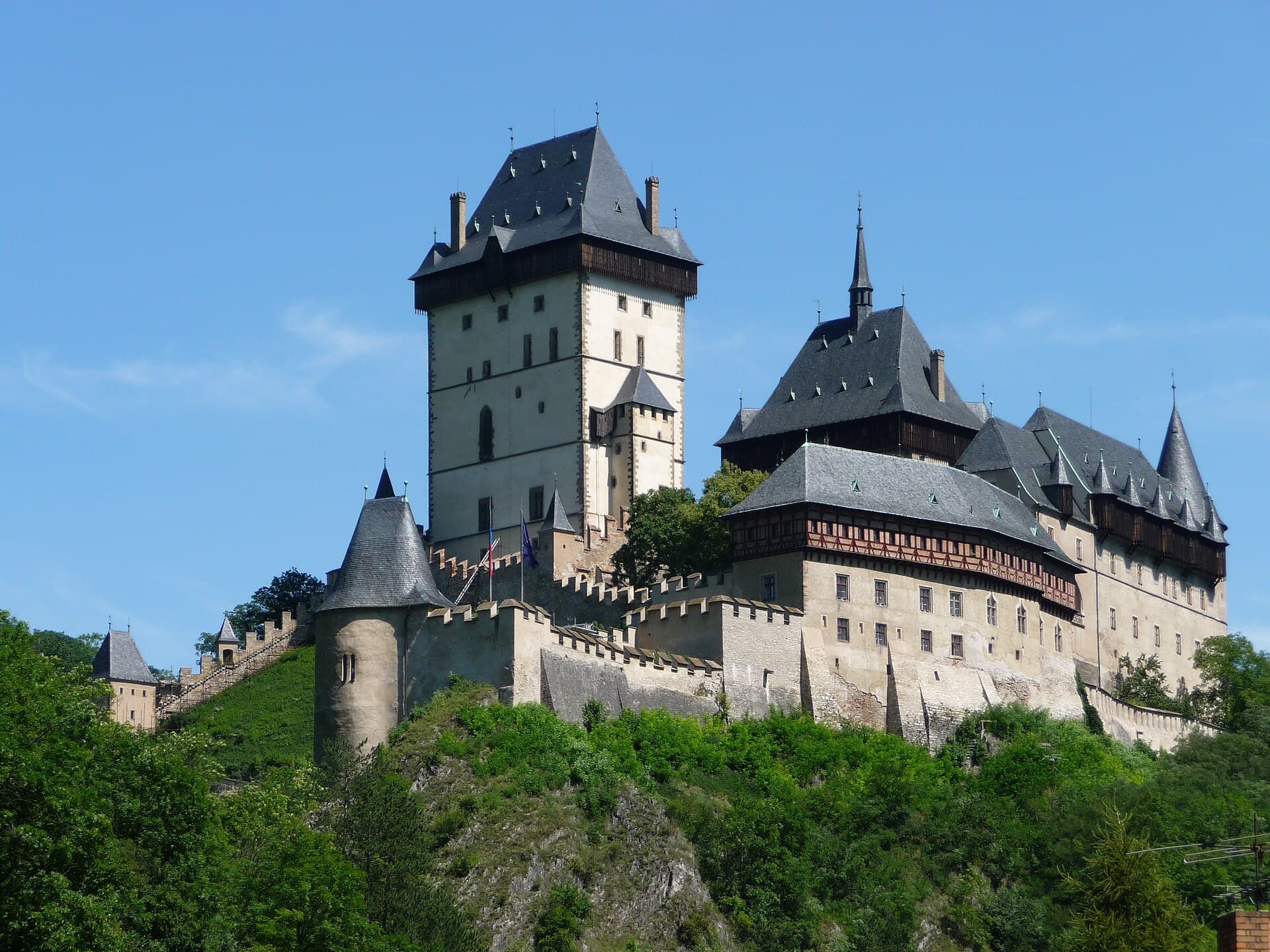
A protected limestone region south-west of Prague, covering some hundred and thirty square kilometres between the city and the town of Beroun. The limestone here formed in a tropical sea about four hundred million years ago, and the rock is so rich in fossils that the area is a global reference in stratigraphy — some boundaries in the geological timescale are defined by rock sections from precisely here. What a visitor sees is simpler and finer than that: narrow valleys, white cliffs, abandoned quarries flooded with blue water such as Velká Amerika, the Koněprusy caves open to visitors by ticket and tour, and Karlštejn Castle on its hill in the middle of the region. This is not a destination with an entrance and a ticket but a region to walk in. The trails are numbered and clear, and access is by train from Prague to Srbsko or Karlštejn and then on foot. Allow a full day and bring walking shoes.
Some boundaries in Earth's timescale are defined by rock sections from here.
The longest cave system in Bohemia, open on a seasonal guided tour.
The castle, the blue quarries and the valleys in one walkable region.
Between Prague and Beroun, about thirty kilometres south-west of Prague
The usual one: train to Karlštejn, the castle in the morning, then a walk through the valley to the Velká Amerika quarry and back to Srbsko station. Around ten to twelve kilometres on numbered trails, filling a comfortable day. For caves, Koněprusy needs separate planning as it sits at another edge of the region.
The main trails are largely paved or level dirt and suit older children. But the distances are long and the quarry rims are dangerous and unfenced, so supervision matters specifically there. With very young children, keep to Karlštejn Castle and the village below it.