Spruce forests
Dense and preserved.
Pavelmarek100 — CC BY-SA 4.0 · Polscience (talk) — Public domain · Tiniko Dzadzamia — CC BY-SA 2.0 · Giorgimailo — CC BY-SA 4.0 · Giorgimailo — CC BY-SA 4.0 · Paata vardanashvili — CC BY-SA 4.0 · GagaMumladze2020 — CC BY-SA 4.0 · Paata vardanashvili — CC BY-SA 4.0
One of Georgia's largest national parks, spreading through the Lesser Caucasus from the resort of Borjomi to the town of Kharagauli and, with the adjoining Borjomi reserve, covering more than eight hundred square kilometres across six municipalities. It was created in 1995 with the support of WWF and officially opened in 2001. In the nineteenth century its forests were hunting grounds of the Russian imperial family, and Grand Duke Michael banned logging and hunting without permission, which preserved its dense forests of spruce, pine, fir and beech. Brown bears, lynx, deer, wolves and many birds live here. The park has twelve marked hiking trails, from short walks to treks of several days, crossing forests, alpine meadows and ridges, with tourist shelters, campsites and picnic spots along the way. Horses can be hired, and snowshoeing is possible in winter. Walking the trails is free: the Agency of Protected Areas lists no entry fee, only charges for services such as horse hire at about 80 GEL a day. The visitor centre in Borjomi provides maps and trail information and arranges shelter stays, so stop there before longer hikes.
Dense and preserved.
For multi-day treks.
Bears, lynx and deer.
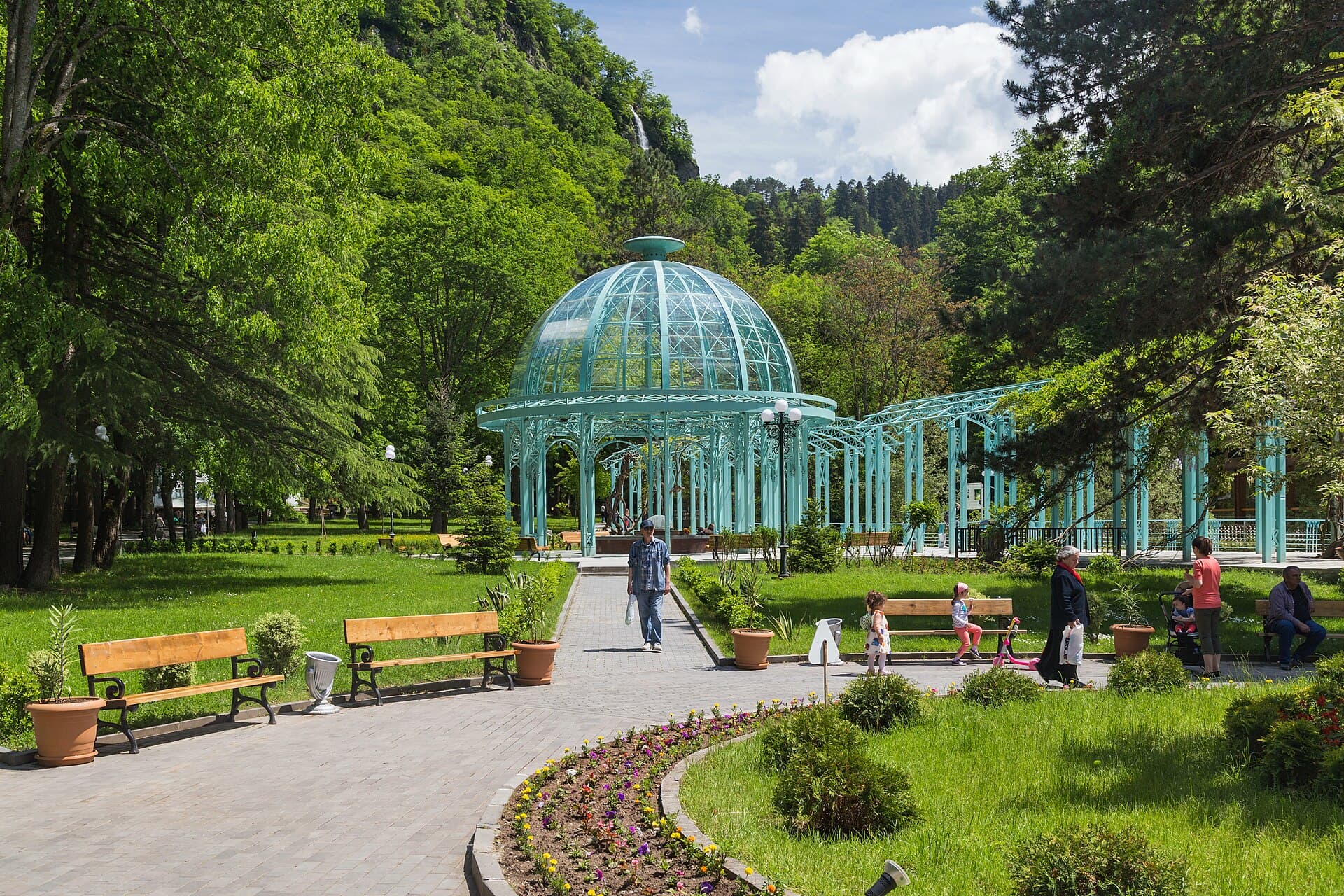
Visitor centre in Borjomi; the park stretches west to Kharagauli
Short walks usually need nothing, but longer treks and shelter stays are best arranged at the visitor centre in Borjomi.