Spiral stairs
Down into the rock.
Bilal Detailz — CC BY-SA 4.0 · Roland Unger — CC BY-SA 3.0 · Slyronit — CC BY-SA 4.0 · Slyronit — CC BY-SA 4.0 · Leon petrosyan — CC BY-SA 4.0
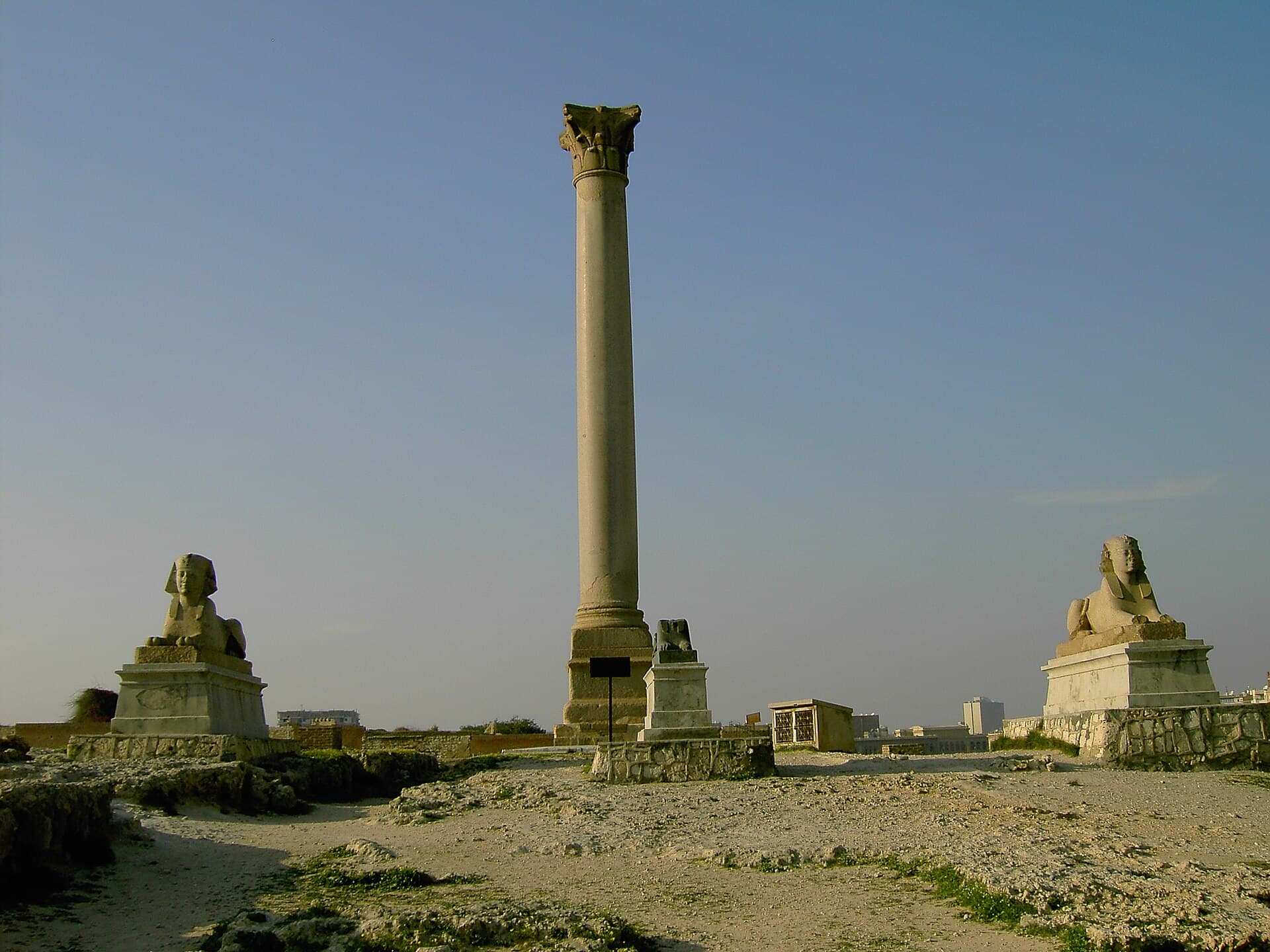
Rock-cut tombs on several levels underground in the Karmouz district, among Alexandria's most remarkable antiquities, dating from the second century AD in the Roman era. Their name means mound of shards, for the many pieces of broken pottery found on the site. They were found by chance in 1900 when a donkey fell into the access shaft. You descend a spiral staircase that winds around a shaft down which the dead were lowered, reaching funerary banquet halls and passages lined with hundreds of burial niches. The finest part is the main tomb, where ancient Egyptian art blends with Greek and Roman art in a unique way: Egyptian gods in the dress of Roman soldiers, two serpents guarding the entrance in the Egyptian manner but with Greek heads, and reliefs of embalming rites. Photography is not allowed in some parts. A foreign visitor's ticket costs about two hundred Egyptian pounds, and it opens from nine to five. The passages are damp and some steps slippery, so wear comfortable shoes. Combine it with nearby Pompey's Pillar in one visit.
Down into the rock.
Egyptian, Greek and Roman.
A donkey fell down the shaft.
Karmouz district, a few minutes from Pompey's Pillar
The passages are not very narrow and the halls fairly roomy, but it is underground, damp and reached by a long staircase, so it may not suit anyone with claustrophobia.