The peninsula path
Half an hour between pines and water — free.
Ma▀▄Ga — CC BY 4.0 · Bracodbk — CC BY-SA 3.0 · United Kingdom Hydrographic Office — Public domain · donald judge — CC BY 2.0
A small coastal town on a peninsula about **thirteen kilometres** south of Dubrovnik, and what remains of Roman **Epidaurum** — the settlement whose people fled raids in the seventh century and founded Ragusa, which is Dubrovnik itself. So Cavtat is **Dubrovnik's mother**, not its suburb. Today it is the quiet opposite of its larger neighbour: a palm-lined waterfront, fishing boats, cafés at reasonable prices, and a pine-covered peninsula circled by a **free coastal path** walkable in about half an hour — one of the loveliest walks in southern Croatia. Two things here are worth going into: the **Račić Mausoleum** on the cemetery hill, a white circular building designed by the sculptor Ivan Meštrović for a local family who lost their members in the 1918 epidemic — an affecting funerary work with carved lions and angels. And the **house of Vlaho Bukovac**, birthplace of Croatia's best-known painter, now a museum with his paintings and studio. ⚠ The best part is **the boat**: a scheduled service links it to Dubrovnik's old harbour in about 45 minutes across the water.
Half an hour between pines and water — free.
A Meštrović funerary work on the cemetery hill.
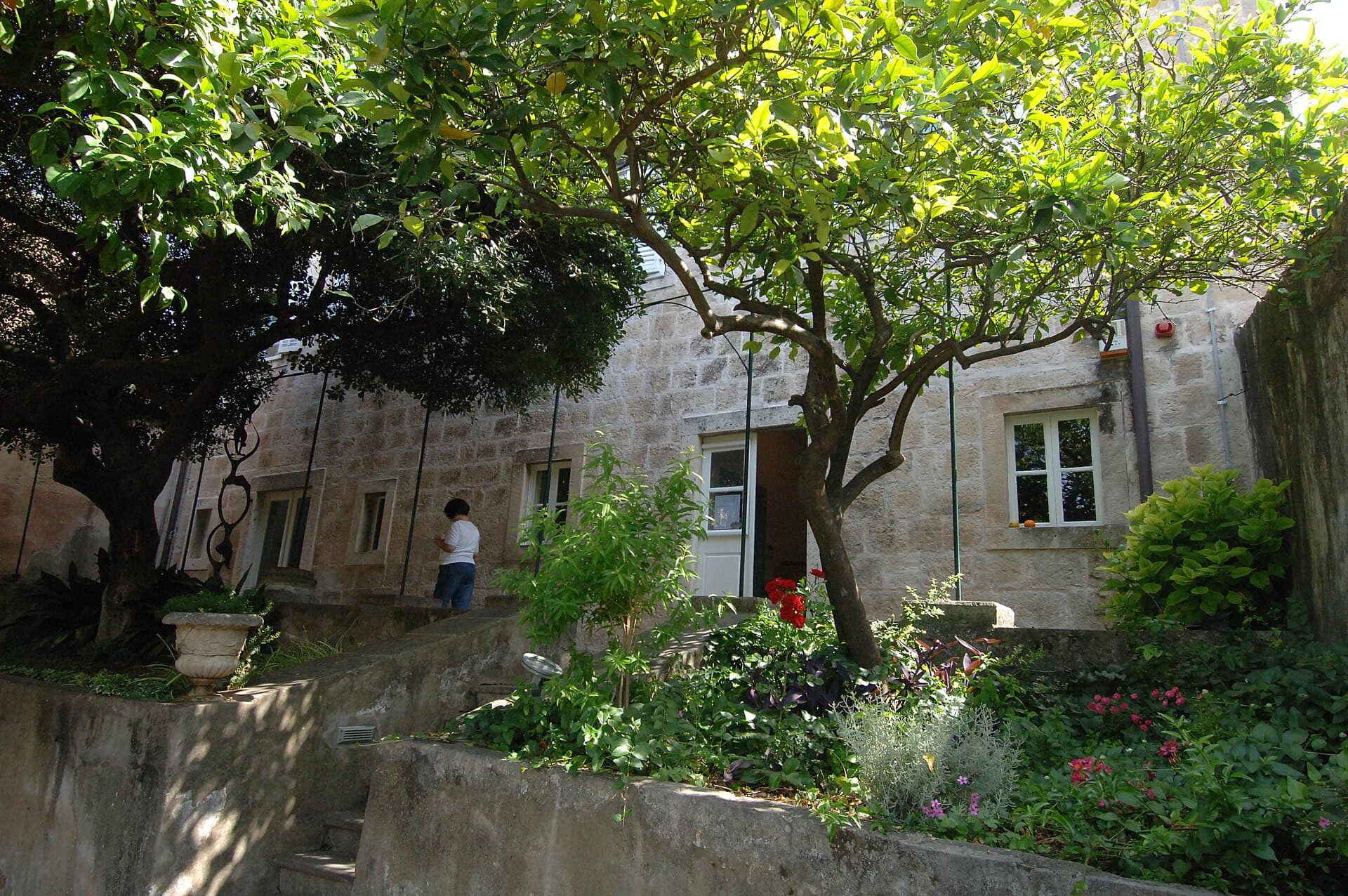
Birthplace and studio of Croatia's best-known painter.
20210 Cavtat, Konavle
A shrewd choice for many travellers. Prices in Cavtat are **clearly lower** — hotels, apartments and restaurants — the town is quiet and walkable and is not swamped by cruise passengers, its beaches are better, and it is **very close to the airport** (minutes), which makes arrival and departure easy. Dubrovnik is **45 minutes by boat** or 40 by bus, so you can visit the old town by day and return to the quiet in the evening. The one drawback: you won't be in the old town at dusk and at night, when it empties of the crowd and is at its finest.
One of **mother and daughter** rather than neighbours. A Roman city stood here called **Epidaurum**, an important port and settlement. In the seventh century raids destroyed it, and its people fled north and settled on a fortified coastal rock where they founded a new settlement they called **Ragusa** — which became Dubrovnik. So the people of Cavtat founded the city you visit today; Cavtat was later resettled and became part of the Republic's territory. You will hear the story often from locals, who are proud of it.