
The pool
Columns reflected in water.
Mohammad Saleh Mousavi — CC BY-SA 4.0 · Ninara — CC BY 2.0 · Amineh kermani74 — CC BY-SA 4.0 · B.Arefeh — CC BY-SA 4.0 · Ninara — CC BY 2.0
Chehel Sotoun, the «Forty Columns», is a 17th-century pavilion and garden in Isfahan, begun under Shah Abbas the Great and completed by Shah Abbas II for royal receptions and entertainments. It lies about 500 metres in a straight line from Naqsh-e Jahan Square. The garden is part of the «Persian Gardens» listed by UNESCO in 2011. Inside, frescoes painted around 1650 show royal receptions, alongside later Qajar-era paintings in miniature style on themes of life, love and joy. Today it is a museum. A porch of slender wooden pillars fronts the pavilion, mirrored in the long pool before it, and the reflection is said to double the number of columns. Inside, walls and ceilings shine with painting, tilework and mirror work, and tall trees and flowerbeds line the pool. The finest view is from the far end of the pool at sunset or after dark, when it is lit. The UK Foreign Office currently advises against all travel to Iran and warns that British nationals risk detention, so check official guidance before making any plans. We could not confirm the current state of this site.
Columns reflected in water.
Royal receptions.
Slender pillars.
Near Naqsh-e Jahan Square, Isfahan, Iran
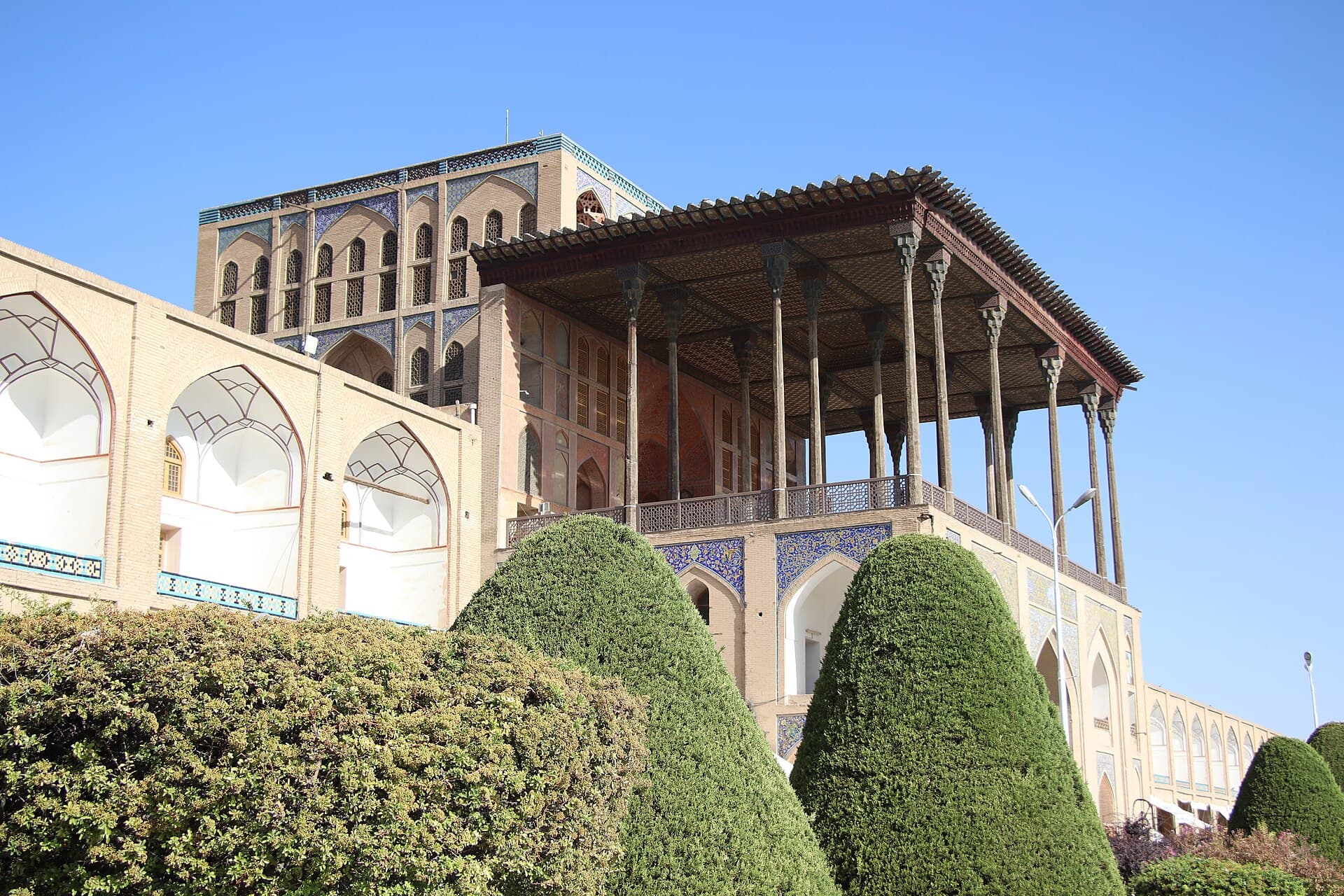 Ali Qapu PalaceAli Qapu, the «Grand Gate», is a royal palace on the west side of Naqsh-e Jahan 6 minutes walk
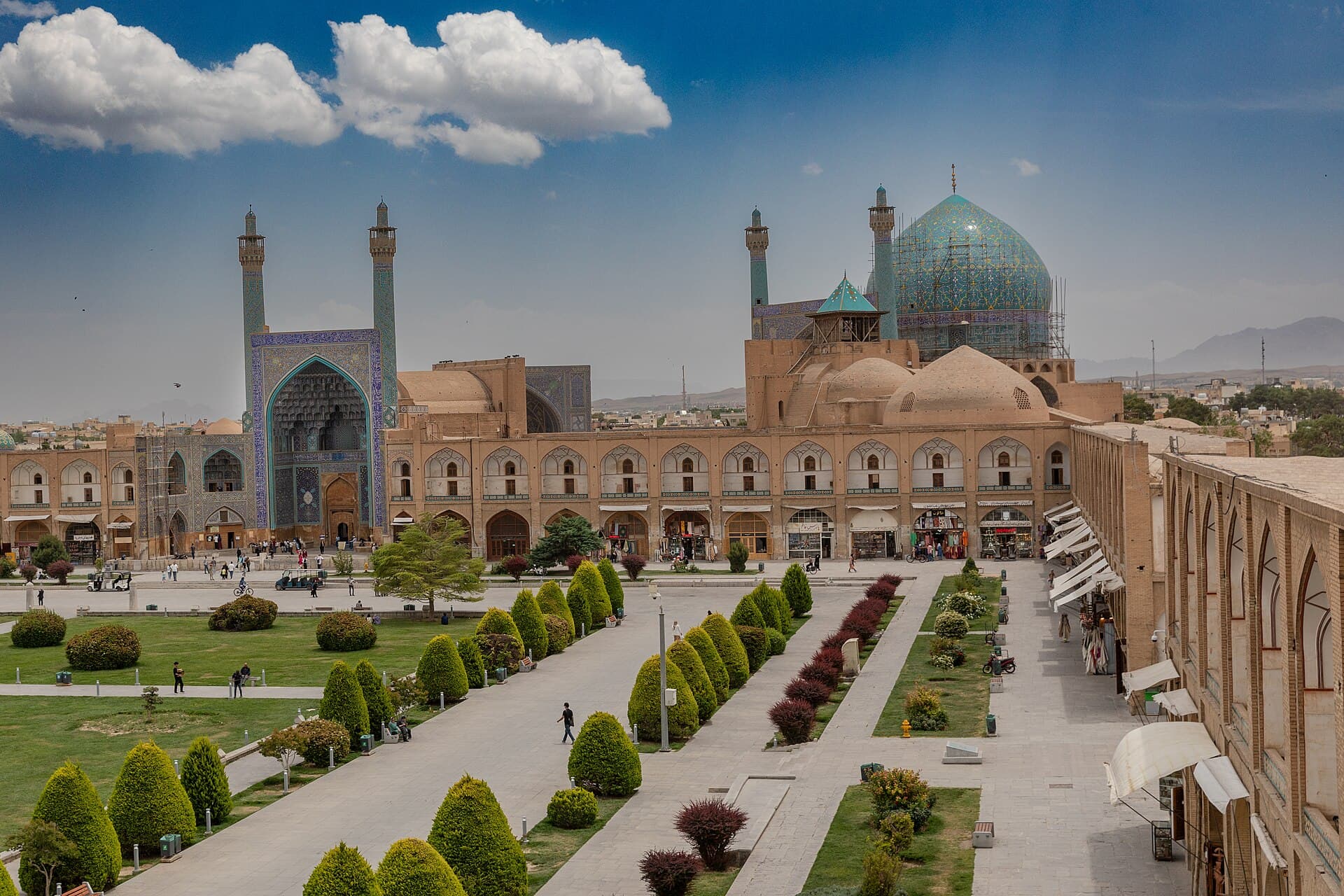 Naqsh-e Jahan SquareNaqsh-e Jahan Square, meaning image of the world, is a huge square at the centre7 minutes walk
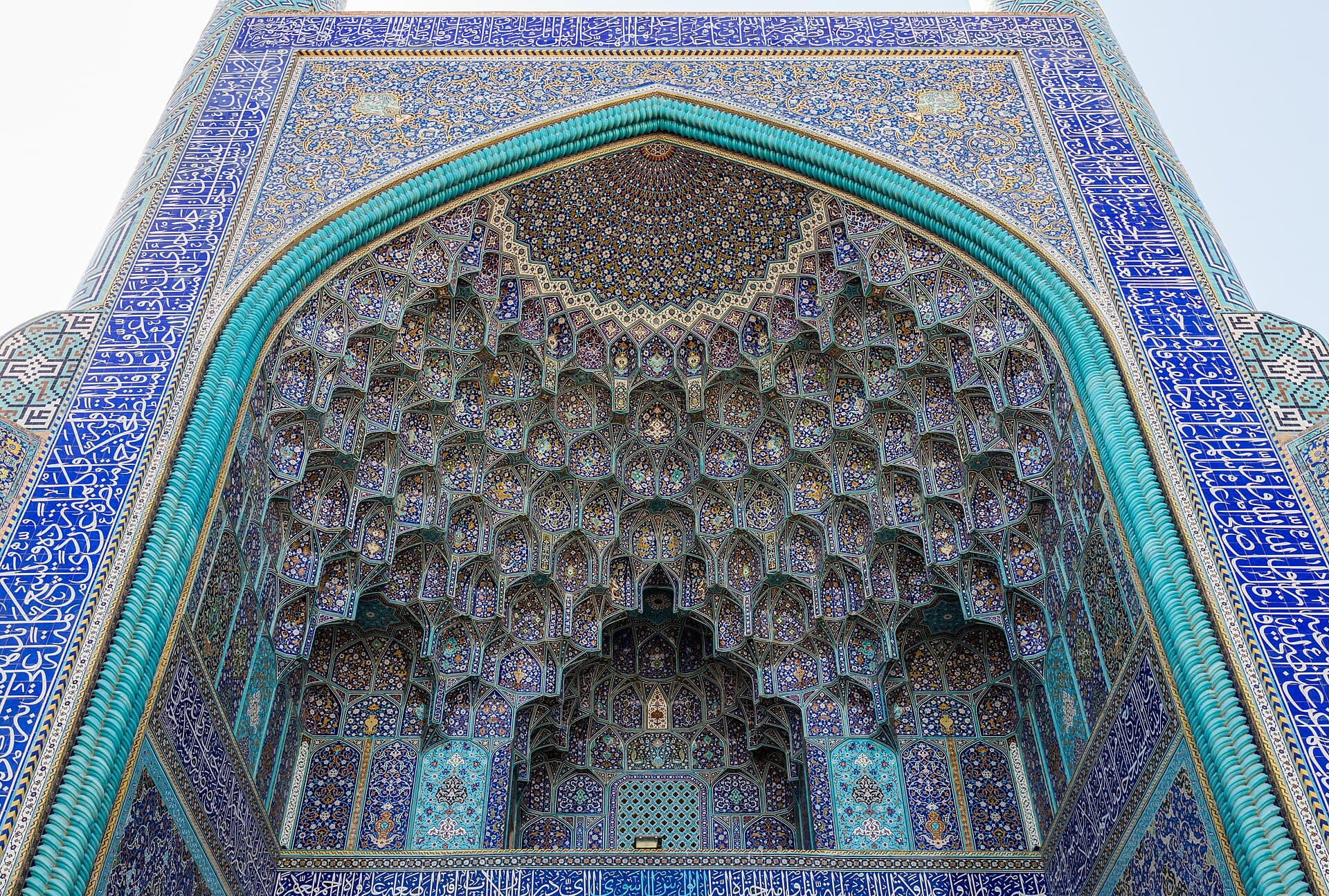 Shah MosqueThe Shah Mosque, officially known today as the Imam Mosque, stands on the south 8 minutes walk
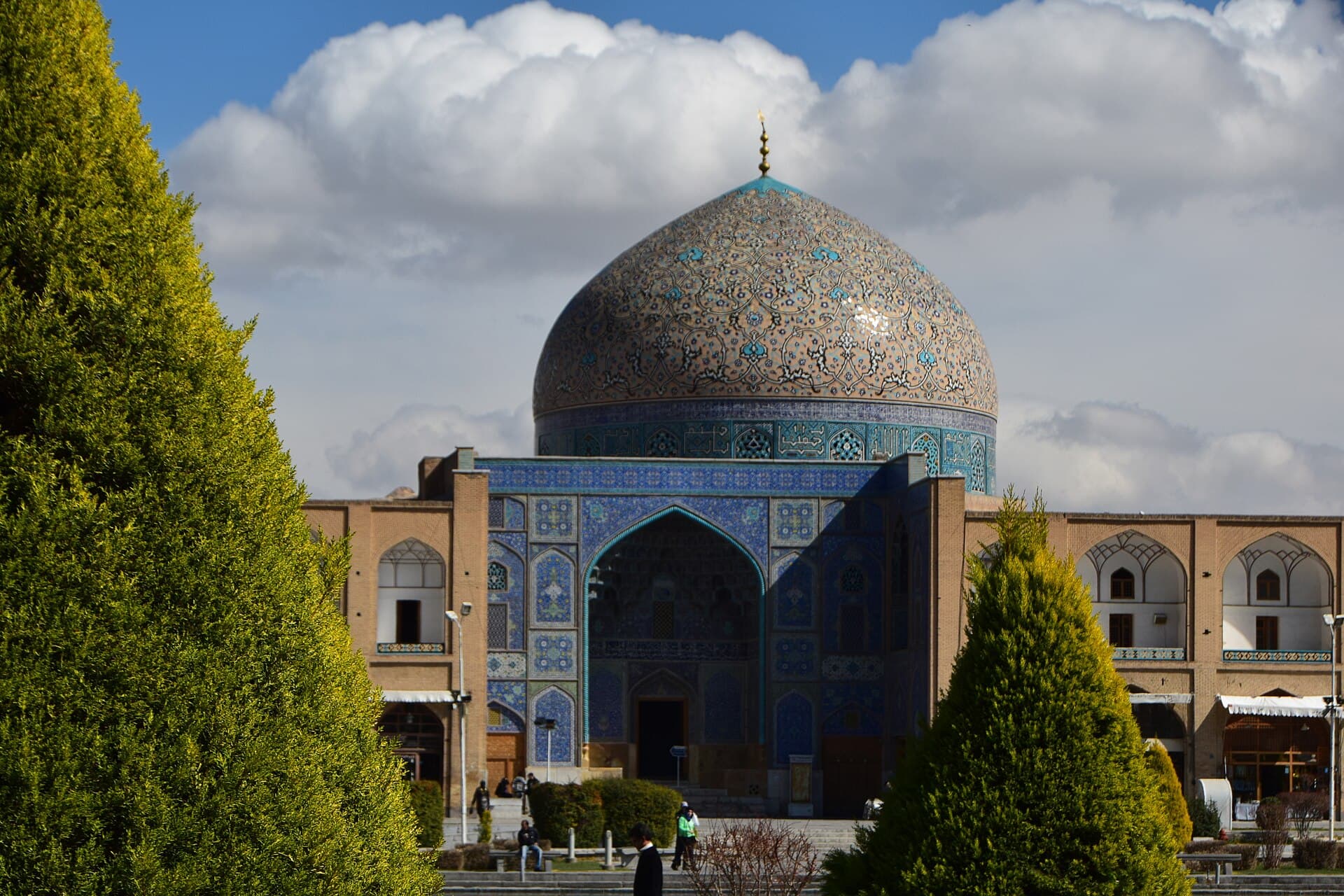 Sheikh Lotfollah MosqueSheikh Lotfollah Mosque stands on the east side of Naqsh-e Jahan Square in Isfah8 minutes walk
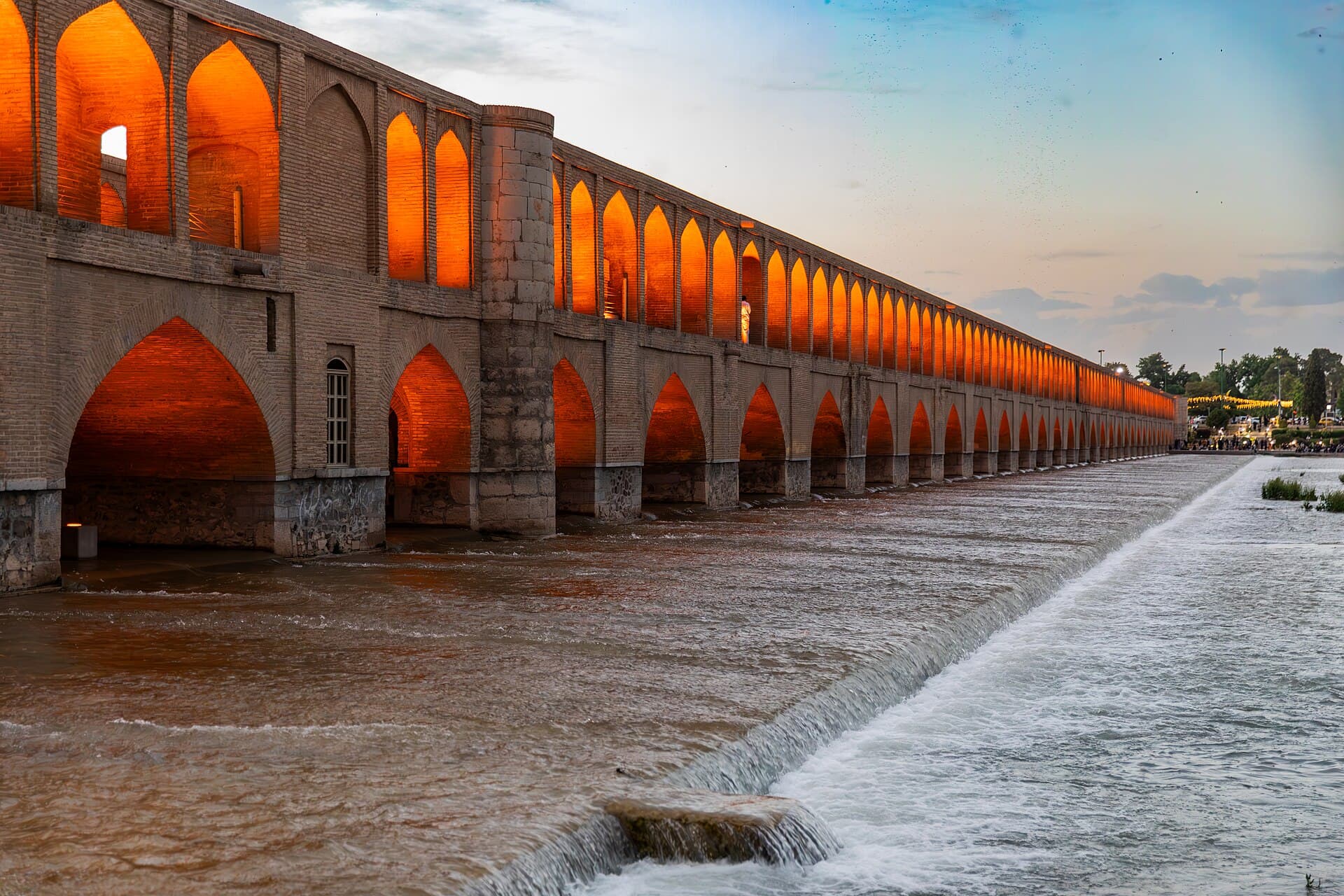 Si-o-se-polSi-o-se-pol, officially the Allahverdi Khan Bridge, is the largest of the eleven18 minutes walk
«Forty Columns»; the pool's reflection is said to double the pillars.
At sunset or after dark, when it is lit.