
New Walk to the Thames
A dead-straight avenue of limes and poplars that ends on the Thames bank, with the college boathouses a short way downstream.
Rhododendrites — CC BY-SA 4.0 · Bilal Yassine — CC BY-SA 2.0 · Andy Li — CC0 · Andy Li — CC0
Two minutes from Oxford's busiest shopping street, pedigree Old English Longhorn cattle graze from early spring to autumn under the towers of the college whose hall inspired the Hogwarts dining hall. This is Christ Church Meadow: a triangular flood meadow owned by Christ Church, bounded by the Thames to the south (known here as the Isis) and the winding Cherwell to the east. It stays open to everyone, free, in daylight hours all year, while the college next door charges around twenty-five pounds and must be booked online in advance. The natural loop starts at the St Aldate's gate through the War Memorial Garden, then turns down New Walk, a dead-straight avenue of limes and poplars that ends on the Thames bank, with the college boathouses a short way downstream on Boathouse Island. Come back along the Cherwell path, then along the wide gravel Broad Walk that separates the meadow from Merton Field, with one of the best views in the city of Merton College tower and the Victorian Meadow Building. The whole circuit is a little under two and a half kilometres, flat and gravelled: forty minutes at a walk, an unhurried hour with stops. For families: the main St Aldate's gate takes pushchairs easily, but the Rose Lane and Merton Street gates are narrow and a buggy will not fit through, so enter and leave by St Aldate's if you have one. There are no toilets and no cafe inside the meadow; the nearest are at the visitor centre and shop by the entrance, or the Westgate centre five minutes away, which also has halal options. Bikes are banned, dogs on leads are fine. Timing matters. The gates are locked at dusk, which means around half past four in midwinter and well after eight in June; the meadow closes only on 25 December. The lower fields by the river turn muddy after rain and occasionally flood outright in winter. The best time is late May during Eights Week, when the riverbank fills with rowing supporters, or an early summer morning before the city wakes. It is not worth a trip to Oxford on its own, but it is the finest free hour in the city if you are already there.
A dead-straight avenue of limes and poplars that ends on the Thames bank, with the college boathouses a short way downstream.
The college's pedigree Old English Longhorns graze the lower fields from early spring to autumn within sight of the city centre, to the delight of children.
One of the best free photographs in Oxford: the towers of Christ Church and Merton above open green field.
St Aldate's gate via the Christ Church War Memorial Garden, Oxford OX1 1DP
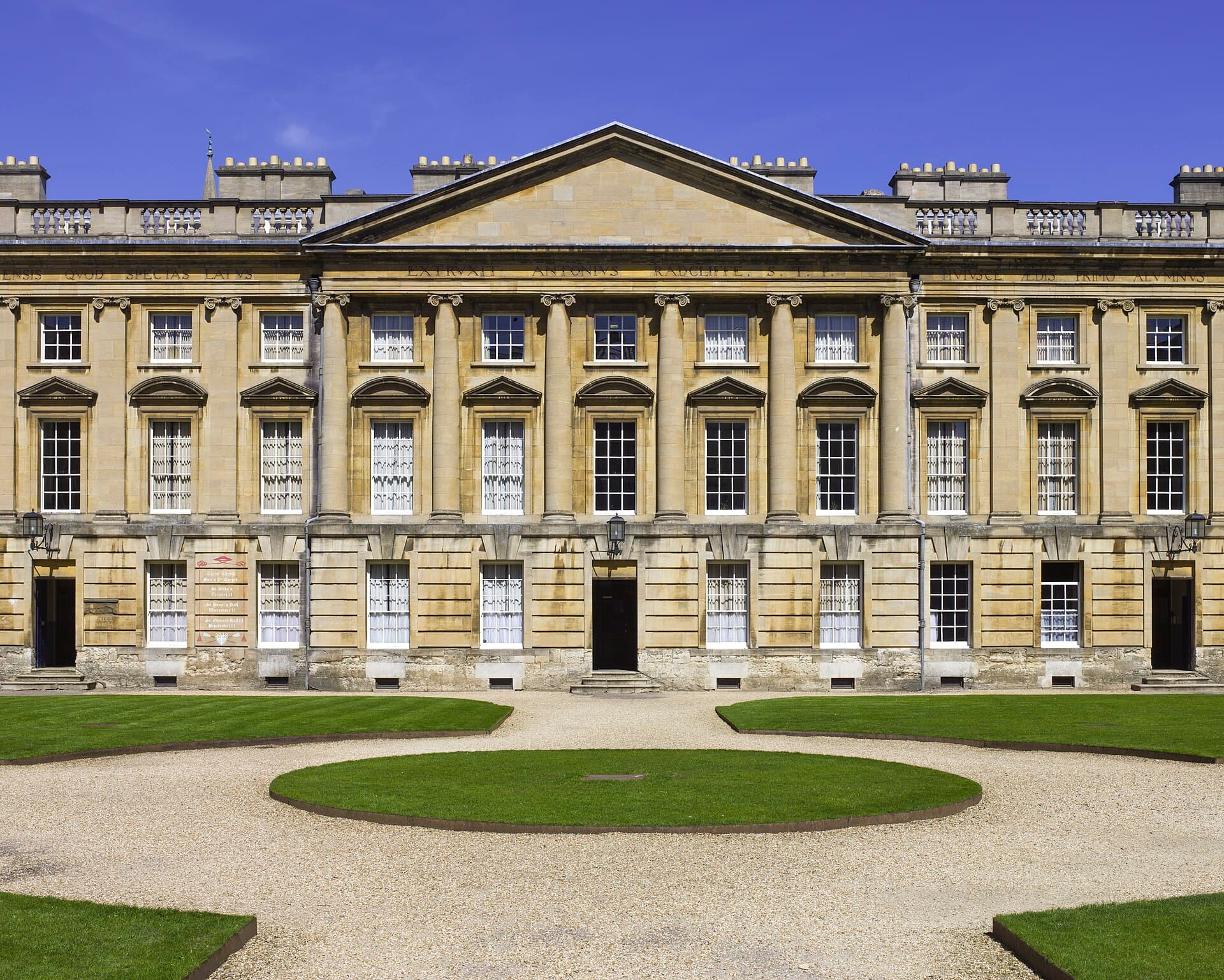 Christ ChurchThe dining hall your children know from the Harry Potter films is not here; it w5 minutes walk4.4
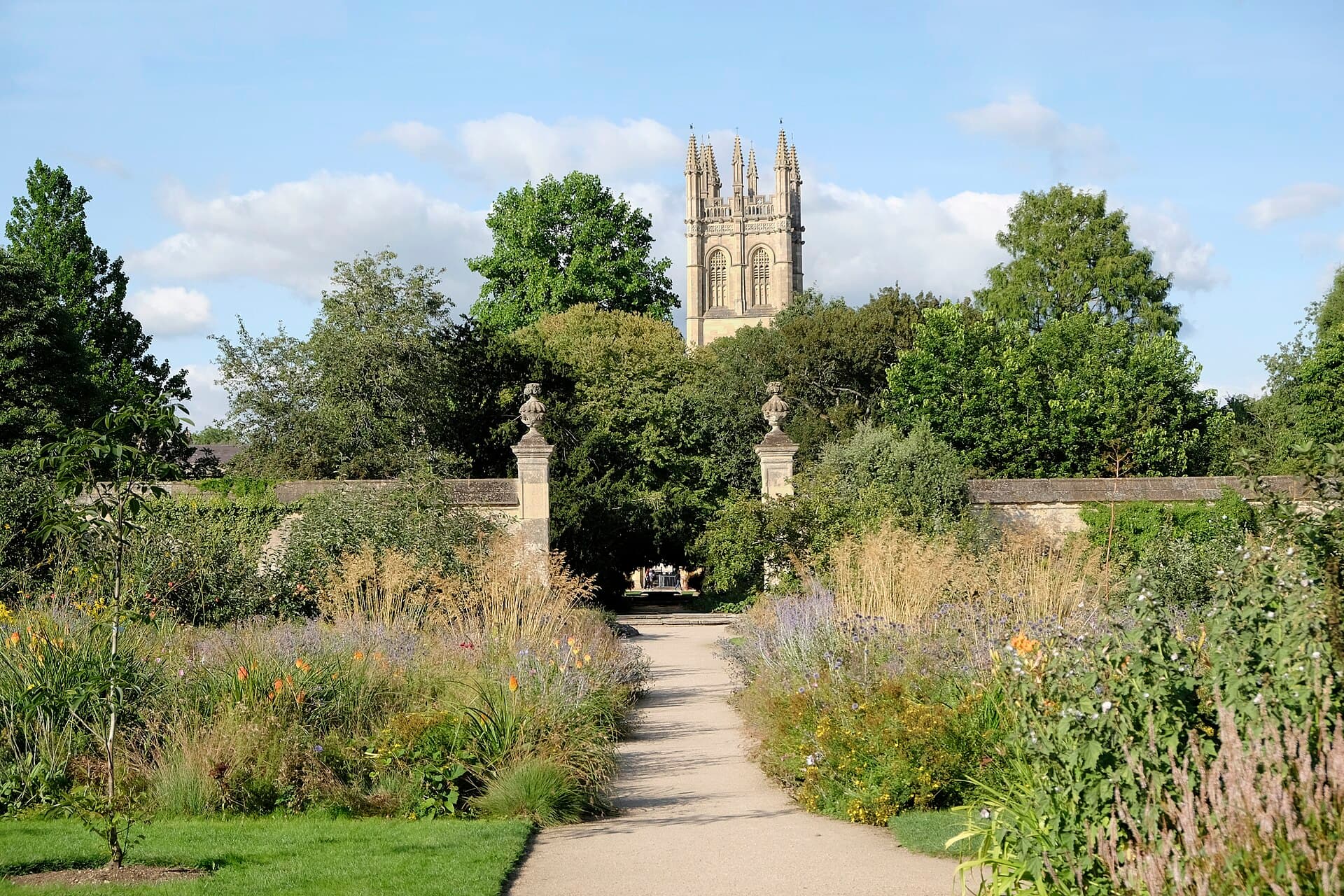 Oxford Botanic GardenBritain's oldest botanic garden was planted in 1621 to supply medical students w6 minutes walk4.4
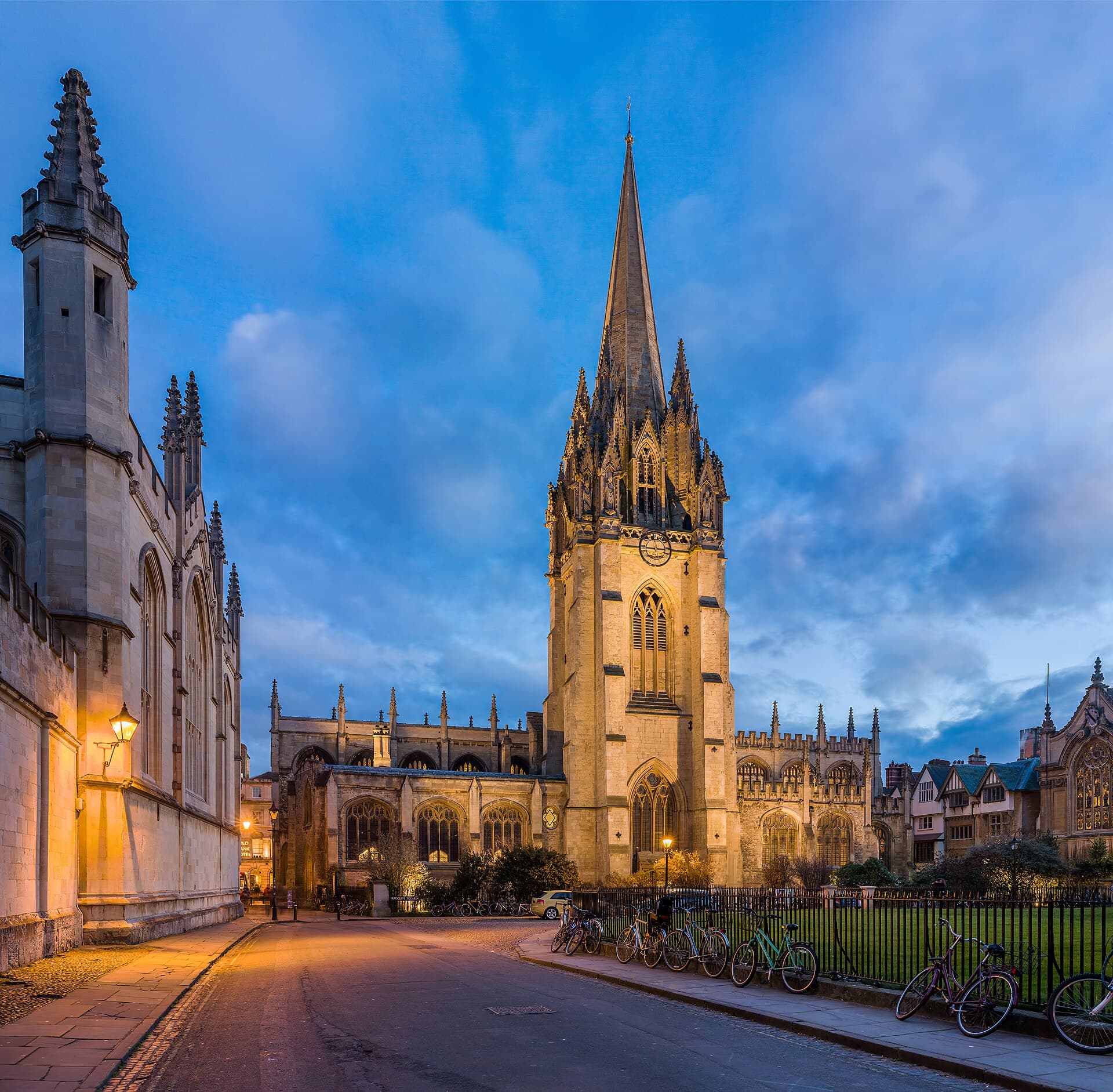 University Church of St Mary the VirginThe best photograph in Oxford is not taken from any street. It is taken from a n7 minutes walk4.8
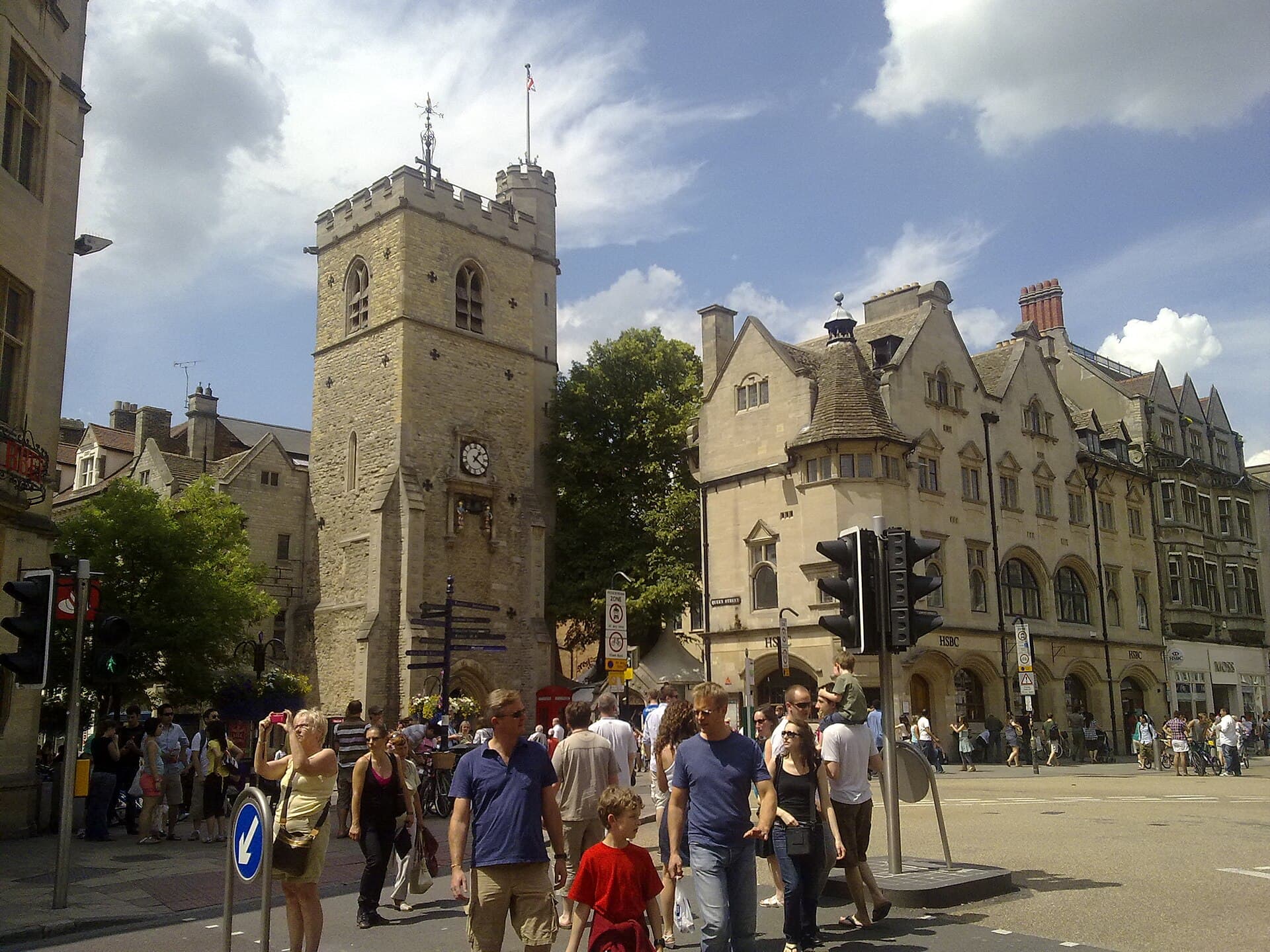 Carfax TowerOxford runs on an odd rule: nothing new in the city centre may rise higher than 8 minutes walk4.5
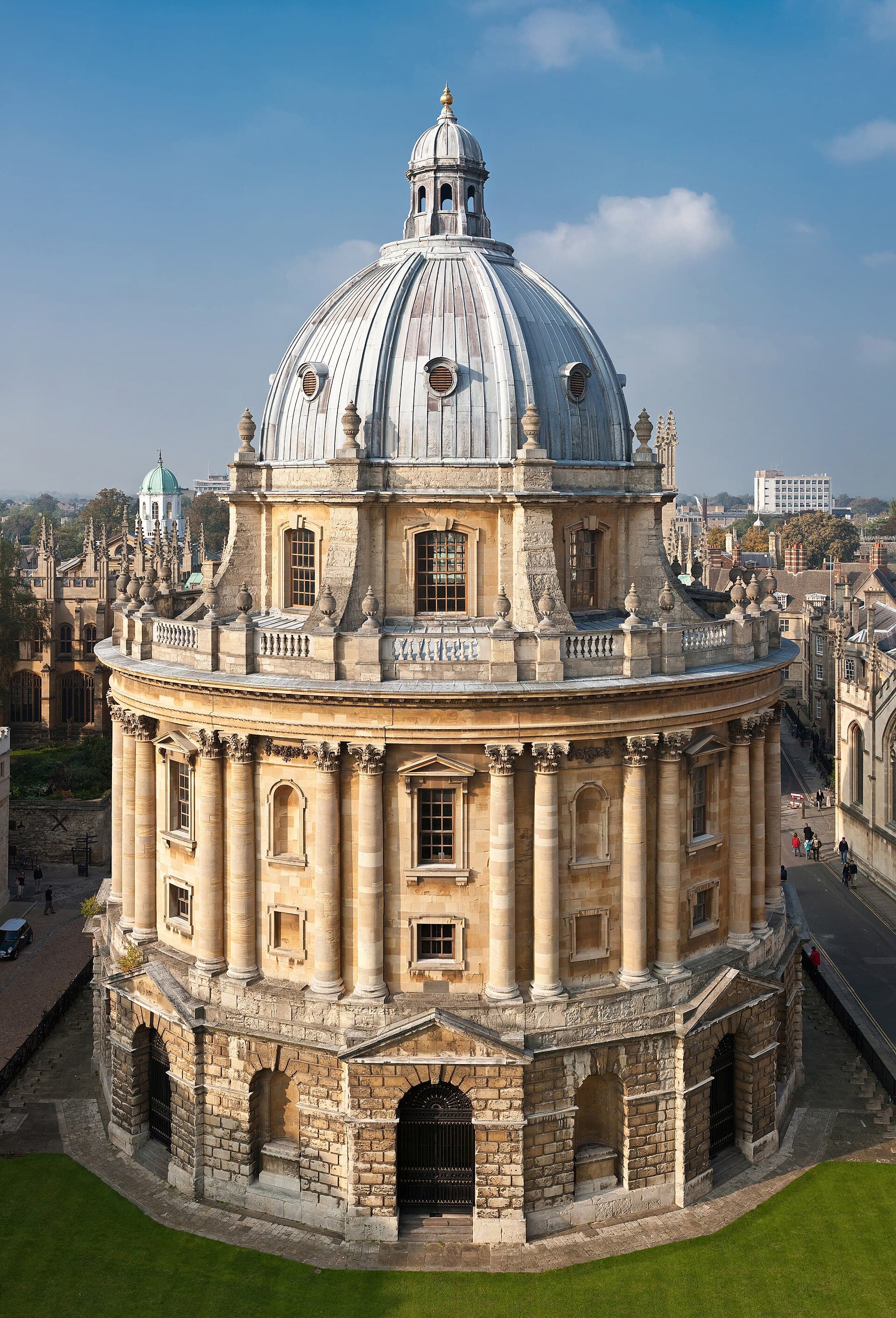 Radcliffe CameraOxford's most famous building is one you cannot walk into. The Radcliffe Camera,8 minutes walk4.6
If time is short the meadow is enough: the exterior of the college and the Meadow Building seen from Broad Walk is free and better than much of what is inside. Pay for the college only if someone in the group cares about the dining hall that inspired Hogwarts or the cathedral, and remember college tickets are booked online in advance and sell out in summer.
Yes, with a caveat: the upper gravel walks (Broad Walk and New Walk) stay passable, but the lower fields by the river turn to mud after rain and can flood completely, and the cattle will have left for their winter farm. The gates lock before five in December, so make it an afternoon walk, not an evening one.