
Cobbled lanes
Portuguese paving.
Embajada de los Estados Unidos en Uruguay from Montevideo, Uruguay — Public domain · Ypsilon from Finland — CC0 · Ypsilon from Finland — CC0 · Photograph by Mike Peel (www.mikepeel.net). — CC BY-SA 4.0
One of South America's loveliest colonial towns, founded by the Portuguese in 1680 on a small peninsula facing Buenos Aires across the Río de la Plata, then fought over by Portugal and Spain for more than a century, leaving a unique blend of both styles. UNESCO listed it as World Heritage in 1995. Its streets are paved with irregular stones in the Portuguese manner, sloping down to the water between low stone houses with tiled roofs, walls in faded yellow, pink and red, shady trees, climbing vines and old cars parked as if part of the set. The quarter holds the broad Plaza Mayor with the ruins of the governor's house, several small museums on one ticket, the lighthouse, the town gate and walls, and restaurants and cafés with quiet courtyards. Sunset over the river from the old town is one of Uruguay's finest sights. Colonia is about two and a half hours by bus from Montevideo and an hour or more by ferry from Buenos Aires, so many visit in a day.
Portuguese paving.
Old ruins.
Over the Plata.
Peninsula on the Río de la Plata, Colonia del Sacramento
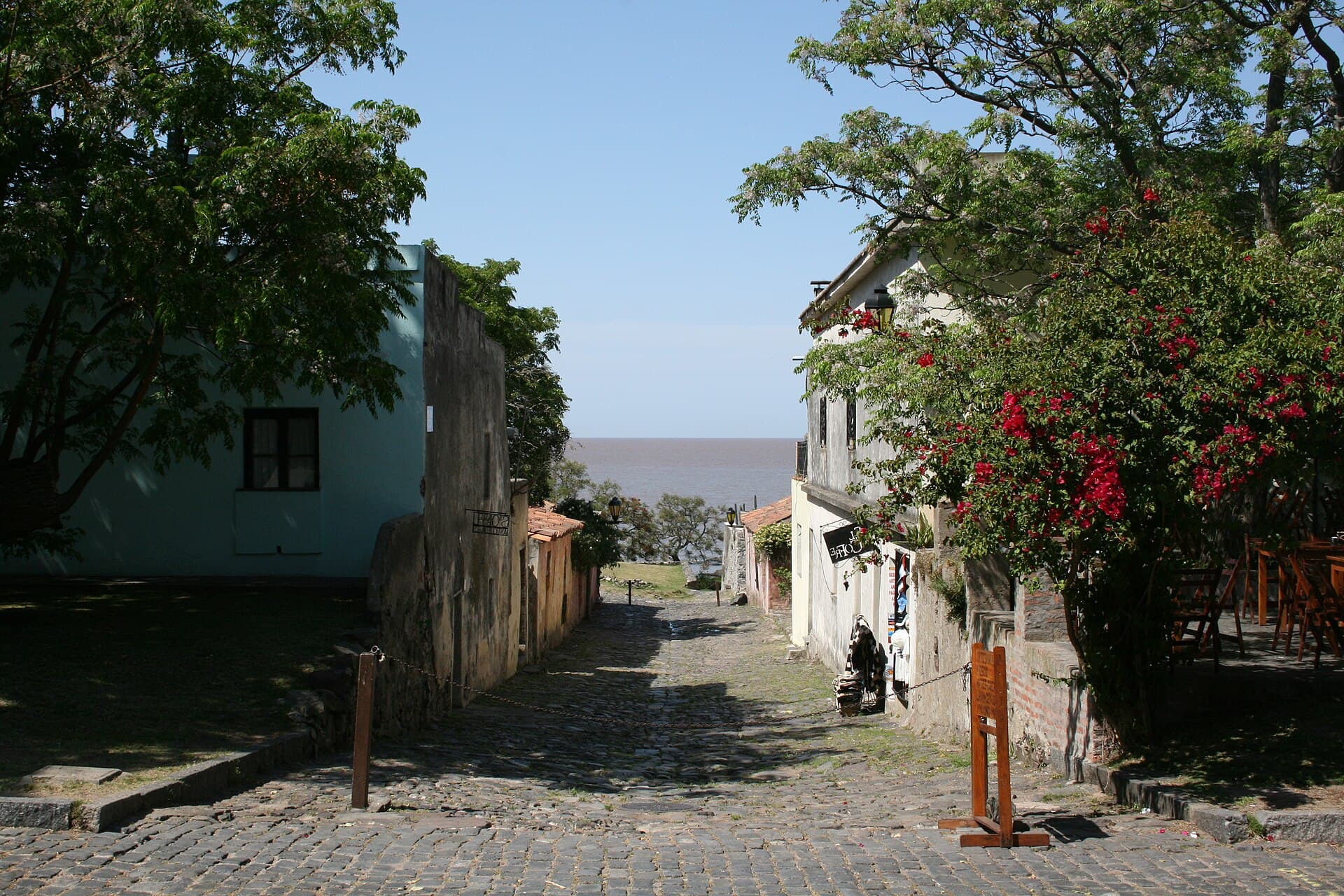 Calle de los SuspirosColonia's best-known and most photographed street, a short, narrow lane sloping 2 minutes walk4.6
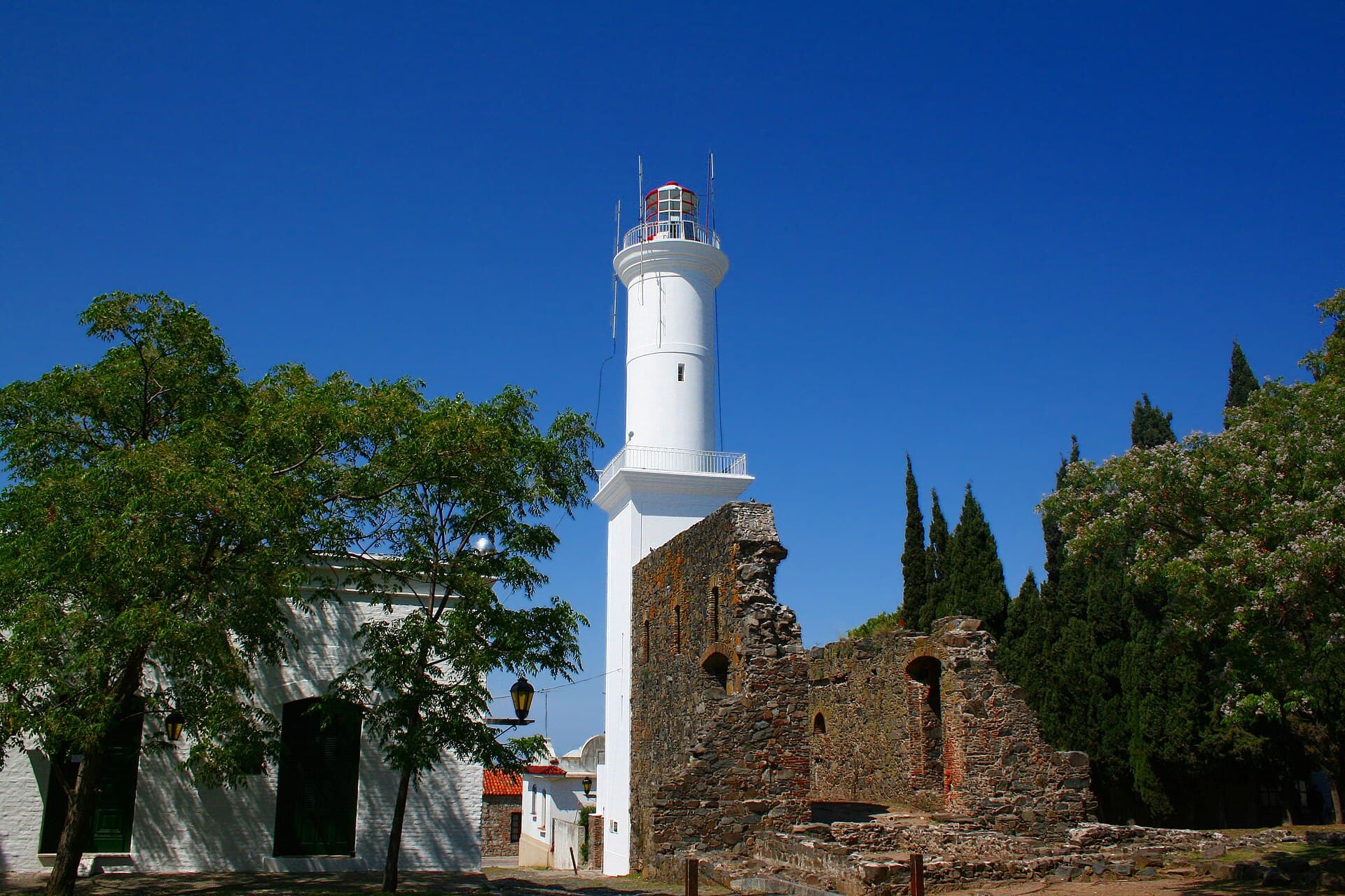 Colonia del Sacramento LighthouseAn elegant white lighthouse at the heart of the historic quarter, built in 1857 2 minutes walk4.5
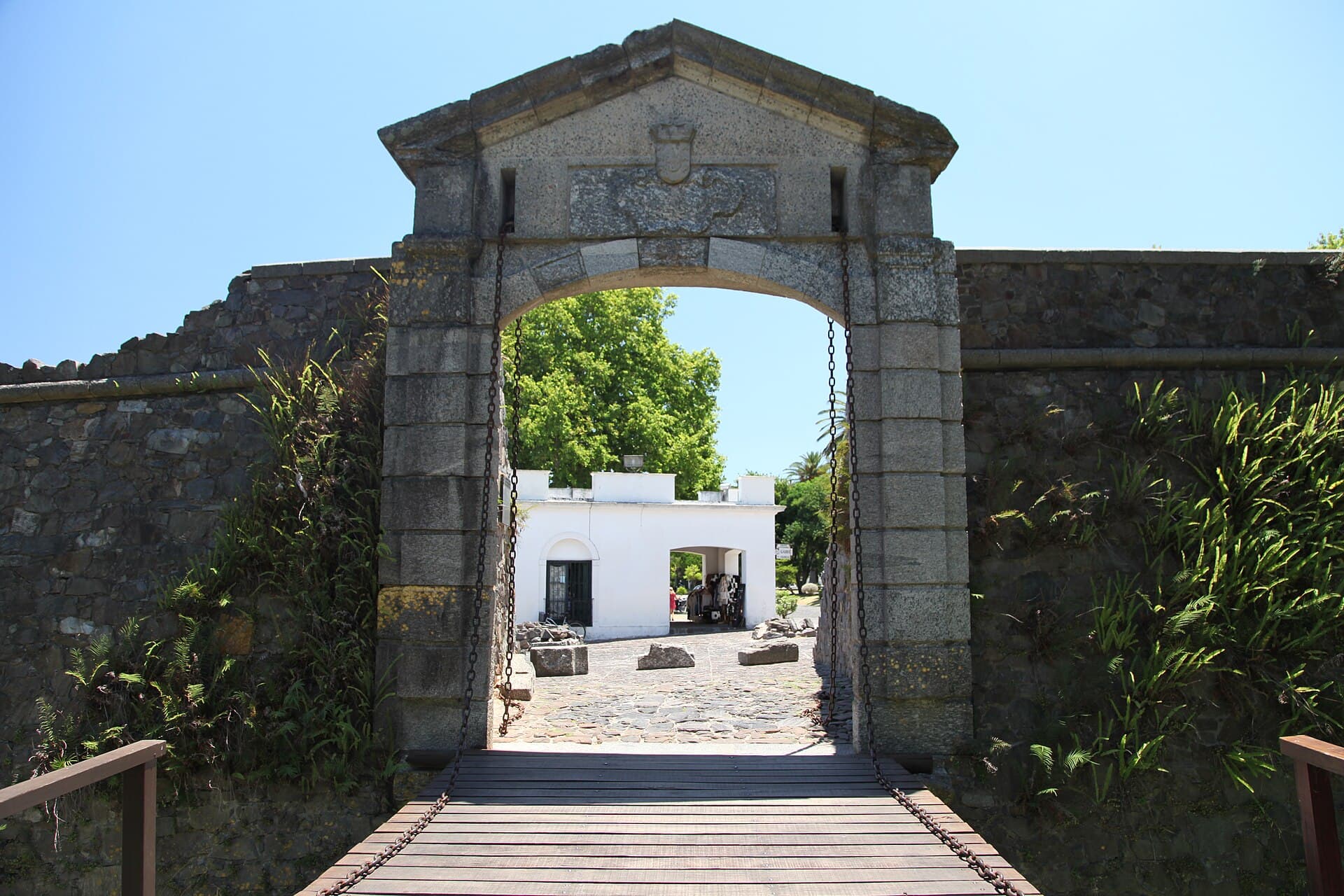 Portón de Campo and the Walls of ColoniaThe old town's main gate, built by the Portuguese in 1745 in the walls that ring2 minutes walk4.9
A day covers the historic quarter, but a night lets you see the sunset and the quiet streets after the day visitors leave.