
Calle El Conde
The pedestrian street.
Dr. Thomas Liptak — CC BY-SA 4.0 · Martin Falbisoner — CC BY-SA 4.0 · -wuppertaler — CC BY 4.0 · Brent — CC BY 2.0
The capital's old heart and the oldest continuously inhabited European settlement in the Americas, founded by the Spanish at the end of the fifteenth century on the west bank of the Ozama River and spread over about one square kilometre inside its old walls. UNESCO lists it as World Heritage, and locals simply call it «La Zona». Its straight, paved streets gather the New World's «firsts»: the first cathedral, palace and fortress, and the first paved street, Calle Las Damas, running between sixteenth-century stone houses. Calle El Conde is a long pedestrian street of cafés, shops and vendors linking the central square, Parque Colón, with the Puerta del Conde, where the country's independence was proclaimed in 1844. The district is dotted with small shady squares, colourful houses with iron balconies, museums in old mansions, and ruined convents and churches of coral stone. It is best explored in the morning or just before sunset, when the heat eases. The Colonial City is busy and patrolled by tourist police; watch your belongings, use registered taxis or ride apps, and avoid walking alone late at night.
The pedestrian street.
The first paved street.
The central square.
West bank of the Ozama River, central Santo Domingo
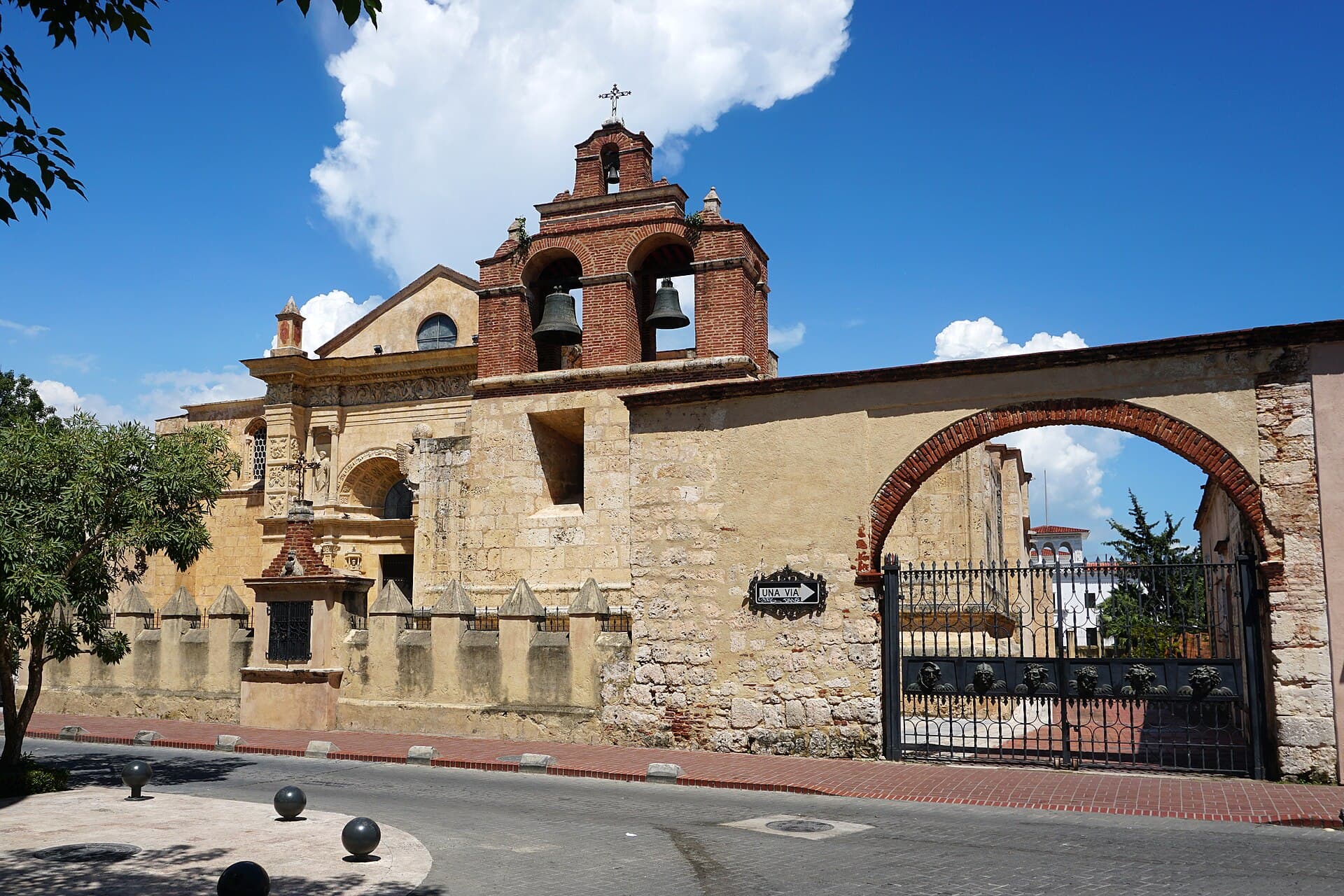 Santo Domingo Cathedral and Parque ColónThe oldest standing cathedral in the Americas, begun in 1504 and completed in 154 minutes walk4.9
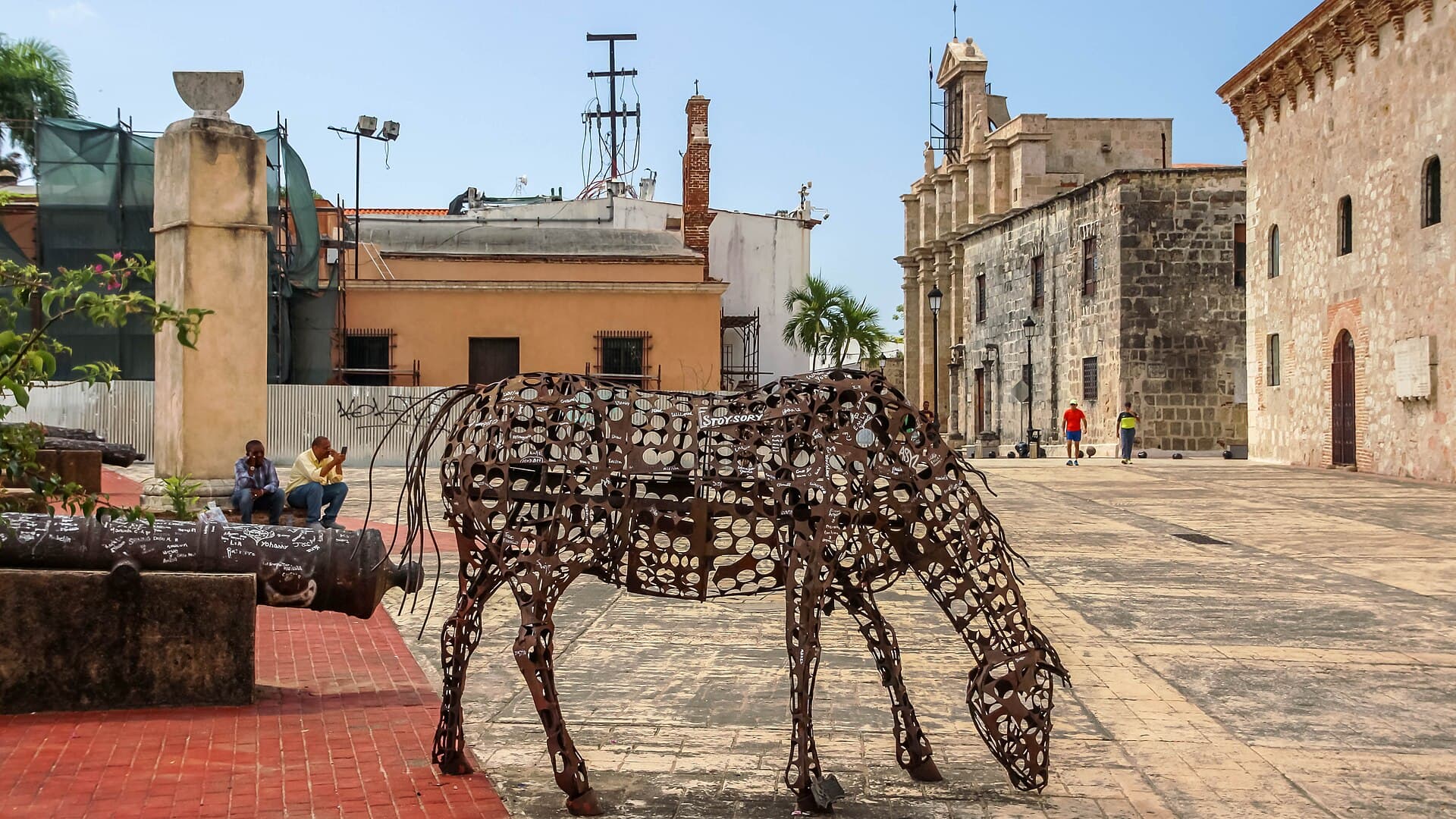 Museo de las Casas RealesThe oldest seat of Spanish power in the New World, a sixteenth-century stone bui5 minutes walk4.7
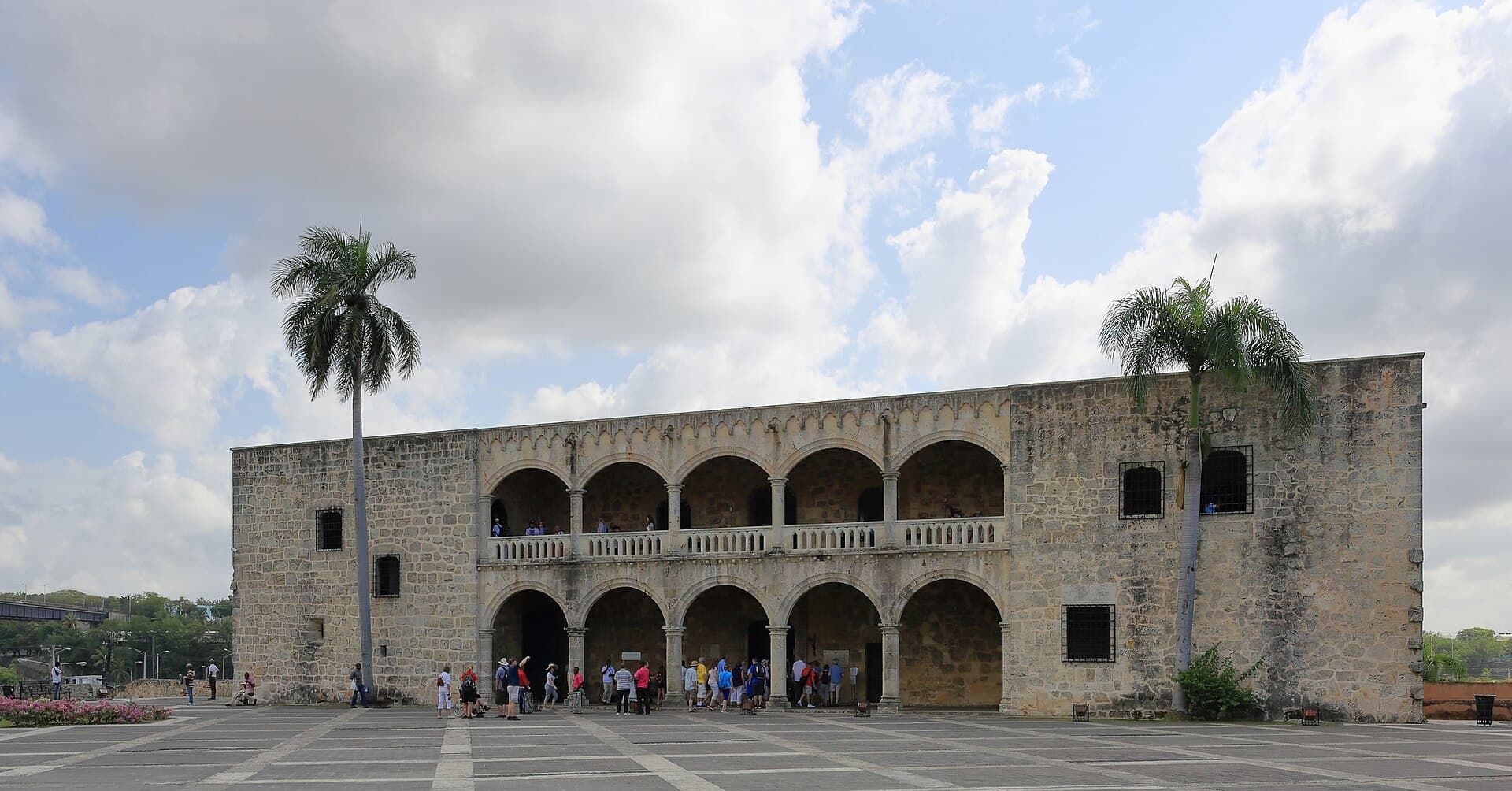 Alcázar de ColónThe first fortified European palace built in the Americas, raised by Diego Colón6 minutes walk4.5
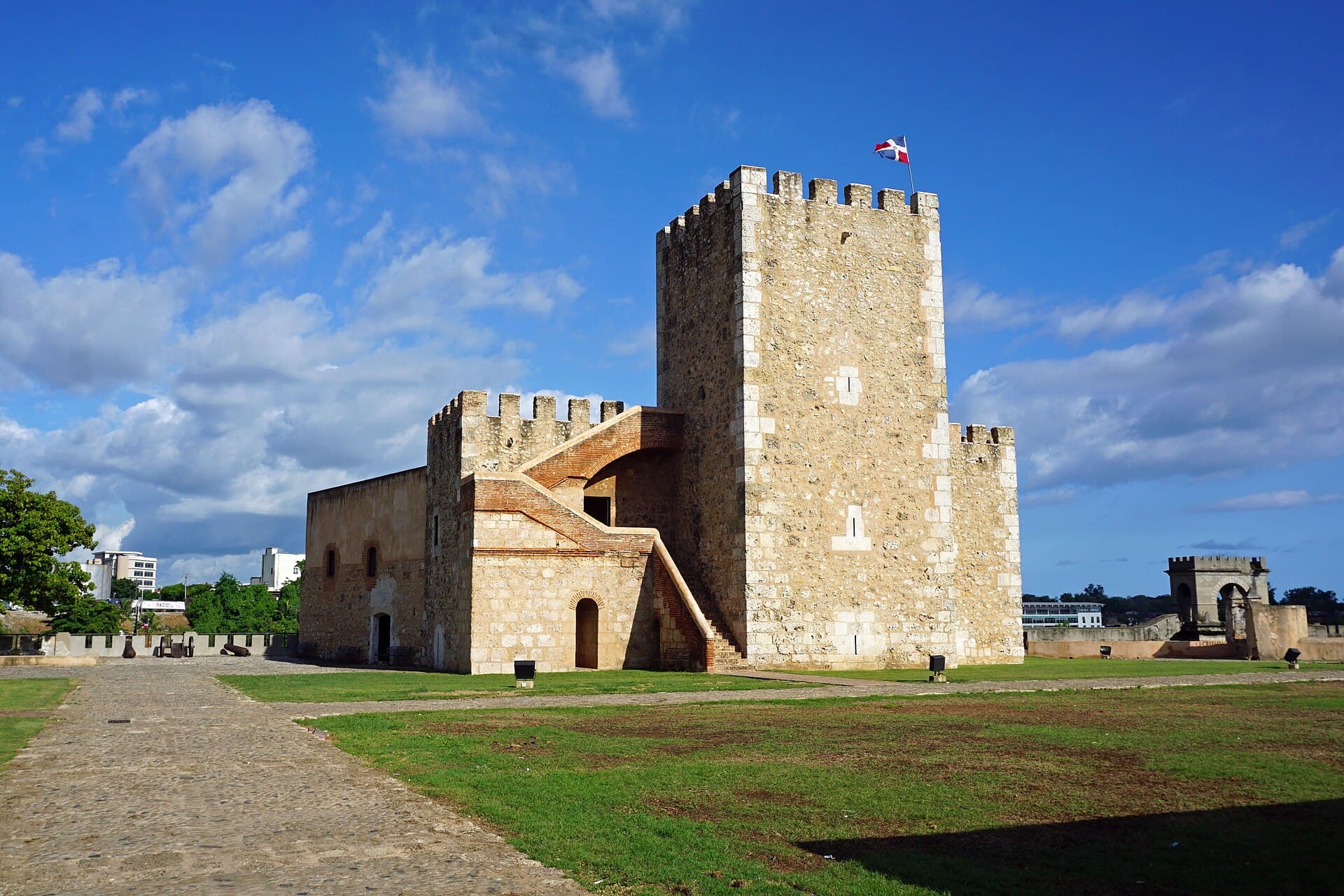 Fortaleza OzamaThe oldest European military building in the Americas, built by the Spanish betw7 minutes walk4.5
One day covers the main sights on foot; two allow time for its museums.