
The Chronophage
A gold grasshopper that creeps one step a second, snaps its jaws on every dying minute and occasionally blinks.
Rror — CC BY-SA 3.0 · Michael Garlick — CC BY-SA 2.0 · Richard Humphrey — CC BY-SA 2.0 · Tanya Hart — CC BY-SA 2.0
A clock that cost a million pounds, has no hands, and is deliberately correct only once every five minutes. That is the Corpus Clock, the rippling gold disc set into the front of the Taylor Library at Corpus Christi College, on the corner where Bene't Street meets Trumpington Street opposite King's Parade. Stephen Hawking unveiled it on 19 September 2008, and Time magazine listed it among the best inventions of that year. The money and the idea came from John Taylor, a Corpus alumnus who made his fortune inventing the thermostat inside electric kettles, and who wanted to salute John Harrison, the eighteenth-century clockmaker behind the grasshopper escapement. Hence the creature crouched on top of the dial: a grasshopper-locust hybrid called the Chronophage, the time-eater, which creeps forward one step a second, opens its jaws at the half-minute and snaps them shut as the minute dies, blinking its gold eyelids now and then. There are no numerals: the hours, minutes and seconds are read from three rings of slits lit by blue LEDs behind the 24-carat gold-plated steel. On the hour there is no bell, just the rattle of a chain and a hammer knocking on a small wooden coffin hidden at the back. Subtle it is not. Be honest with yourself: this is a two- or three-minute stop, seen from the pavement, free, at any hour of day or night. It is at its best after dark, when the blue rings glow against the gold, which makes it one of the few Cambridge sights that gains from an early English winter dusk. Do not cross town for it alone; fold it into the natural walk between King's College and Great St Mary's on one side and the Fitzwilliam Museum on the other. A small crowd builds against the glass on the hour, so if you want a clean photograph, arrive a few minutes early or wait for them to drift away. For families it is an easy win: children rate a monster that eats and blinks above any college court, and the level pavement suits pushchairs. The protective glass earned its keep in March 2023, when a vandal put a hammer through it and the mechanism survived untouched; the clock was back in place by late June. It is a twenty- to twenty-five-minute walk from the railway station, or a few minutes from the Grand Arcade car park if you have driven in.
A gold grasshopper that creeps one step a second, snaps its jaws on every dying minute and occasionally blinks.
Three rings of slits glow with blue LEDs behind the gold, and the clock is deliberately exact only once every five minutes.
No bell, just a chain rattling and a hammer knocking on a wooden coffin hidden behind the dial, and a small crowd gathers to hear it.
Corner of Bene't Street and Trumpington Street, Corpus Christi College, CB2 1RH
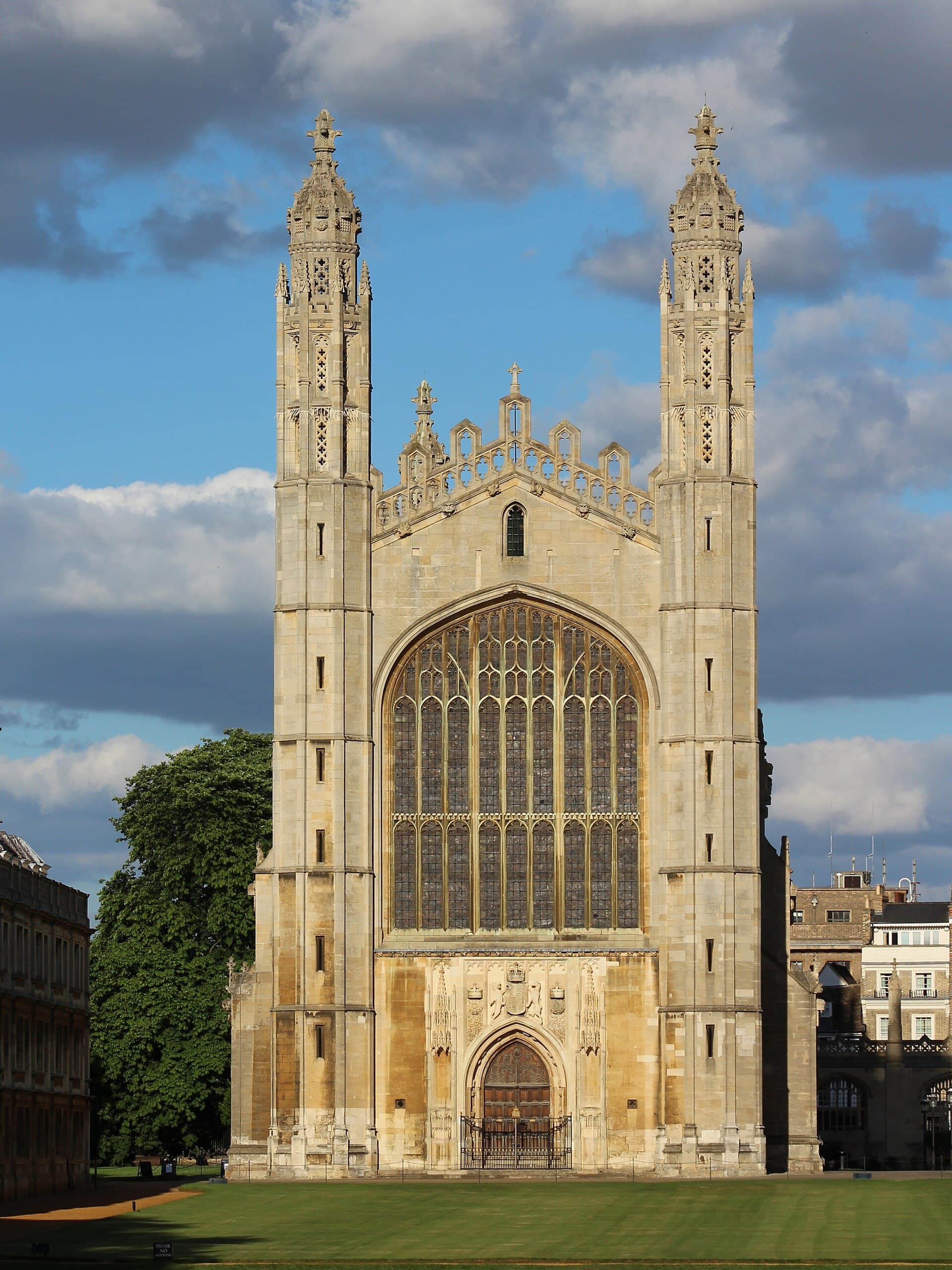 King's College ChapelLook up before anything else. The ceiling of King's College Chapel is the larges1 minute walk4.6
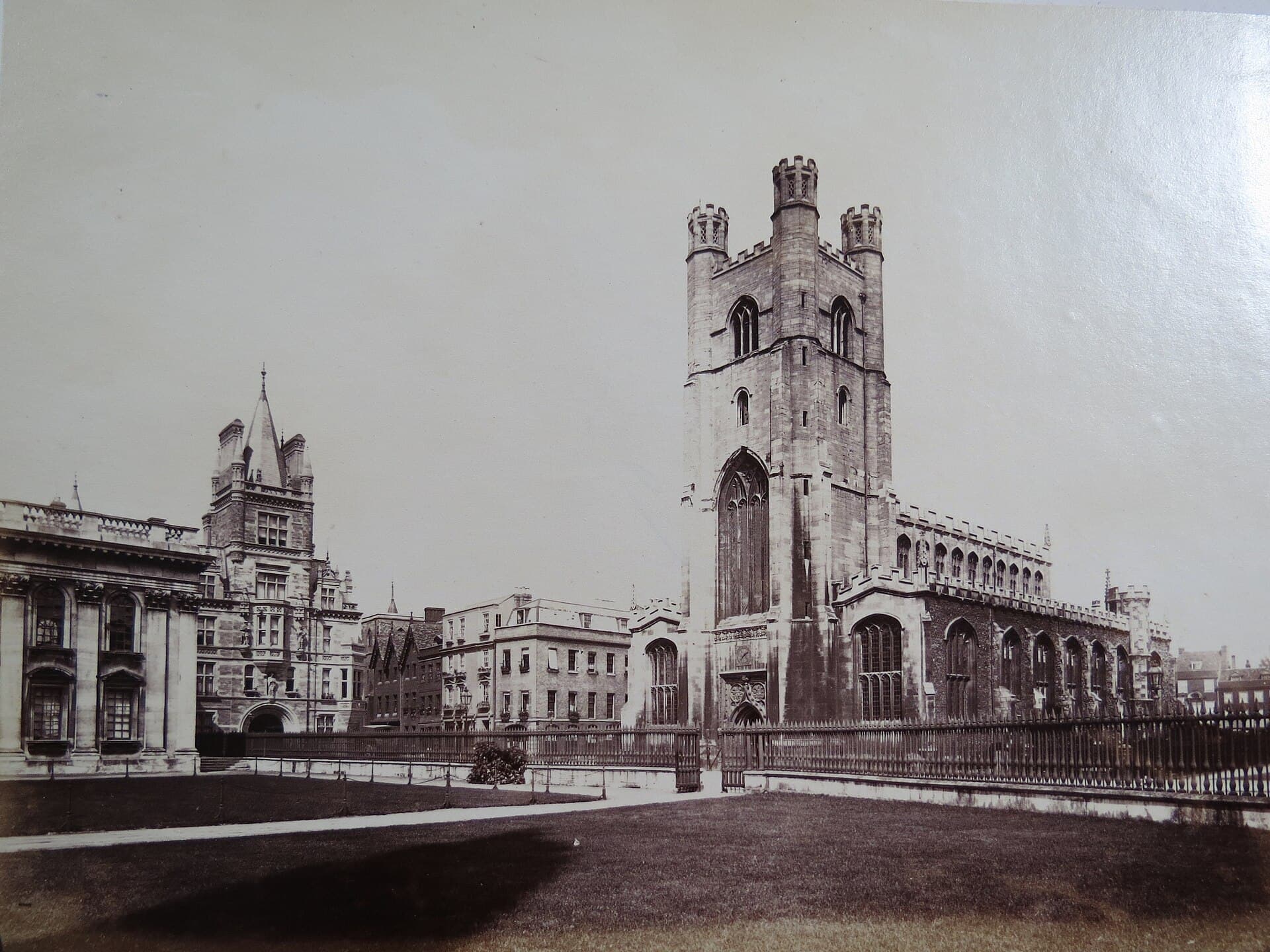 Great St Mary's ChurchThe tune the whole world knows as the Big Ben chimes was written for this tower,2 minutes walk4.7
 Cambridge Market SquarePeople have been buying and selling on this patch of ground since Saxon times, c2 minutes walk4.4
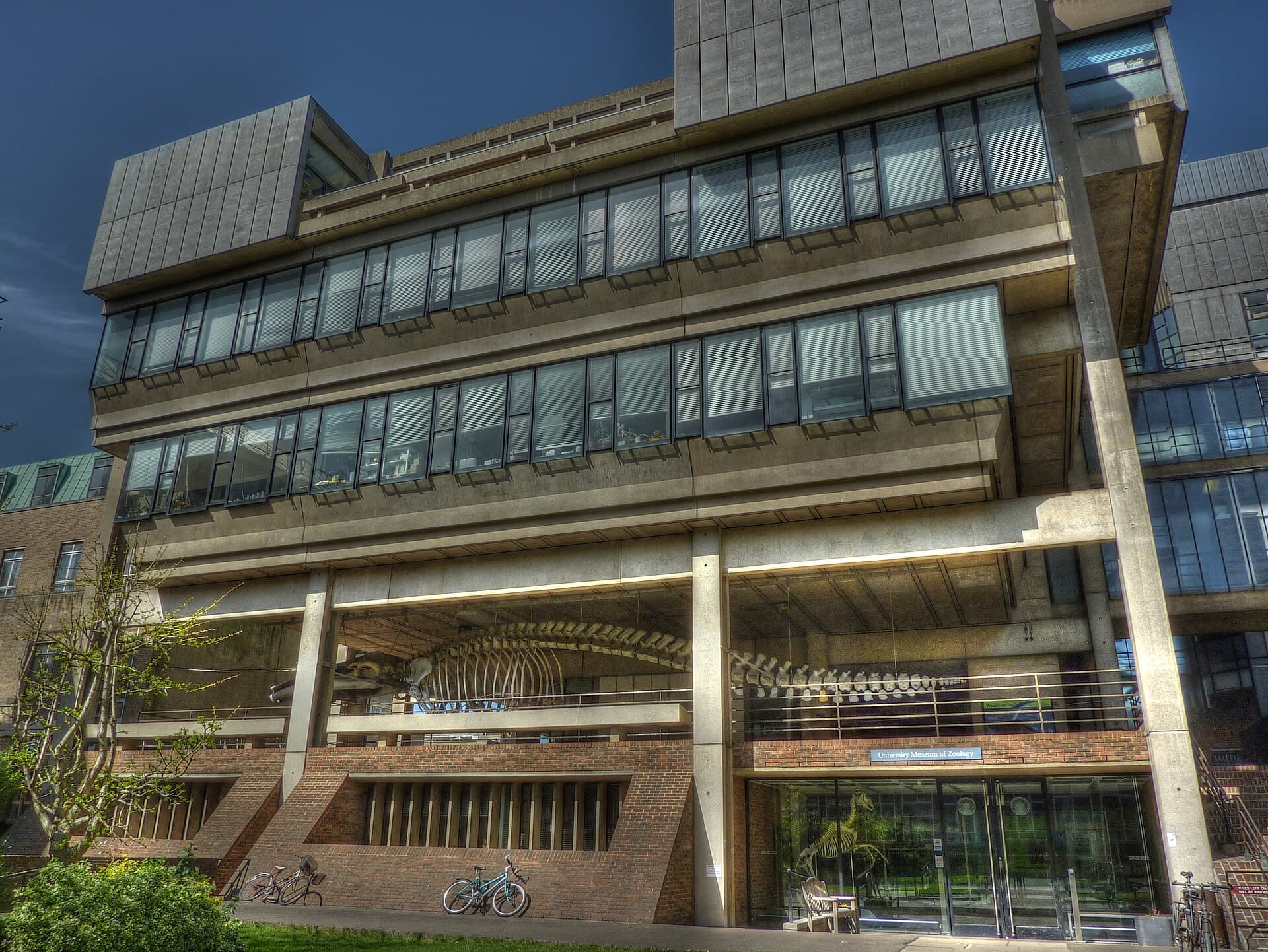 Museum of ZoologyA fin whale skeleton more than 21 metres long hangs over your head before you ha3 minutes walk4.8
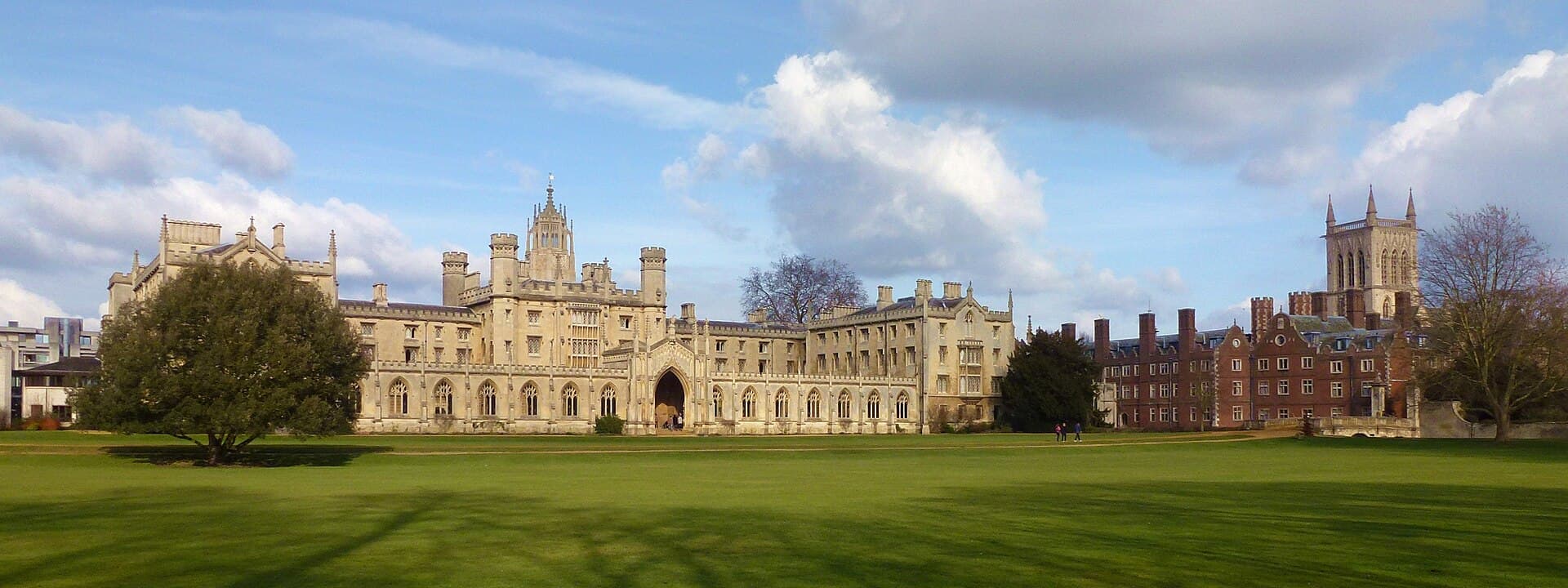 The BacksCambridge's most famous view is not seen from the street every visitor knows, bu3 minutes walk4.5
No. It is a two-minute stop on the pavement, but it sits right on the walk between King's College and the Fitzwilliam Museum, so you will pass it anyway. If you are in town in the evening, come after dark: the blue rings look far better in the gloom.
No. The clock is built into the front of a working student library and is not open to the public; the custodian gives a tour on the college's annual name day for the college's own guests only, so your visit will be from behind the glass.