The textile market
Colourful Hmong embroidery.
Tle.sorakrai — CC BY 4.0 · LannaPhoto — CC BY-SA 4.0 · LannaPhoto — CC BY-SA 4.0 · LannaPhoto — CC BY-SA 4.0
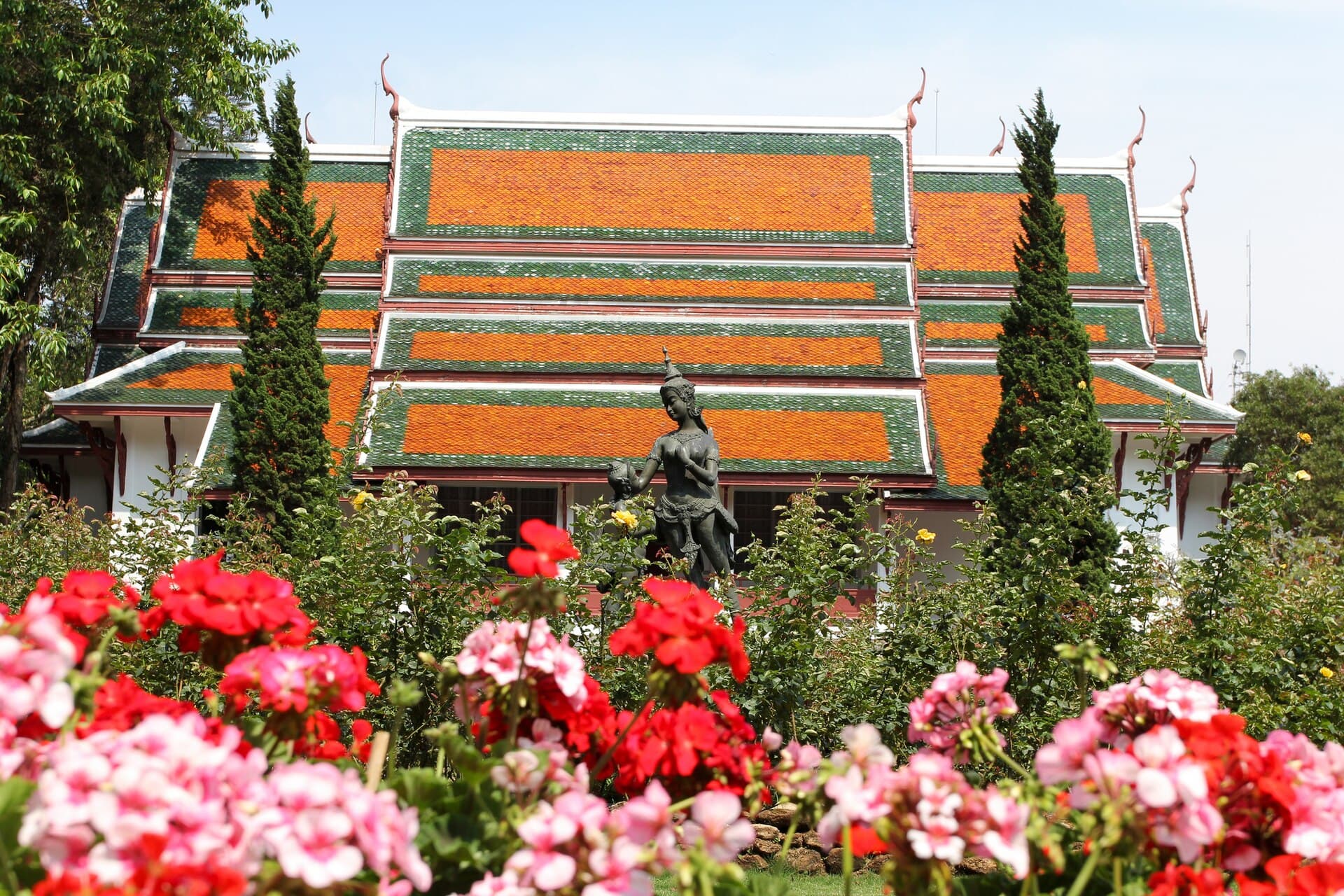
A village of the Hmong hill tribe at about twelve hundred metres in the Doi Suthep-Pui mountains, just beyond Bhubing Palace, reached by a winding mountain road through the forest. The Hmong are a mountain people who migrated from southern China, known for their colourful embroidered dress. At the entrance the visitor passes a small market stepping up the slope, selling embroidered textiles, bags, silverware, dried fruit and highland coffee, then climbs to a colourful flower garden at the top of the village, with a small waterfall and a simple museum on Hmong life and dress. You can also wander the village itself among houses and fields. A small token fee is paid for the flower garden and museum. The village has become largely touristic, so don't expect fully authentic village life, but the cool air, views and flowers are worth it. From February to April, smoke from farm burning often hangs over the north, cutting visibility and air quality. It is usually combined with Doi Suthep temple and Bhubing Palace on a half-day mountain tour, by hired car or the shared red trucks from town.
Colourful Hmong embroidery.
At the top of the village.
From Doi Pui's farms.
Doi Suthep-Pui mountain, past Bhubing Palace, about 25 km from Chiang Mai
It has become largely touristic, though Hmong people genuinely live there. It is a pleasant stop on the mountain road, not a trip on its own.