The pink building
Towers on a junction.
Christophe95 — CC BY-SA 4.0 · mohigan — CC BY-SA 3.0 · mohigan — CC BY-SA 3.0 · mohigan — CC BY-SA 3.0 · ReflectedSerendipity from United Kingdom — CC BY-SA 2.0
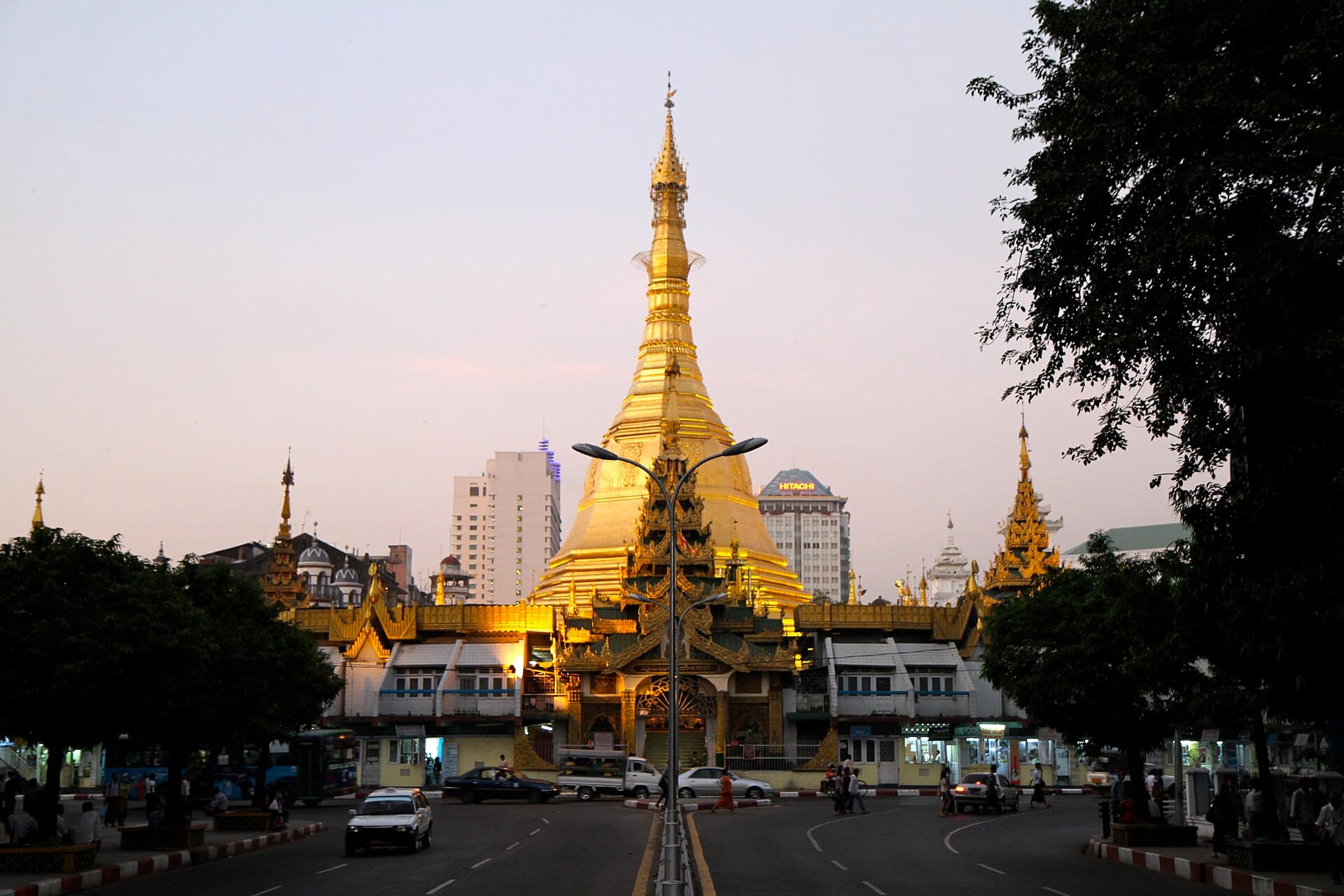
Pansodan Street is the spine of old central Yangon, lined with British colonial buildings almost unmatched in the region. It is the finest place to walk and see how the city once looked, with red, pink and yellow fronts, some restored and some worn. Nearby stands Yangon City Hall with its tiered Burmese roofs, among the city's most handsome buildings. City Hall was designed by the Burmese architect U Tin, who also designed Yangon Central railway station, and it went up from 1926 to 1936 on the site of the old Ripon Hall. It is a fine example of Burmese and Western building styles combined. Many commercial and government buildings from that period survive around it, which is why the city drew up a heritage list. You see a pink building with small towers on a wide junction, a white bank with a dome and clock, and the shells of stone balconies where plants have taken root. To the east stands a large red building with pointed domes among palm trees. On the street are pavement sellers of old books, tea and street food, with busy life all day. Sule Pagoda is a few steps away, and the riverside port a short walk. Pavements are uneven, so take care, and do not enter buildings without permission. Avoid photographing official buildings and soldiers, and ask before photographing people. Morning is the best time, before the heat and rain. The UK Foreign Office does not name Yangon among the areas it warns against, but it calls the situation in Myanmar volatile, so read the current advice before you plan.
Towers on a junction.
Tiered Burmese roofs.
On the pavement.
Central Yangon, near Sule Pagoda, Myanmar
Most are offices or closed, so see them from outside and ask if one is open.
Generally yes, but avoid official buildings and ask before photographing people.