Sea of palms
Unbroken oases.
Sergey Pesterev — CC BY-SA 4.0 · Richard Allaway — CC BY 2.0 · Dan Lundberg — CC BY-SA 2.0 · Youness97 — CC BY-SA 4.0 · Donar Reiskoffer — CC BY 3.0 · Hammou bakkass — CC BY-SA 4.0 · tifoultoute — CC BY-SA 4.0 · Lalla-ltcia — CC0
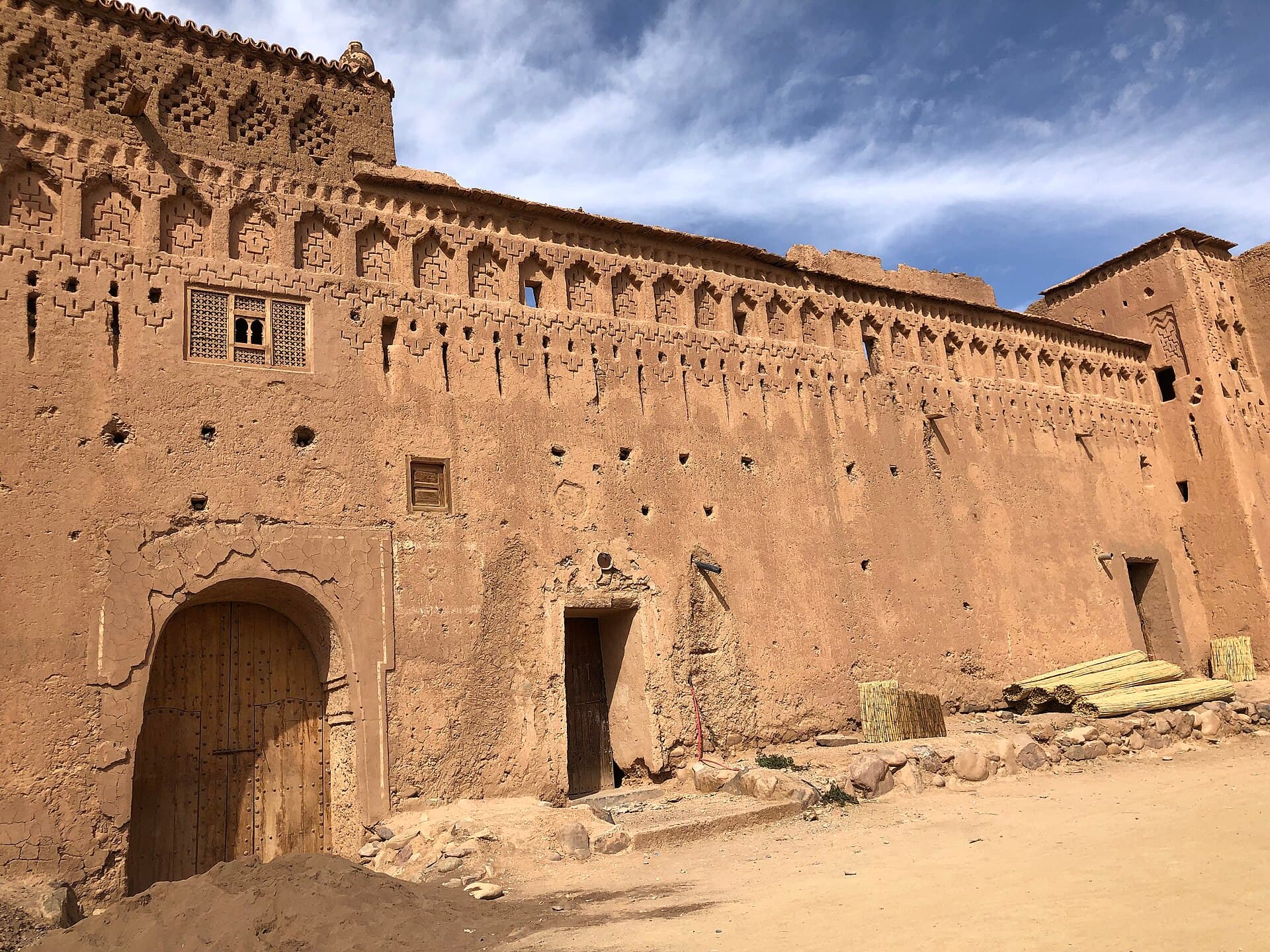
The Draa is Morocco's longest river, fed by tributaries that come down from the High Atlas before it flows south towards the desert. Along its banks between Agdz and Zagora runs an unbroken ribbon of palm groves for about a hundred kilometres, one of the finest sights in southern Morocco, and National Route 9 follows it, looking out over a green sea of palms between bare mountains. Dozens of mud-brick ksour and kasbahs line the valley, some abandoned and crumbling, others still lived in, along with small fields under the palms where grain and vegetables grow, watered by irrigation channels. The oases are known for their dates, harvested in autumn. In Zagora, the valley's capital, stands the famous sign announcing that Timbuktu is fifty-two days away, a reminder of the caravan routes that once crossed the desert to Mali; a mural has since replaced the original sign. South of Zagora the valley continues to Tamegroute and then M'Hamid El Ghizlane, where the desert begins. Exploring and taking photos is free. The best views are from the heights around Agdz and from the road in the morning or before sunset. The valley is easily explored on the drive from Ouarzazate to Zagora, with stops at the ksour and kasbahs.
Unbroken oases.
Along the valley.
52 days away.
Between Agdz and Zagora on National Route 9, Zagora Province
Spring and autumn, when the heat eases; autumn is also date-harvest season, while summer is extremely hot.