The kronosaurus
Where it was found.
t_y_l — CC BY-SA 2.0 · AndrewSaurus — CC BY-SA 4.0 · Jen jihz — CC BY-SA 4.0 · t_y_l — CC BY-SA 2.0
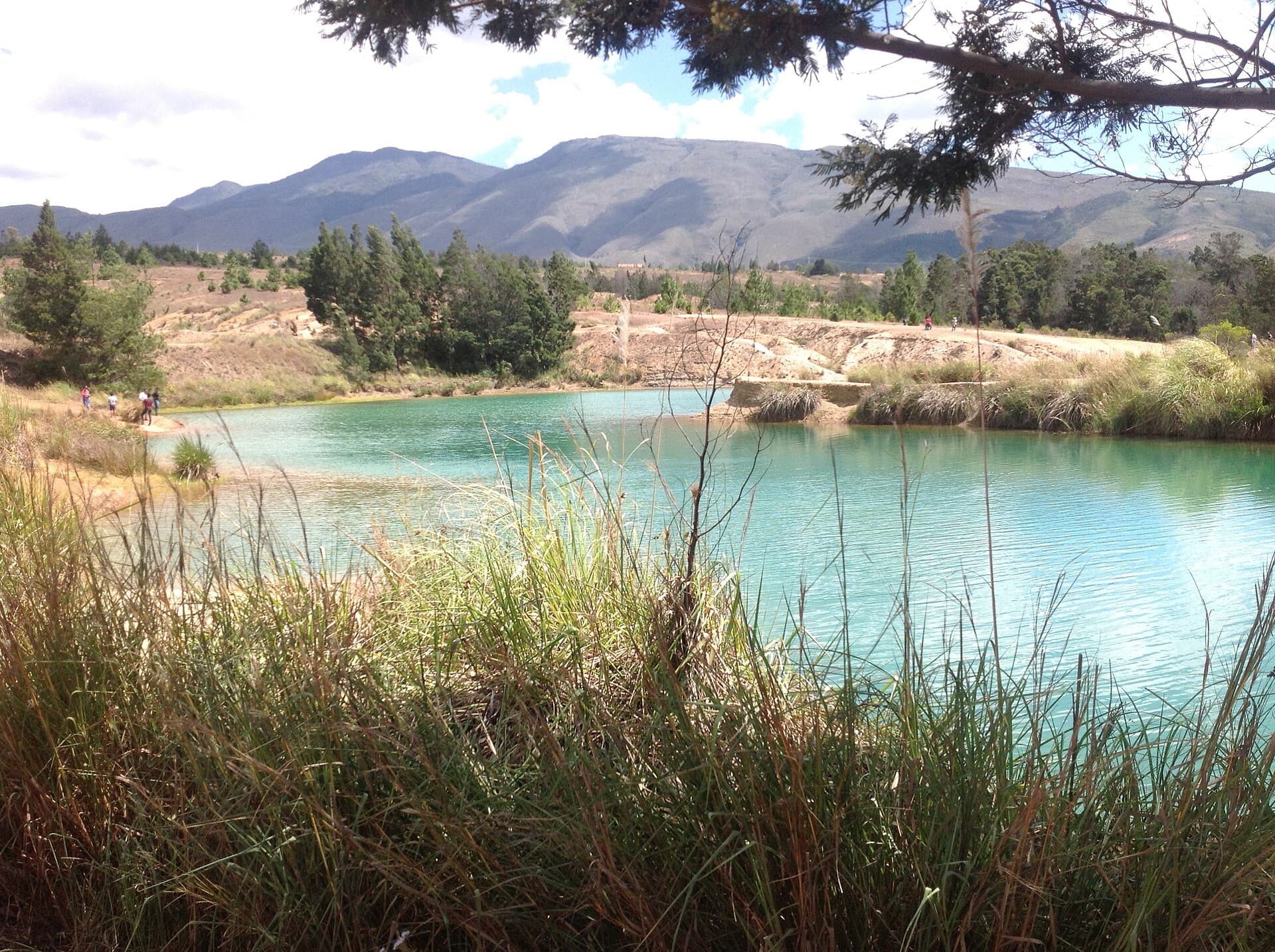
A small community-run museum built around a huge fossil of an ancient marine reptile, a «kronosaurus», which lived more than a hundred million years ago, when this now-dry land was sea floor. A farmer found it in the 1970s, and it is shown on the very spot where it was discovered. You stand before the long petrified skeleton stretched out in the ground, seeing the huge skull, jaws and vertebrae, and imagine the size of this predator of ancient seas. Guides tell the story of the discovery and of marine life in that age. The museum's rooms hold many other fossils from the area: huge spiral «ammonite» shells, fish and sea creatures, as the land around Villa de Leyva is so rich in fossils that small ones show up in some of the town's houses and pavements. The visit is short and fun for families and children. It is usually combined with the nearby Pozos Azules in half a day from town. Scientists now place it in a genus of its own, «Monquirasaurus», estimated at nine to eleven metres long, though the museum and locals still call it a kronosaurus.
Where it was found.
Spiral shells.
Now desert.
On the road west of Villa de Leyva toward Santa Sofía
Very: the huge fossil in its find spot wows children, and the visit is short with guides explaining.