The Omani House
Carvings and Arabic inscriptions.
Kensta87 — CC BY-SA 4.0 · Mutisya Maingi — CC BY-SA 4.0 · Kensta87 — CC BY-SA 4.0 · O.Mustafin — CC0
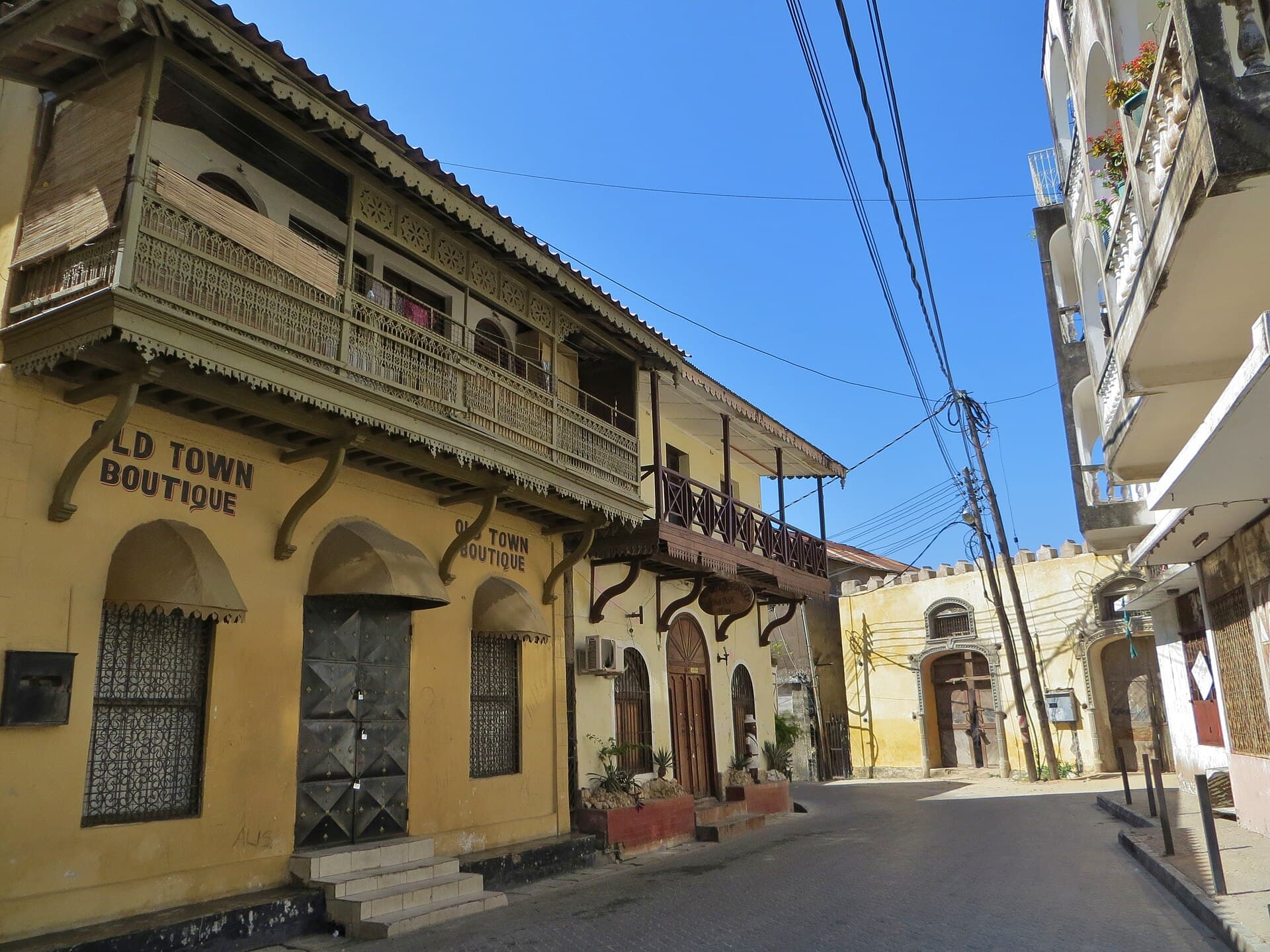
A massive coral-stone fort at the entrance to Mombasa's Old Port, built by the Portuguese between 1593 and 1596 to a design by the Italian architect Giovanni Battista Cairati, shaped like a human body when seen from above. It has been a UNESCO World Heritage Site since 2011. Control of the fort passed between the powers competing for the East African coast. Its most famous chapter is a long siege of about thirty-three months that ended in 1698 with the Omanis taking it, opening an Omani era that left its mark on Mombasa and the whole coast. Governors from the Mazrui family later ruled it, and under the British it became a prison. Today the fort holds a museum showing ceramics imported from China and Persia, finds from a sunken Portuguese ship and the history of coastal trade. Inside stands the Omani House with its carvings and Arabic inscriptions, and the walls look out over the Old Port and its dhows. Some evenings a sound-and-light show tells the fort's story. The ticket is USD 17 for foreign adults since May 2026, and the visit usually pairs with a walk through the neighbouring Old Town.
Carvings and Arabic inscriptions.
Chinese and Persian ceramics.
Over the Old Port.
Edge of Mombasa Old Town, at the entrance to the Old Port
USD 17 for foreign adults since May 2026; foreigners pay in US dollars.
In 1698, after a siege of about thirty-three months, opening an Omani era on the coast.