
The Last Supper
Eight metres, and the most important painting in the Dalmatian islands.
Regiteric — CC BY-SA 3.0 · Bernard Gagnon — CC BY-SA 4.0 · Bernard Gagnon — CC BY-SA 4.0 · Bernard Gagnon — CC BY-SA 4.0
A fifteenth-century monastery on the water''s edge south-east of the town, its position on a small headland making it one of the quietest places in Hvar — ten minutes'' walk from the noise of the harbour. The Franciscans founded it in 1461 with money from a sailor who survived a storm, having vowed to build a monastery if he lived. The cloister is the first thing to see: **Renaissance arcades** around a garden, with a **cypress** at its centre said to be over three hundred years old. In the former refectory hangs the piece the monastery is known for: a **Last Supper** about **eight metres** long, painted by an unknown sixteenth-century artist, probably of the Venetian school. Its scale and condition make it one of the most important paintings in the Dalmatian islands. The attached museum holds manuscripts, including a **Ptolemy** printed in 1524 with coloured maps, along with maritime finds and coins. Note: the monastery includes a small cemetery still in use, so quiet is expected.
Eight metres, and the most important painting in the Dalmatian islands.
Renaissance arcades and a tree said to be three hundred years old.
A quiet headland, ten minutes from the harbour noise.
Kriz 3, Hvar Town
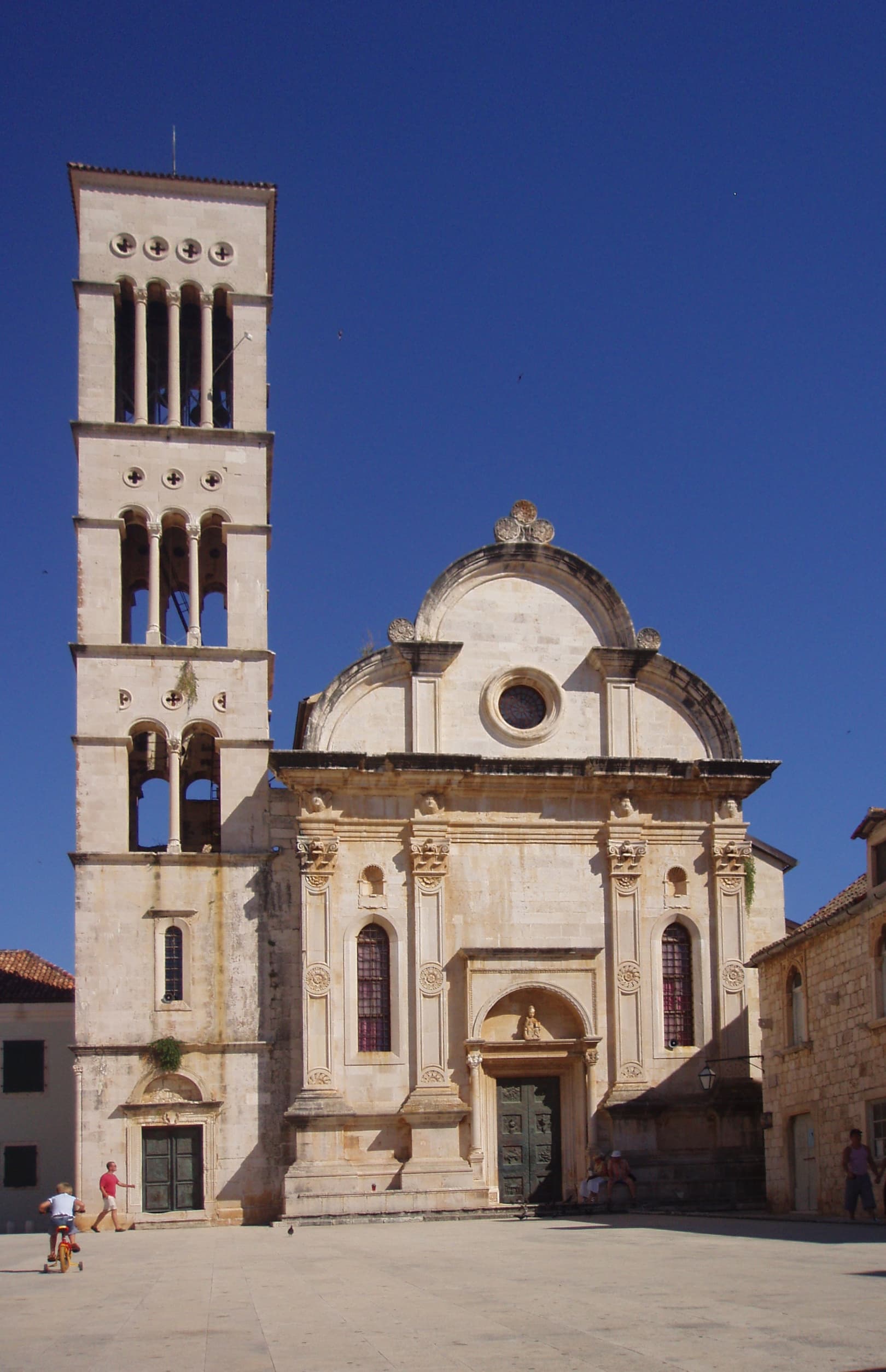 St Stephen''s CathedralIt stands at the eastern end of St Stephen''s Square and closes it, so its facad6 minutes walk4.6
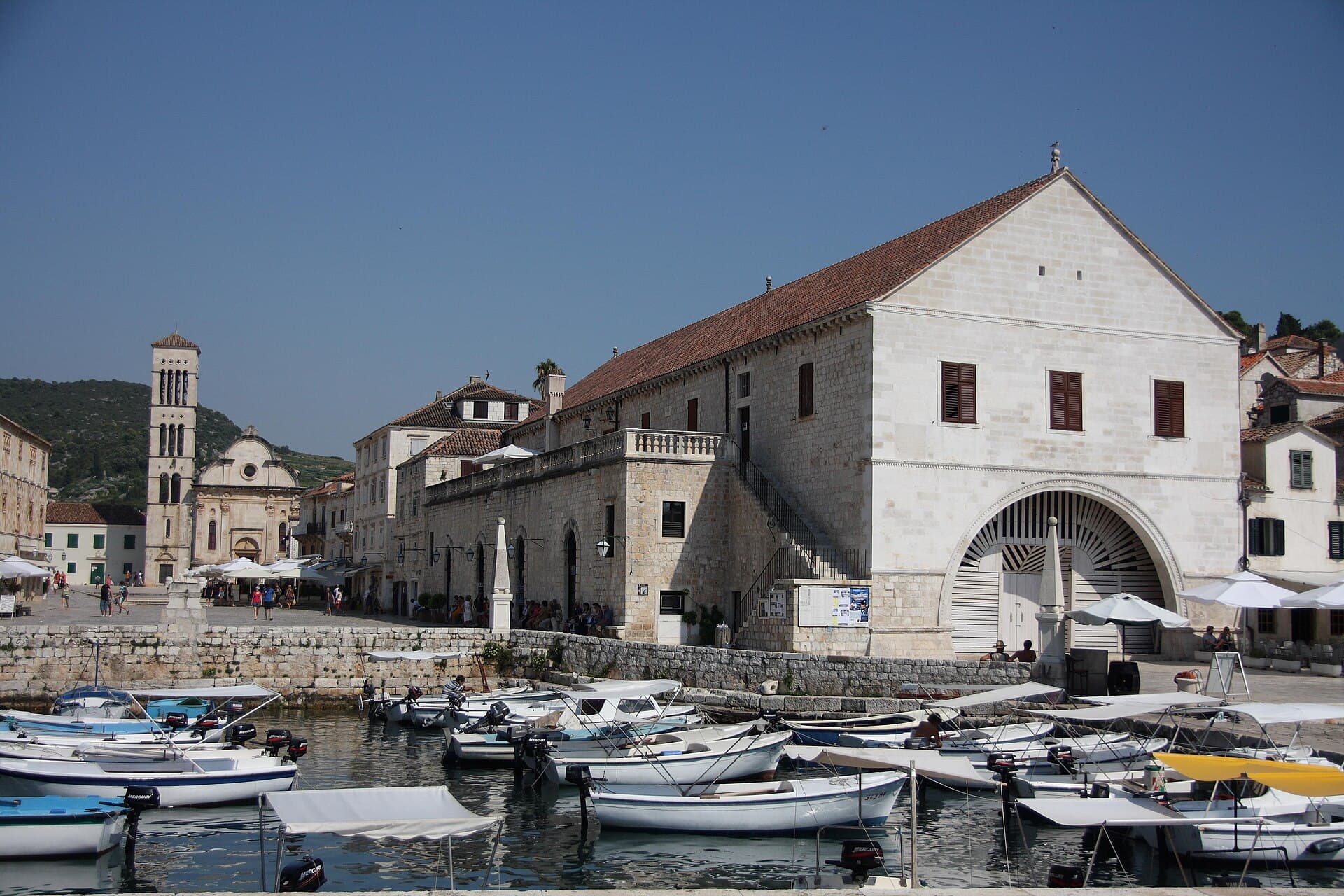 The Hvar ArsenalA massive stone building closing St Stephen''s Square on the seaward side, holdi6 minutes walk3.9
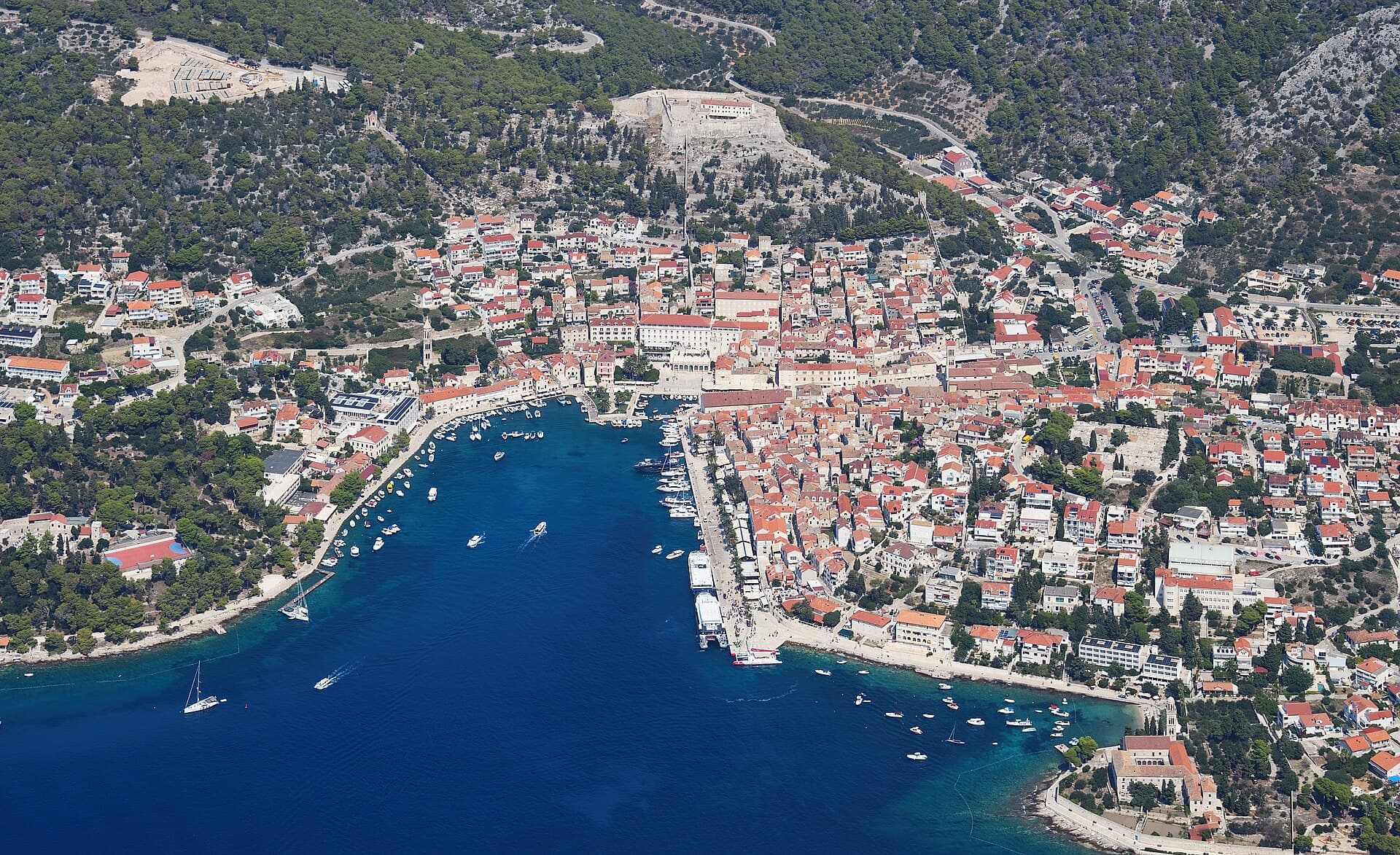 Hvar TownThe historic centre of the island of Hvar, and one of the oldest planned towns o6 minutes walk
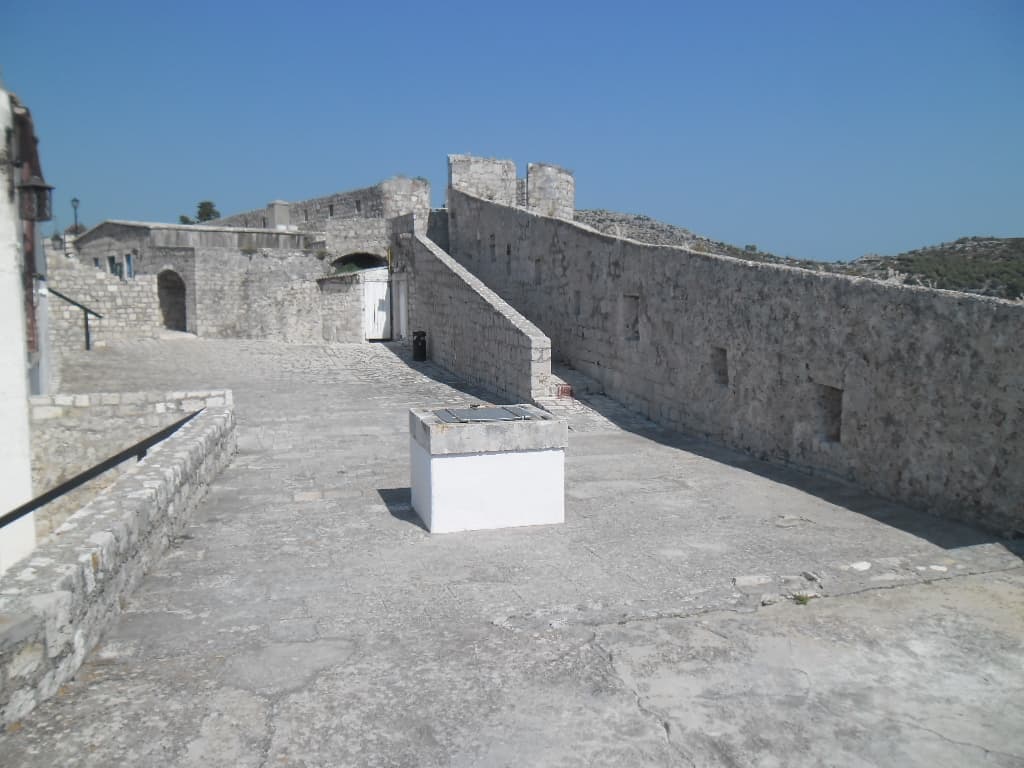 Fortica FortressA fortress on a hill about **90 metres** above Hvar Town, known locally as **Špa10 minutes walk4.7
Hvar Town is loud in July and August, but quiet is close by. The **Franciscan Monastery** itself is ten minutes'' walk from the square and another world. **Fortica** before nine in the morning is all but empty. And the **outer Pakleni Islands** — not crowded Palmižana but beyond it — are genuinely still. The broader answer is **not to stay in Hvar Town at all**: **Stari Grad**, **Jelsa** and **Vrboska** are attractive towns on the same island, much cheaper and quieter, with a half-hour bus to Hvar Town. ⚠ Many visitors work this out too late and pay peak prices for sleepless nights.