Change happening now
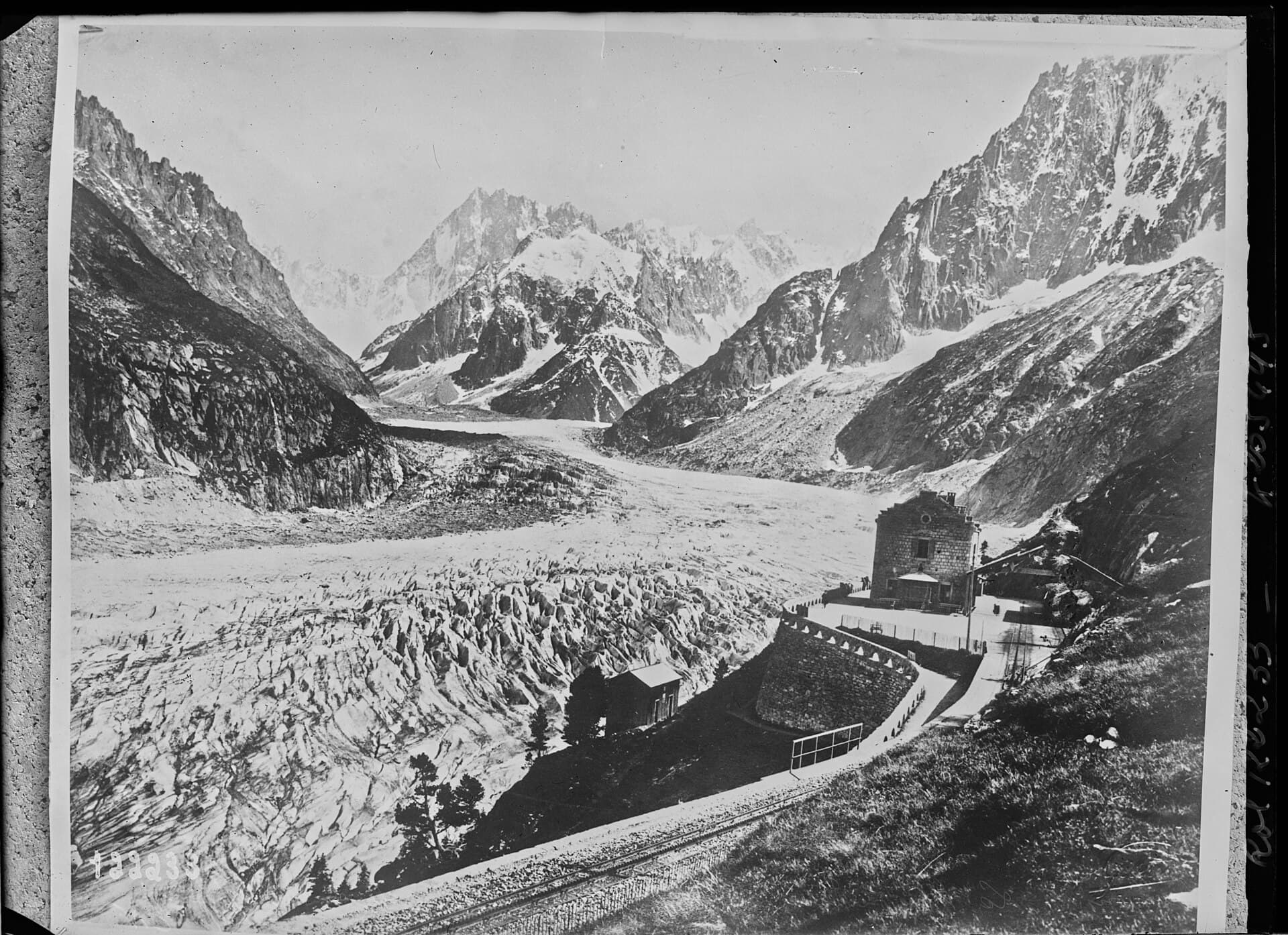
The exhibition is about the glacier's retreat, and you see that retreat from the door.
Rémih — CC BY-SA 4.0 · Rémih — CC BY-SA 4.0 · Rémih — CC BY-SA 4.0 · Rémih — CC BY-SA 4.0
A small interpretation centre at Montenvers above Chamonix, devoted to glaciology and to the history of the Mer de Glace glacier lying directly below it. The subject here is not academic but visual and immediate: the exhibition documents how the glacier has retreated over the decades, and you walk out of the door and see that retreat with your own eyes. The staircase down to the ice cave grows longer year after year because the glacier's surface is dropping, and that staircase has itself become a measure a visitor understands without numbers. That makes the visit unlike an ordinary nature museum: you are looking at a change happening now rather than a finished history. The exhibition explains how glaciers form, move and are measured. Access is by the Montenvers rack railway from Chamonix, a short and beautiful ride in itself. The centre is part of the Montenvers site, which also holds the ice cave and the historic hotel, so it is visited within the ascent rather than on its own.
The exhibition is about the glacier's retreat, and you see that retreat from the door.
Its length grows yearly as the ice surface drops — clearer than any graph.
The rack railway, the ice cave and the historic hotel are all on the same site.
Montenvers, above Chamonix at the glacier
Normally no. Entry is covered by the Montenvers site ticket, which includes the rack railway from Chamonix and the ice cave. Check the current ticket structure before buying, as the options change by season.
Late spring to early autumn, when the rack railway runs its full timetable and the ice cave is open. In winter the line may stop or run reduced, and the cave can close for reasons of ice safety.