The Copper Tents
Barracks shaped as a Roman tent, faced in copper.
Peter Isotalo — Public domain · Sniper Zeta — CC BY-SA 4.0 · Sniper Zeta — CC BY-SA 4.0 · Sniper Zeta — CC BY-SA 4.0
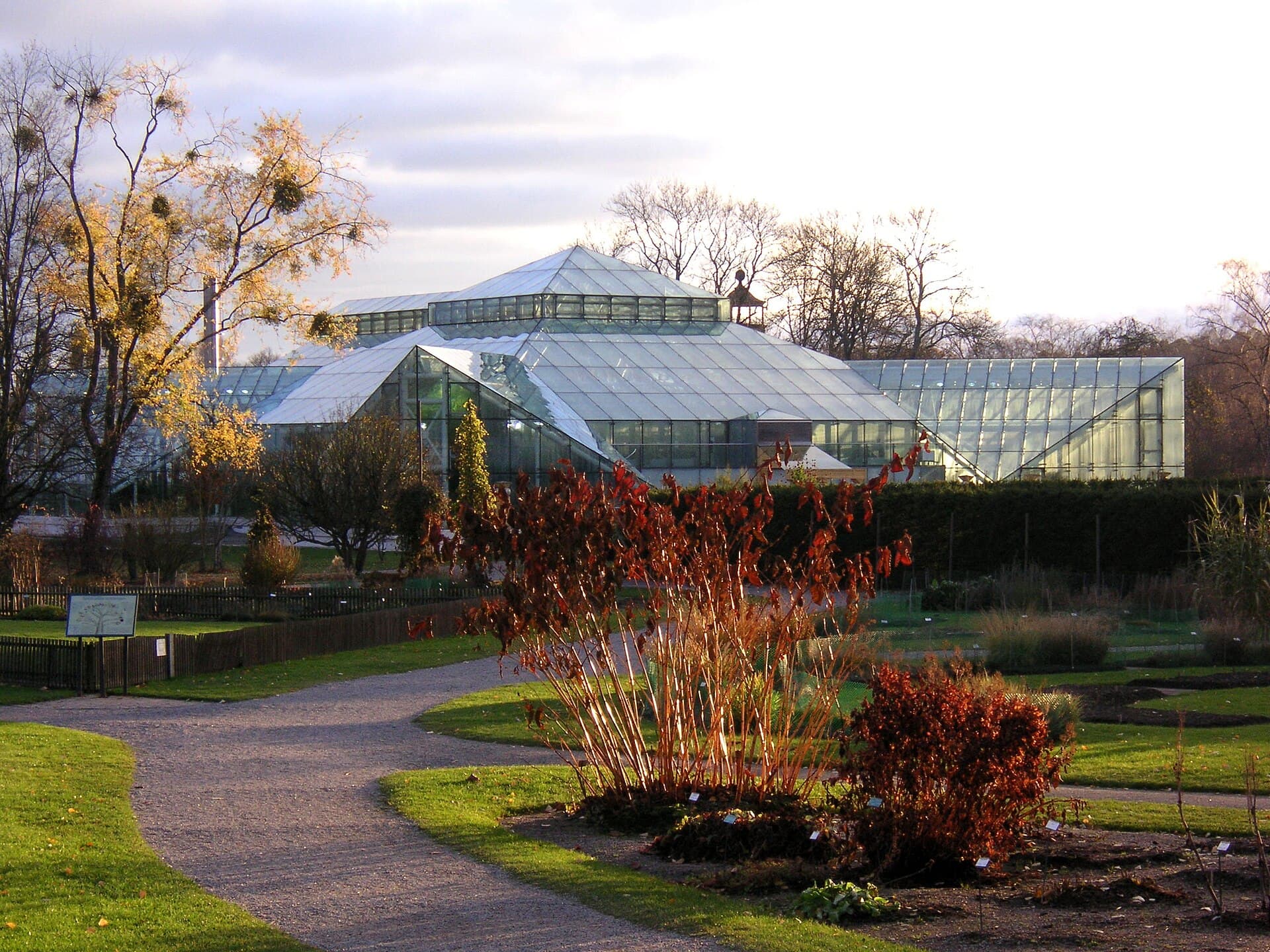
Hagaparken lies directly north of Stockholm, an eighteenth-century **royal English park** running along the shore of Brunnsviken bay — part of the Royal National City Park, the first urban national park in the world. King **Gustav III** laid it out from 1780 in the free English manner — meadows, groups of trees and winding paths rather than French symmetry. He wanted an enormous palace at its centre, but he was assassinated in 1792 at a masked ball at the opera house, the building stopped, and its foundations lie exposed to this day. What was actually built is a group of small, strange and beautiful buildings: the **Copper Tents** — barracks in the shape of a Roman military tent, faced in painted copper; the small **royal pavilion**; the **Chinese Pagoda**; the **Egyptian Temple**; and a modern **butterfly house**. Free and always open, twenty minutes by bus from the centre. **The best free royal outing in Stockholm.**
Barracks shaped as a Roman tent, faced in copper.
What was built of Gustav's palace, left exposed.
Solna, north of Stockholm
A continuous green belt about ten kilometres long running through Stockholm from Haga in the north to Djurgården and Fjäderholmarna in the south, declared an urban national park in 1995 — the first of its kind in the world. It takes in royal parks, forest, beaches, museums and palaces, and a special law protects it from development. The idea is that a city can keep its nature in the middle rather than at the edges, and it has since been copied elsewhere. You can walk its whole length from Haga to Djurgården in a day.