The lava caves
Limestone over black rock.
Grapesurgeon — CC BY-SA 4.0 · Grapesurgeon — CC BY-SA 4.0 · Grapesurgeon — CC BY-SA 4.0 · Grapesurgeon — CC BY-SA 4.0
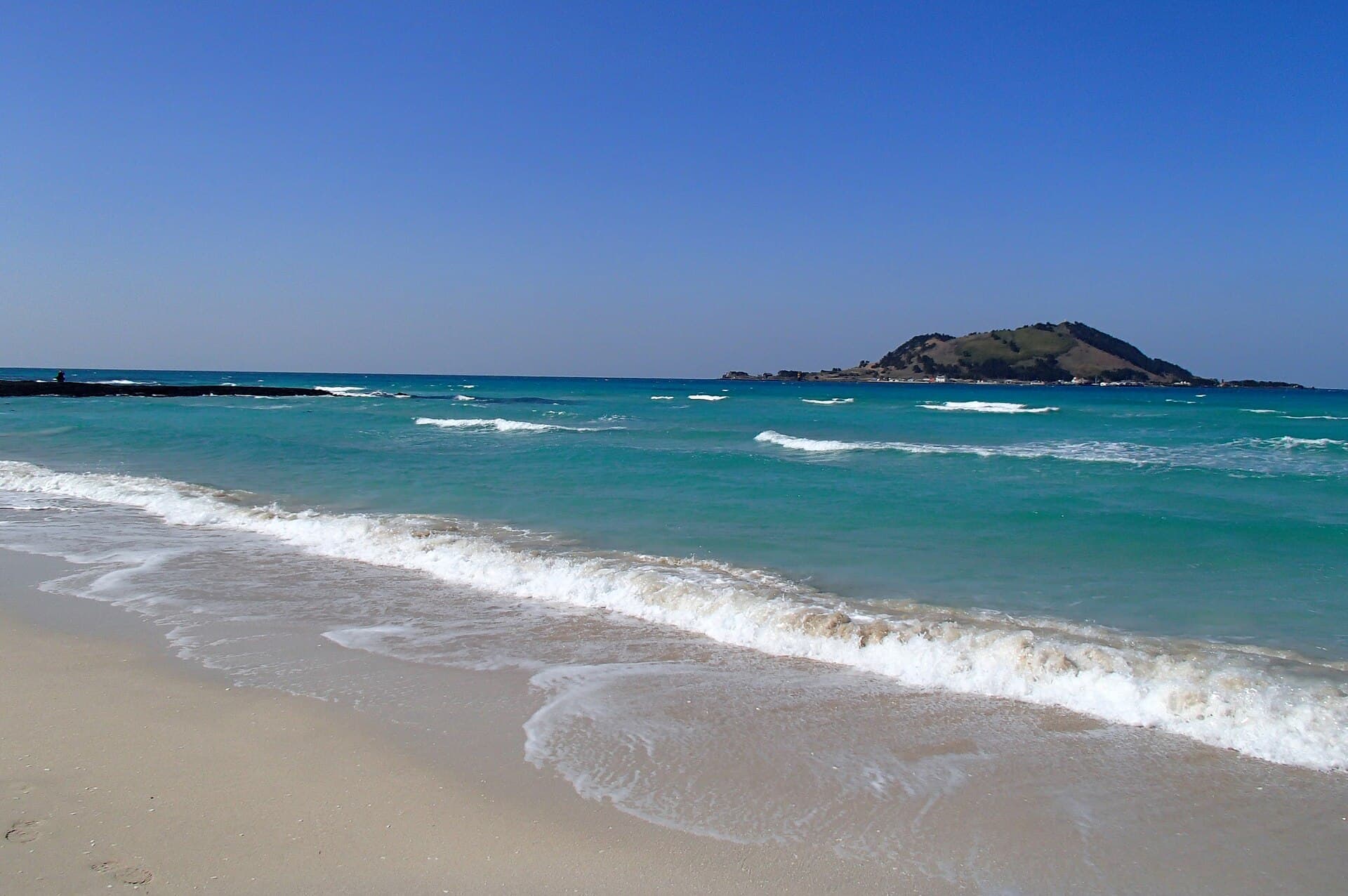
A large botanical park on the west coast of Jeju, founded in 1971 by a local man on barren land of sand and stone and turned over the years into one of the island's best-known gardens. It is divided into nine sections linked by a single route that takes about two hours. The route starts with the palm avenue and the subtropical garden, then goes down into two lava-tube caves, Hyeopjae and Ssangyong, both protected as natural monuments. What makes them unusual is that rainwater carried shell sand in from the beach, so limestone stalactites have formed over the black lava rock, a rare combination. After the caves come the bonsai and stone garden, a small folk village of traditional thatched Jeju houses, a bird garden where peacocks roam free, and flower gardens that change with the seasons: tulips, camellias, cherry blossom and chrysanthemums. The park suits families and the route is mostly level. It lies directly opposite Hyeopjae Beach, so the two fit into one day.
Limestone over black rock.
Gateway to the tropical garden.
Thatched Jeju houses.
Hyeopjae-ri, Hallim, west coast of Jeju Island, opposite Hyeopjae Beach
15,000 won for adults, 10,000 won for teenagers and 9,000 won for children, per visitor guides. The ticket covers the gardens, the two caves and the folk village.