The gilded Kannon
Eleven faces.
Anagoria — CC BY-SA 4.0 · Anagoria — CC BY-SA 4.0 · Anagoria — CC BY-SA 4.0 · Anagoria — CC BY-SA 4.0 · Anagoria — CC BY-SA 4.0 · Anagoria — CC BY-SA 4.0 · Bryan Ledgard — CC BY 2.0 · sailko — CC BY-SA 3.0
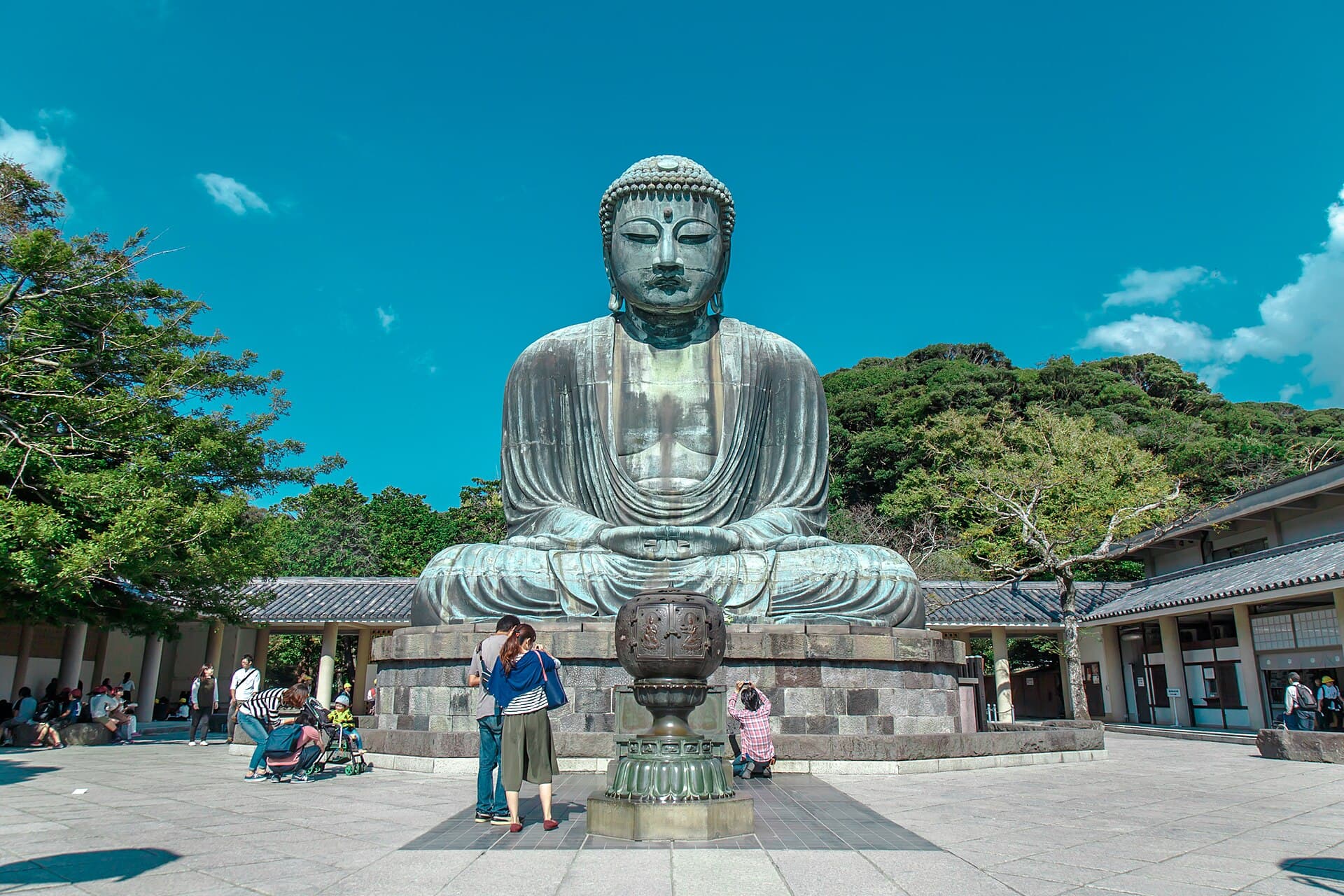
A Buddhist temple in Kamakura, popularly called Hase-kannon, famous for a huge wooden statue of the eleven-headed Kannon, the Buddhist figure of compassion. Legend dates the temple to the 8th century, though its documents suggest it flourished in the Kamakura period. The Kannon is one of the largest wooden statues in Japan at 9.18 metres, carved from camphor wood and gilded, with eleven faces on its head, each standing for a stage on the path to enlightenment. The temple climbs a hillside, so visitors rise through gardens with ponds and small waterfalls, past hundreds of little stone statues, to a broad terrace overlooking Kamakura town, its beach and Sagami Bay. It is famous for the hydrangeas that bloom along its Hydrangea Path in June and July. Tickets are 400 yen, and it opens 8:00-17:00 from July to March and to 17:30 from April to June, according to its official site. It is a few minutes from the Great Buddha, so the two combine easily.
Eleven faces.
Kamakura and the bay.
On the hillside.
Hase, Kamakura, on a hillside above the sea
400 yen; it opens 8:00-17:00 from July to March and to 17:30 from April to June, according to its official site.