Evening lanterns
All along the Thu Bon River.
Ryan Milani — CC BY-SA 2.0 · lumoplank — CC0 · Chainwit. — CC BY 4.0 · Chainwit. — CC BY 4.0
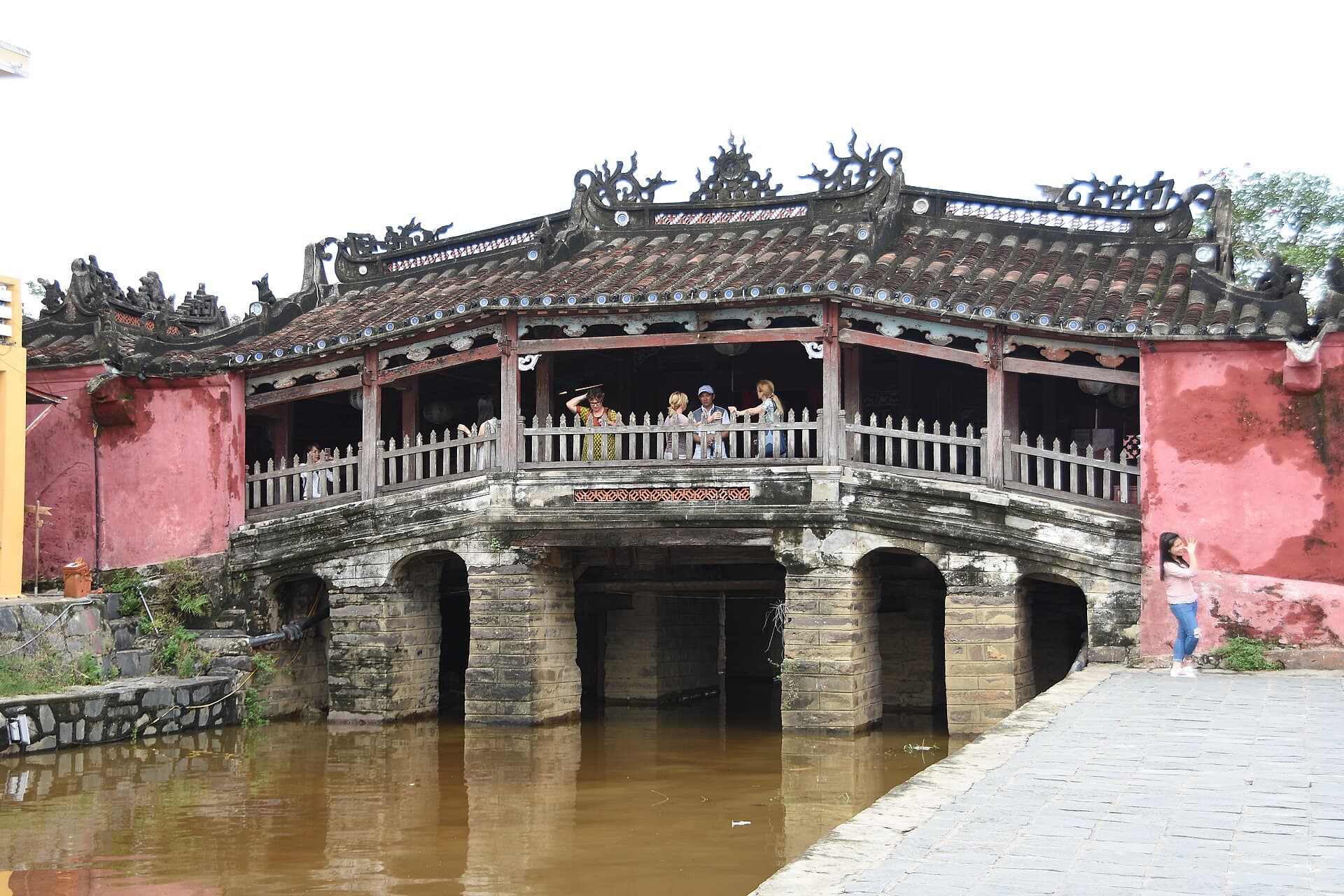
A former trading port on the Thu Bon River, about 30 km south of central Da Nang, whose old quarter has survived almost intact and was listed by UNESCO as a World Heritage Site in 1999. From the late sixteenth to the eighteenth century it was one of the busiest ports in Southeast Asia, where Japanese, Chinese and later European merchants settled; when the river silted up and trade moved to Da Nang in the nineteenth century, the town was left much as it was. The old quarter holds more than a thousand preserved buildings: wooden merchants' houses with shops at the front and courtyards behind, assembly halls built by Chinese communities from Fujian, Guangdong and elsewhere, family chapels and the Japanese Covered Bridge (its own page). The streets are closed to cars and lined with tailors, lantern makers and cafes. The town is at its most beautiful in the evening, when silk lanterns are lit along the river and small boats carry visitors on the water. On the fourteenth night of each lunar month, the full-moon night, the streetlights are switched off and the town is lit by lanterns alone. In October and November the river often floods the lower streets. Visitors buy a single ticket to enter the old quarter, which also admits them to five of its listed houses, halls and museums.
All along the Thu Bon River.
Shops in front, courtyards behind.
From Fujian and Guangdong.
On the Thu Bon River, about 30 km south of central Da Nang
Yes: 120,000 dong for foreign visitors, covering the old quarter and five listed sites of your choice, valid on the day of purchase.
In the evening when the lanterns are lit, especially on the full-moon night, the fourteenth of each lunar month. Avoid October and November, when the river often floods.