The ramp
To the upper platform.
Reyniercm — CC BY-SA 4.0 · BrunoLocatelli — CC BY-SA 4.0 · Rompechela — CC BY-SA 4.0 · Lucía Pérez2 — CC BY-SA 4.0 · Lucía Pérez2 — CC BY-SA 4.0
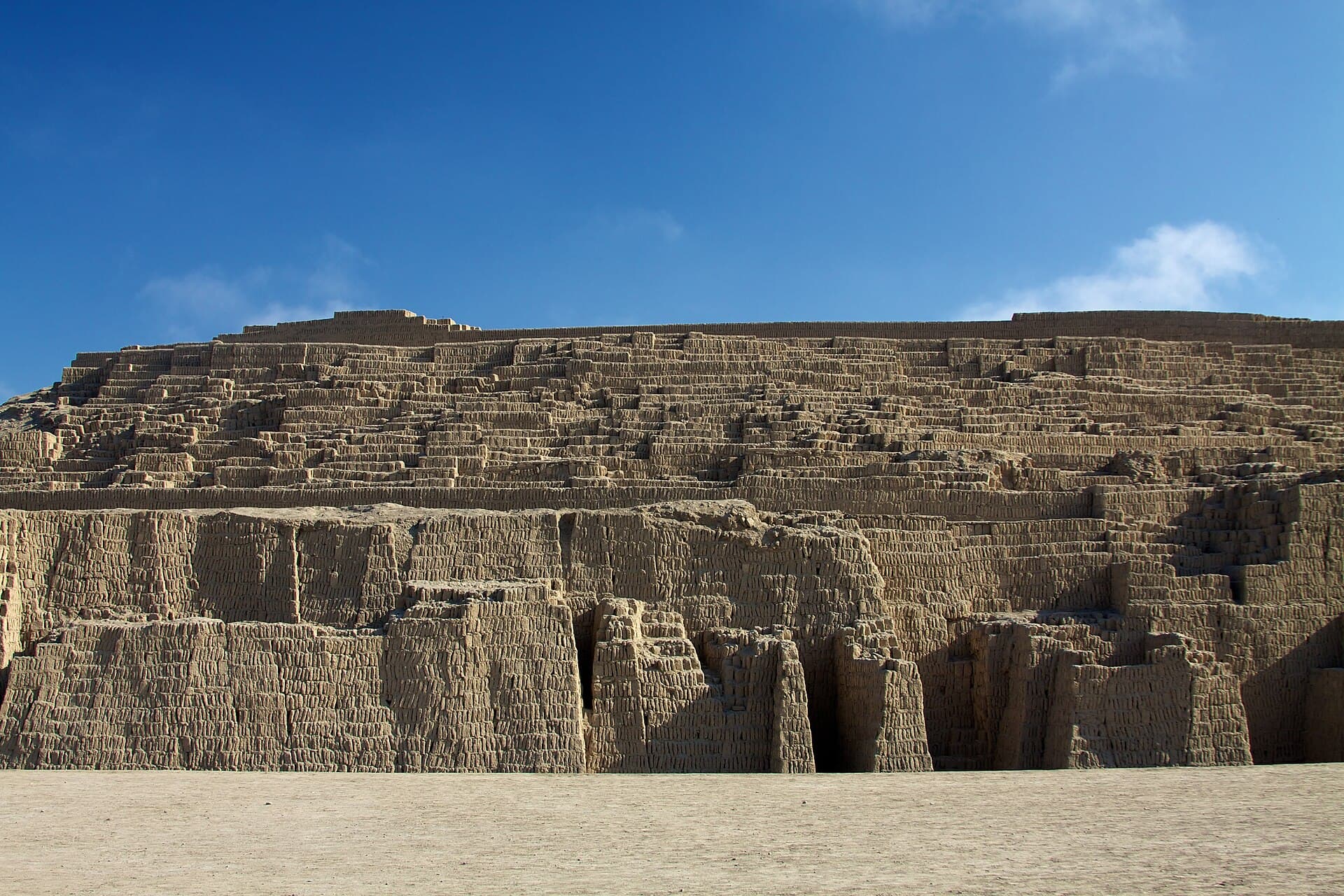
Huaca Huallamarca is a pre-Columbian stepped pyramid of adobe in the San Isidro district of Lima, the capital of Peru, about 6 km in a straight line south of the historic centre. It rises in three levels to about 19 m and is one of the few huacas, ancient adobe mounds, still preserved in that part of the city, surrounded today by apartment blocks and offices. Its construction began around 200 BC, and it was first used as a temple for ceremonial and administrative purposes. From about 300 AD it became a burial ground, used over the centuries by several later cultures of the central coast. Until the early 20th century it was known as «Pan de Azúcar», or Sugarloaf, after the rounded shape of its adobe bricks. In the 1950s the pyramid was rebuilt by the Peruvian ethnologist Arturo Jiménez Borja, and on 8 August 1960 the Huallamarca Site Museum opened beside it, the first site museum in Peru, displaying finds from the excavations. A long ramp climbs the side of the pyramid to the upper platform, which looks out over San Isidro. It is easy to combine with a visit to Huaca Pucllana in neighbouring Miraflores. A small entrance fee is charged. The visit is short and fits well into half a day in Lima's modern districts.
To the upper platform.
Stepped walls.
Excavation finds.
San Isidro, Lima, Peru
Huaca Pucllana in Miraflores.
Under two hours.