Double dome
In white marble.
Aliva Sahoo — CC BY-SA 4.0 · Mubba832 — CC BY-SA 4.0 · Md Furkan — CC BY-SA 4.0 · Mubba832 — CC BY-SA 4.0 · Aliva Sahoo — CC BY-SA 4.0 · Abhay Singh Chauhan — CC BY-SA 4.0 · Unknown — CC BY 3.0 · Akshatha Inamdar — CC BY-SA 4.0
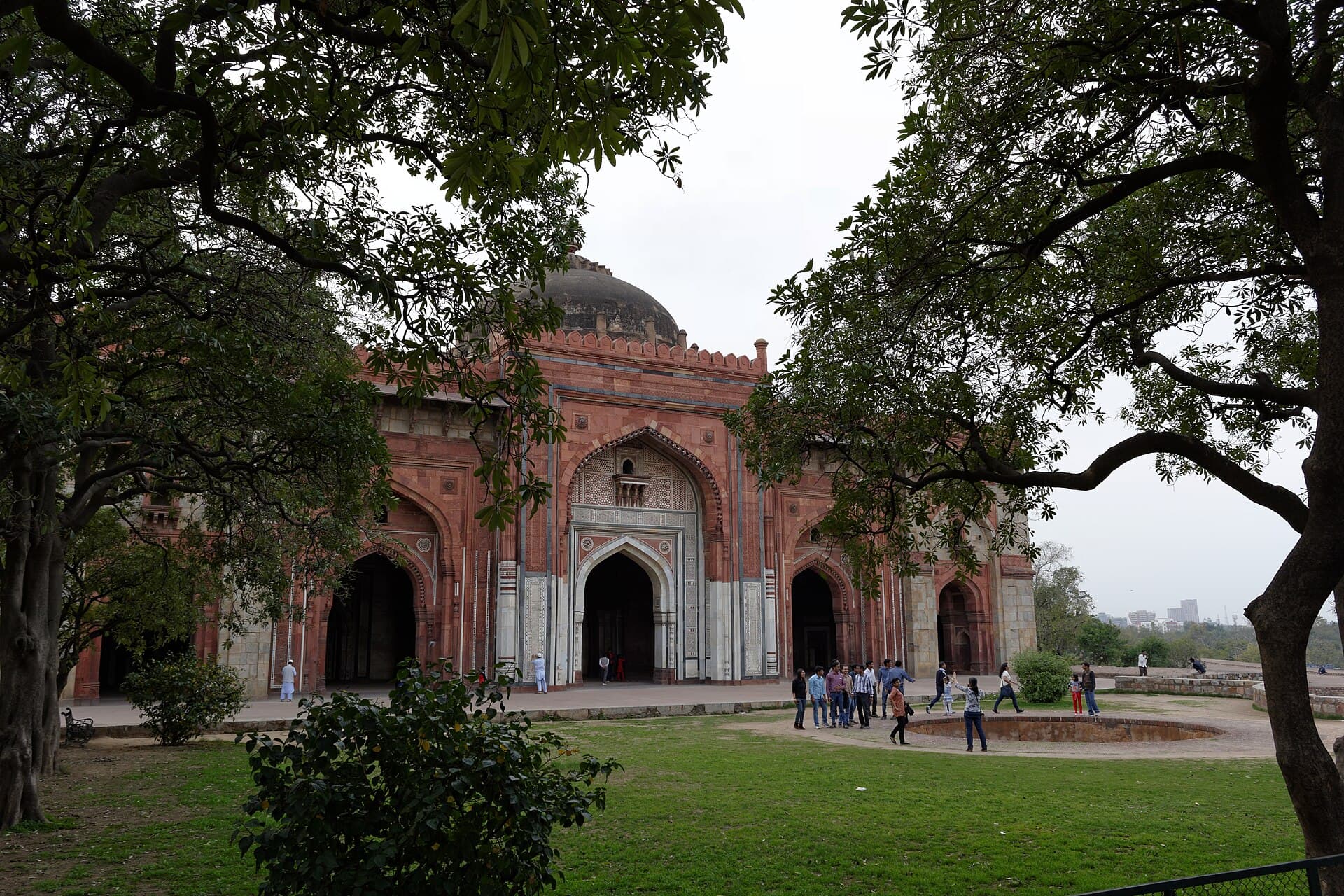
The tomb of the Mughal emperor Humayun, commissioned by his first wife, Empress Bega Begum, in 1558 and designed by the Persian architects Mirak Mirza Ghiyas and his son Sayyid Muhammad; it has been a UNESCO World Heritage Site since 1993. It was the first garden-tomb on the Indian subcontinent and the first building to use red sandstone on such a scale, and it was the direct inspiration for the Taj Mahal, built about a century later, with its white marble double dome and raised platform. The tomb is surrounded by a Persian-style charbagh garden, divided into four by water channels and paths, and smaller tombs line the way in, the best known being Isa Khan's octagonal tomb; extensive restoration has brought back its splendour. Foreign visitors pay about ₹600, a little less online, and it opens daily from sunrise to sunset, per visitor guides. It is calmer and far less crowded than the Taj Mahal; late afternoon is the loveliest time.
In white marble.
Persian style.
Octagonal.
Nizamuddin East, Delhi
It was the subcontinent's first garden-tomb, and its design inspired the Taj Mahal, built about a century later.