The wall walk
Six kilometres round the city.
Jpbarrass — Public domain · Jpbarrass — Public domain · Piotrus — CC BY-SA 4.0 · Rangculove — CC BY-SA 4.0
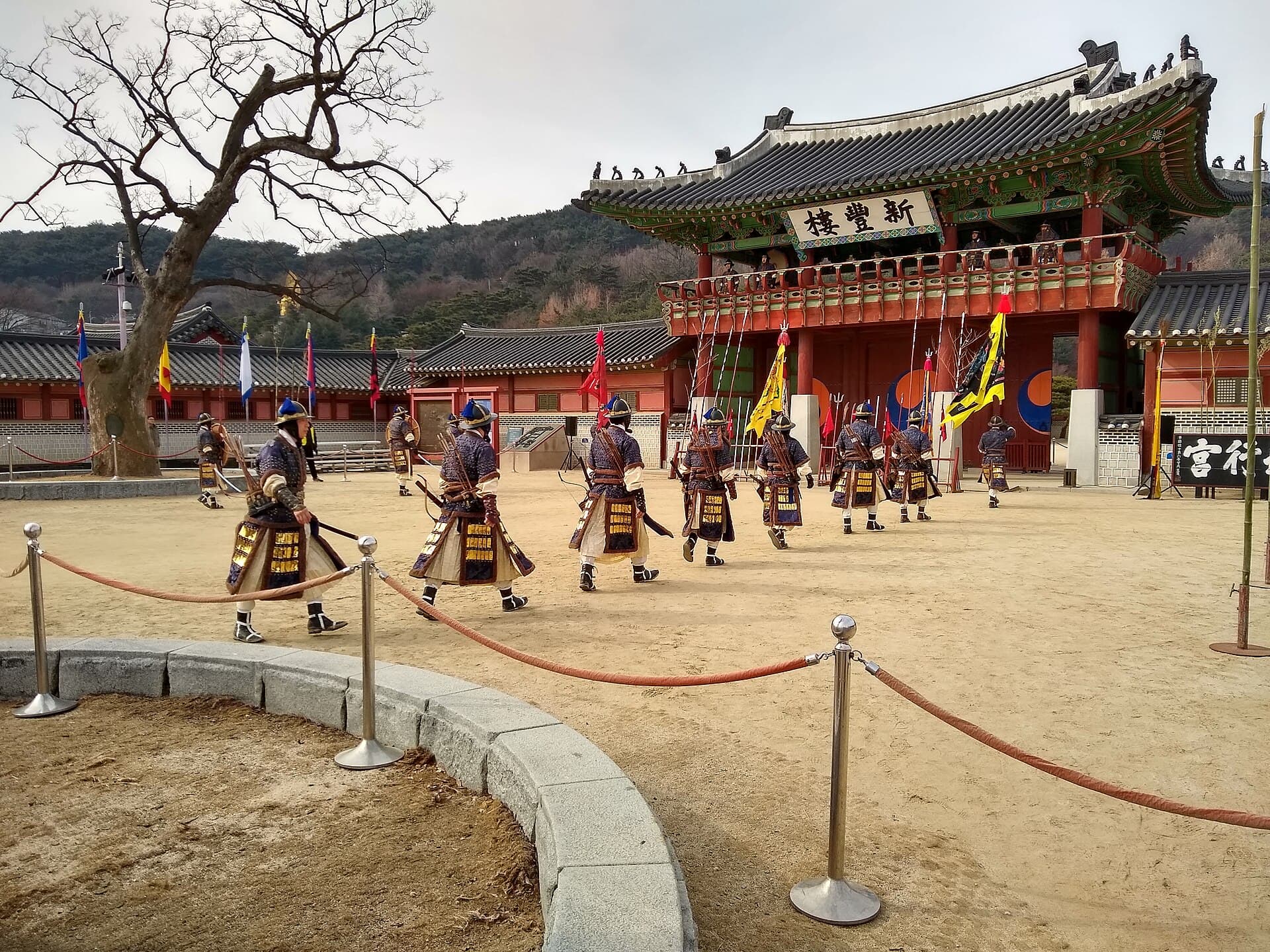
A fortified wall about six kilometres long ringing the centre of Suwon, built by King Jeongjo of the Joseon dynasty between 1794 and 1796 to honour the remains of his father, Crown Prince Sado, and possibly in preparation for moving the capital here. It has been on UNESCO's World Heritage list since 1997. Its builders combined Korean and Chinese fortification styles with techniques that were new at the time, including cranes and pulleys. Along the wall are four main gates, among them Paldalmun to the south and Janganmun to the north, along with watchtowers, archers' towers and a seven-arched water gate over the Suwoncheon stream. The wall was damaged in the twentieth century and rebuilt faithfully from a detailed illustrated record that the king's engineers compiled during construction. The best way to see it is to walk along the top. The full circuit takes two to three hours, starting with a climb to Paldalsan hill and then levelling out. On the way is Banghwasuryujeong, a pavilion above a small pond and one of the finest photo spots, and a ground where you can try traditional archery. The wall is lit at night, and walking it after sunset is a different experience. Hwaseong Haenggung palace stands within it, so the two make one day trip from Seoul.
Six kilometres round the city.
The great south gate.
A pavilion above a pond.
Central Suwon, about 30 km south of Seoul; Suwon Station (Line 1), then a bus to Paldalmun gate
The full circuit is about six kilometres and takes two to three hours with stops. You can also walk just part of it.
By metro Line 1 to Suwon Station in about an hour, then by bus to Paldalmun gate in about a quarter of an hour.