The conical roof
Faceted and clad in turquoise tiles.
Kalpak Travel — CC BY 2.0 · Kalpak Travel — CC BY 2.0 · Hans Birger Nilsen — CC BY-SA 2.0 · Hergit — CC BY-SA 3.0 · John Pavelka from Austin, TX, USA — CC BY 2.0
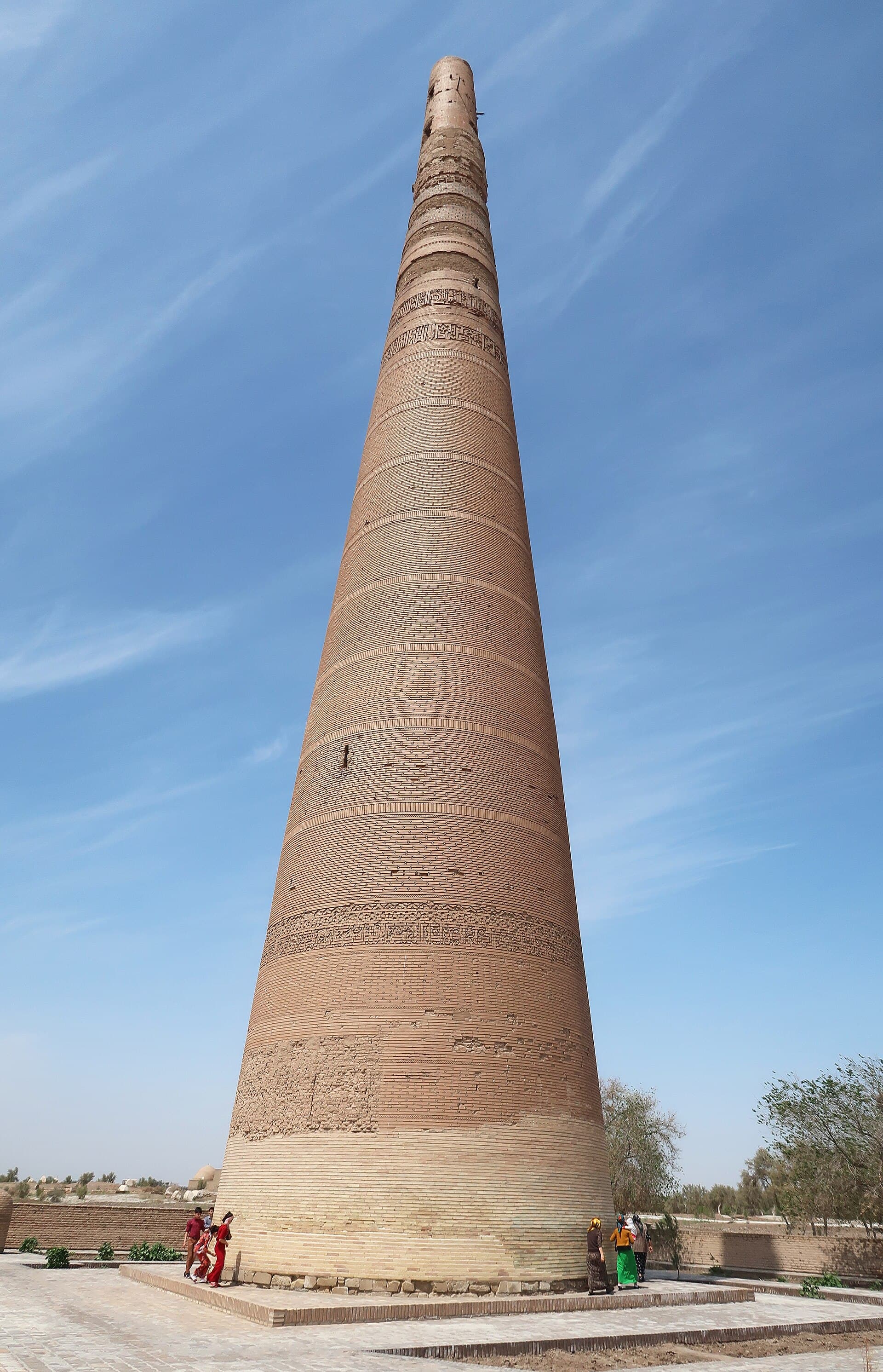
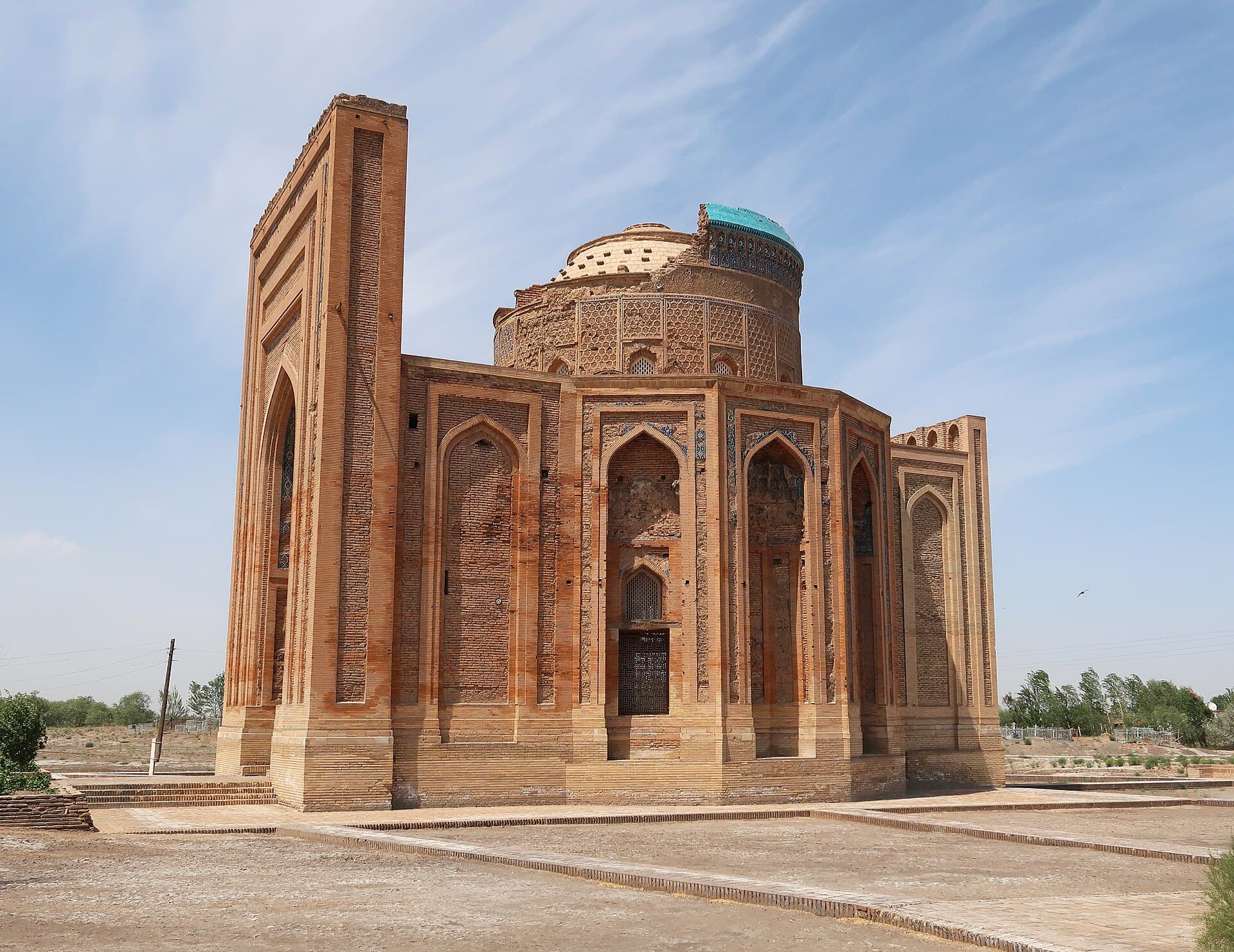
The Il Arslan Mausoleum is the oldest standing monument in Old Urgench, the historic capital of Khwarazm in northern Turkmenistan. It stands within the ruins of Old Urgench, which joined the UNESCO World Heritage list in 2005. The mausoleum dates from the 12th century and is known locally as the tomb of the Khwarazmshah Il Arslan, who ruled from 1156 to 1172. Its cube of baked brick resembles the Samanid mausoleum in Bukhara, the oldest surviving Islamic mausoleum in Central Asia. Some recent findings suggest that at one point the building was also used to store water. Its most striking feature is the faceted conical roof in place of the usual round dome, clad in turquoise glazed brick tiles laid in a geometric pattern. The walls carry panels of carved brick relief, a frieze with an aphorism in fine script, and carved plant motifs in arabesque patterns. The mausoleum is about 600 metres in a straight line from the Kutlug Timur Minaret and about 1 km from the Turabek Khanum Mausoleum, so see them together. The site is exposed, so bring water and a hat, and visit in the morning or late afternoon.
Faceted and clad in turquoise tiles.
Panels of plant motifs.
An aphorism in fine script.
Old Urgench site, Konye-Urgench, Dashoguz, Turkmenistan
It is linked to the Khwarazmshah Il Arslan, who ruled from 1156 to 1172.
The Kutlug Timur Minaret, about 600 metres away.