The Libeskind building
Three leaning aluminium shards and a sloping floor stand for a globe torn apart by war; the building alone justifies the trip.
James Johnstone from Ecclefechan, Scotland — CC BY 2.0 · James Johnstone from Ecclefechan, Scotland — CC BY 2.0 · James West from UK — CC BY-SA 2.0 · James Johnstone — CC BY-SA 2.0
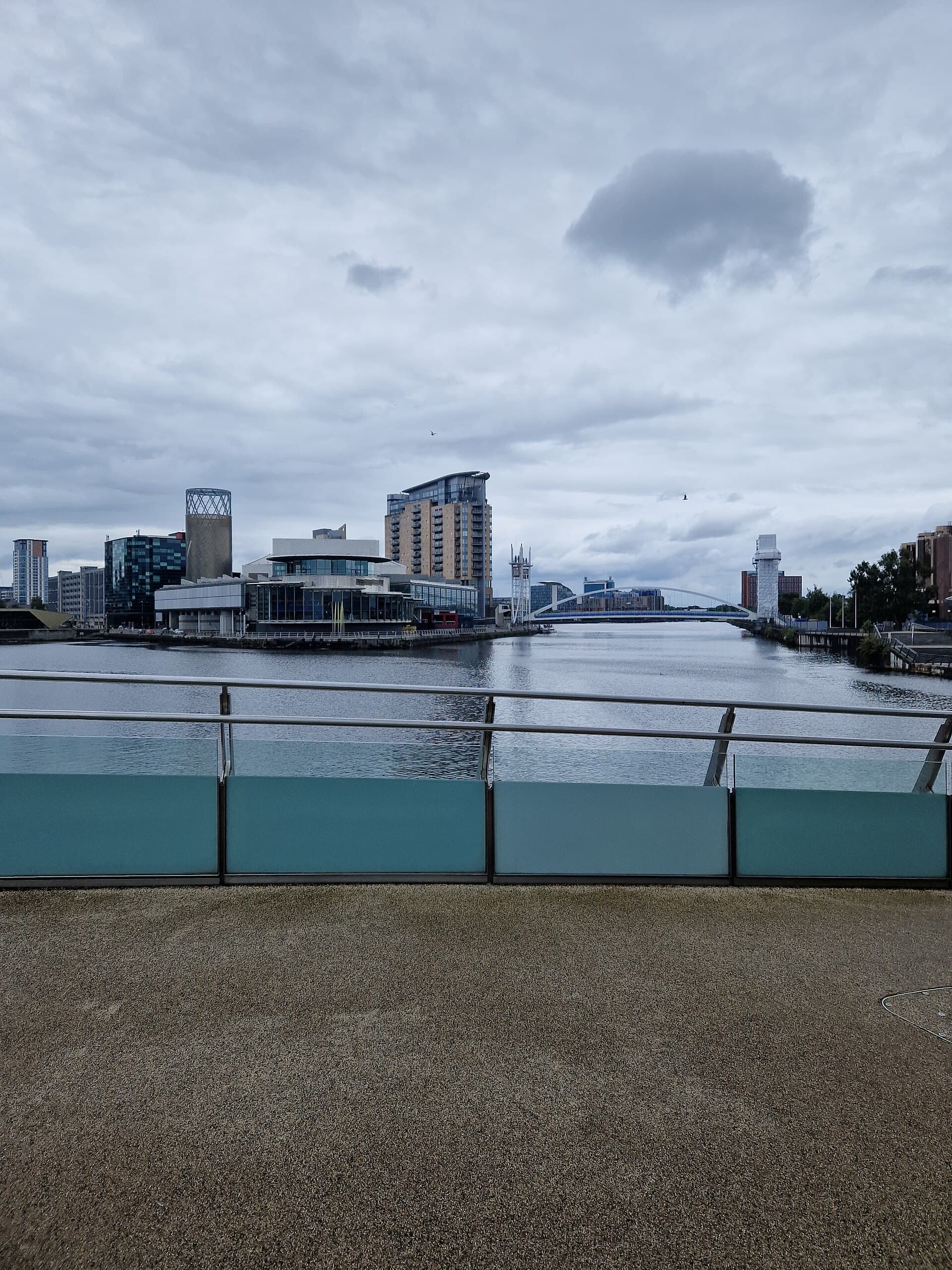
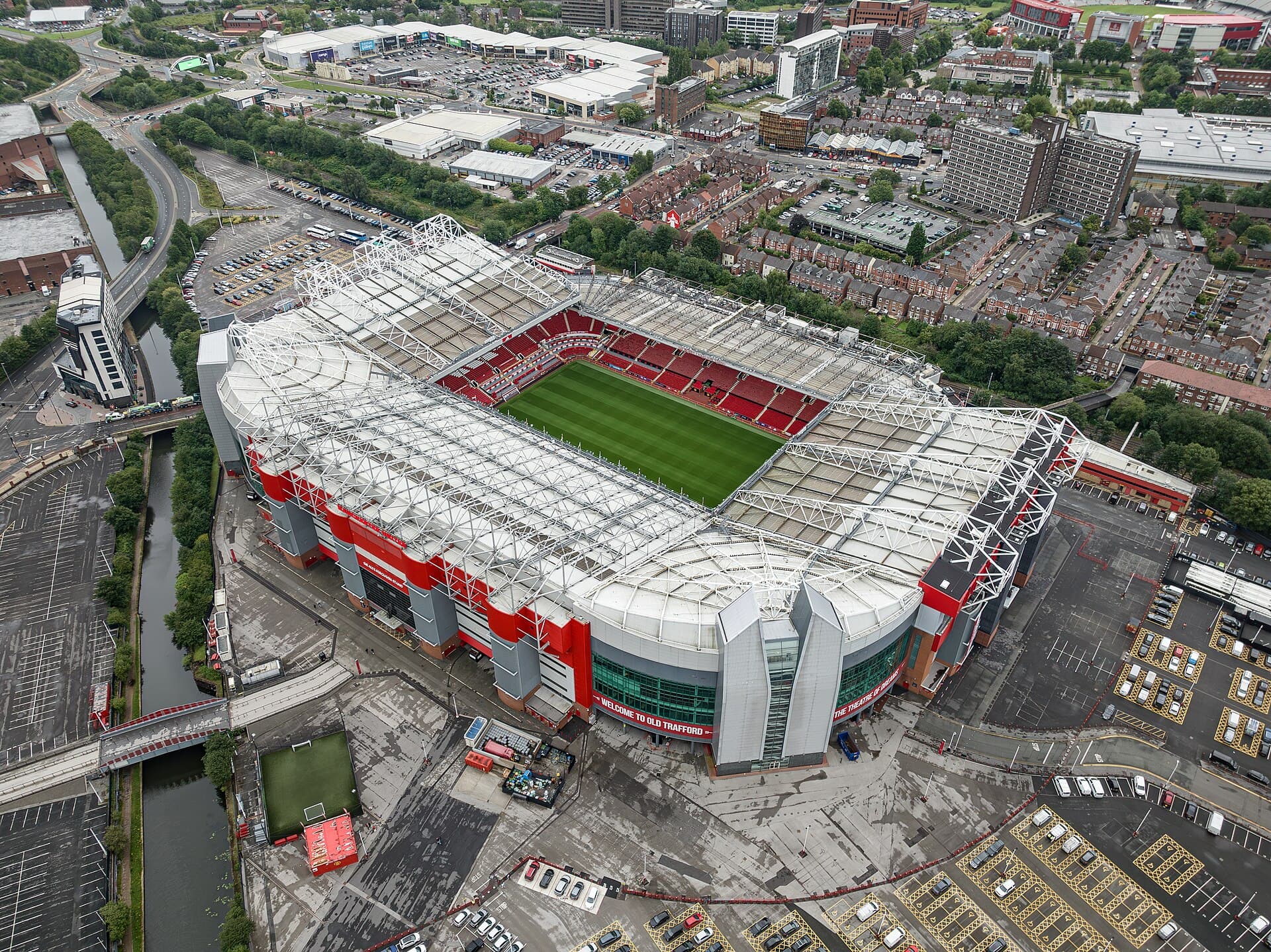
The floor slopes on purpose. Daniel Libeskind built this as a globe shattered by war and left in three interlocking aluminium shards: Air, the 55-metre tower leaning over the entrance; Earth, which holds the main gallery; and Water, facing the Manchester Ship Canal. Walls tilt, the ground drifts downhill so gently you only notice when your legs do, and that is the point: the architect wants you slightly off balance before you begin. The building is the first reason to come, and plenty of people photograph it from The Lowry side of the canal without ever going in. They should. Entry is free, no booking needed, and the inside earns its keep. The main space is one big dark hall telling a century of conflict from 1914 to now: a Soviet T-34 tank, a US Marine Corps Harrier hanging overhead, the 13-pounder field gun that fired Britain's first shot of the First World War, and a seven-metre twist of steel pulled from the World Trade Center rubble. Outside the entrance sits an Iraqi T-55 captured by the Royal Engineers in 2003, which tends to stop Arab visitors a beat longer than anyone else. On the hour, every hour, the lights drop and every wall becomes a screen for the Big Picture Show: archive photographs and recorded voices of people who lived through war, under ten minutes long. It is the museum's strongest moment, but it is loud, dark and flickering, so children under six may be frightened; ear defenders can be borrowed from the shop or the information desk. Be warned: the viewing balcony at the top of the Air Shard has been closed to the public for years, so do not come for the skyline. The subject matter is heavy and this is no science museum for running about; that said, families get free adventure trails for children, lifts and ramps make it entirely pushchair-friendly, and there is a quiet room past the cafe on the entrance level if anyone needs a breather. One to two hours is enough. Getting there is simple: Metrolink tram from central Manchester to MediaCityUK on the Eccles line, then a few minutes across the footbridge over the canal, or to the Imperial War Museum stop on the Trafford Park line, right outside the door, about twenty minutes either way. Drivers have the museum's own 160-space car park at £5 for three hours. Open daily 10:00 to 17:00, closed only 24 to 26 December, it is an ideal wet-weather day; term-time mornings fill with school groups, so afternoons are calmer. Pair it with MediaCityUK and the Quayside outlet (the former Lowry Outlet) across the water.
Three leaning aluminium shards and a sloping floor stand for a globe torn apart by war; the building alone justifies the trip.
On the hour the hall goes dark and its walls become a screen for archive images and survivors' voices, under ten minutes long.
A T-34 tank, a Harrier jet, twisted steel from the World Trade Center, and an Iraqi T-55 at the door.
The Quays, Trafford Wharf Road, Trafford Park, Manchester M17 1TZ
For under-sixes, the Science and Industry Museum in the city centre is far better suited. The subject here is heavy and the hourly show is dark and loud enough to frighten them. Children over ten usually come out moved and interested, and since entry is free there is nothing to lose by trying.
No. The viewing balcony at the top of the Air Shard has been closed to the public for years. The good view is of the building itself, from The Lowry side across the canal.