A living fort
People still live here.
Gerd Eichmann — CC BY-SA 4.0 · Davi1974d — CC BY-SA 3.0 · Schwiki — CC BY-SA 3.0 · Pinakpani — CC BY 4.0 · Shitha Valsan — CC BY-SA 4.0 · Ashwin Kumar from Bangalore, India — CC BY-SA 2.0 · Malakarmithun — CC BY-SA 4.0 · Sougata Bhar — CC BY-SA 4.0
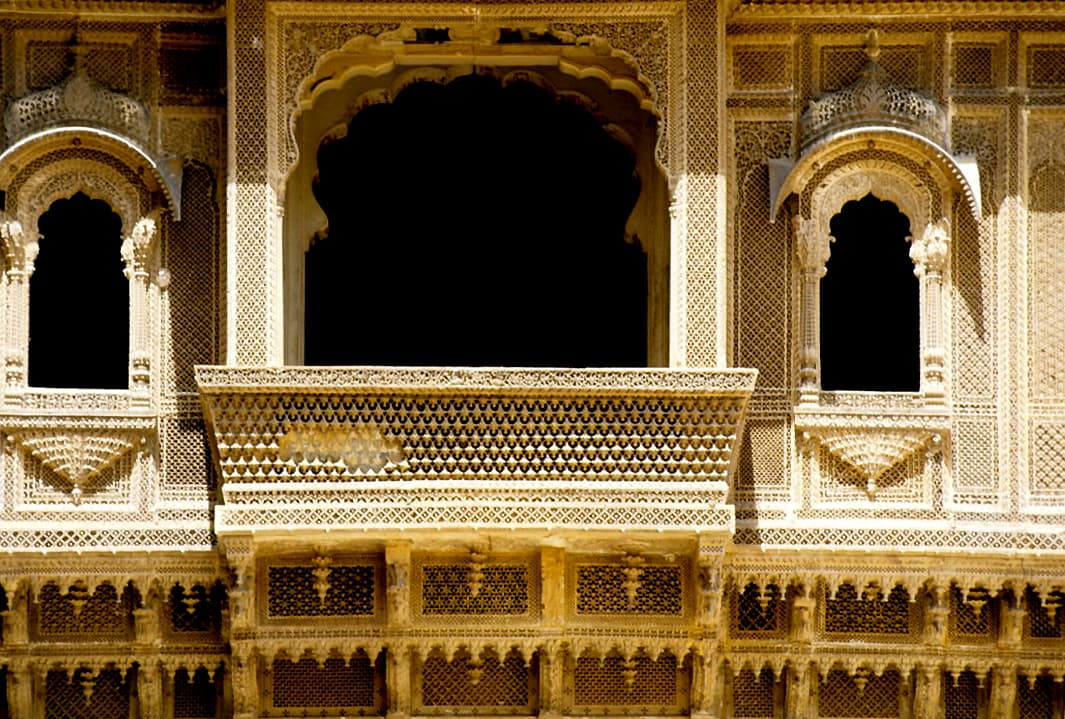
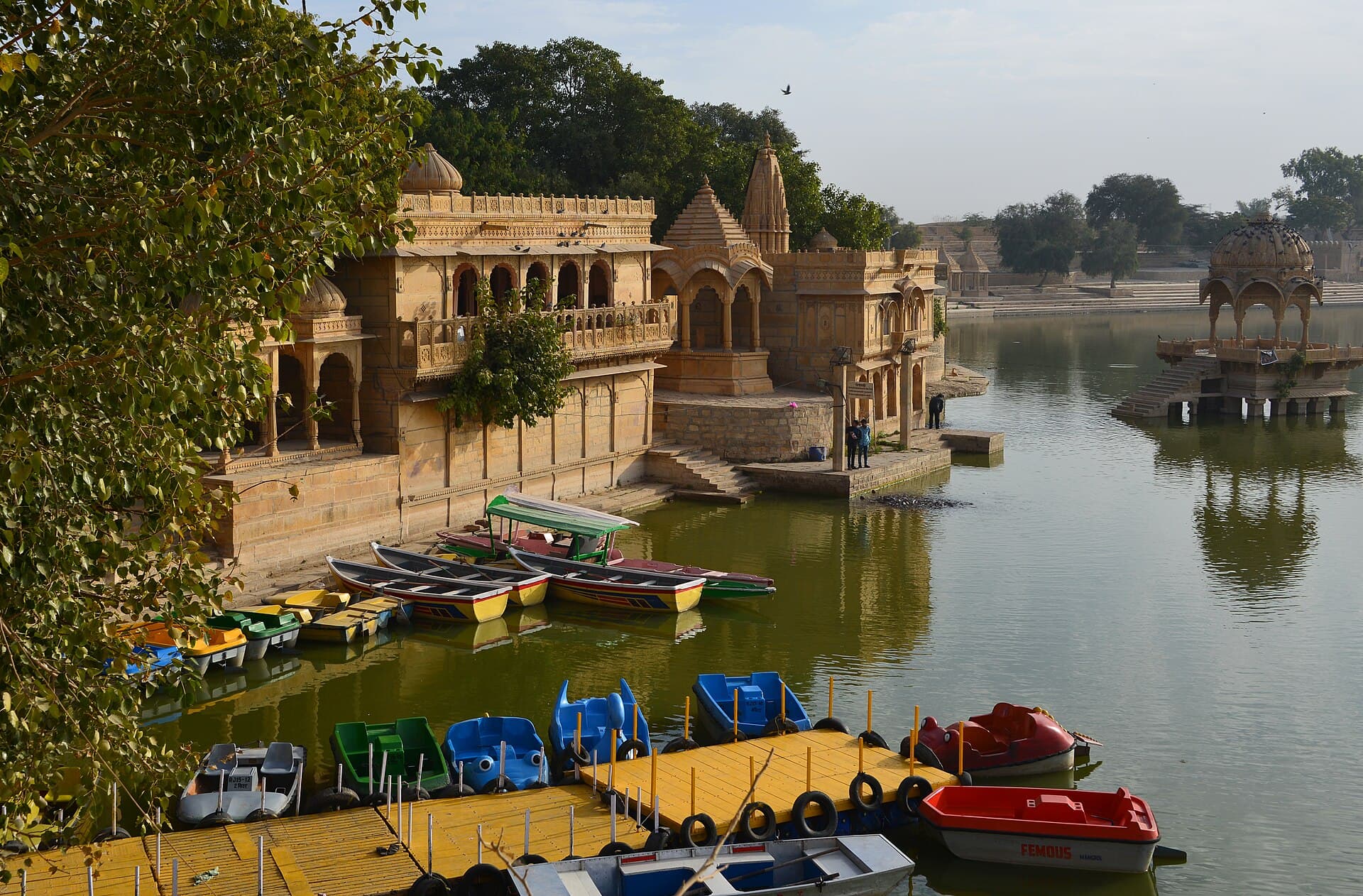
A majestic fort of yellow sandstone in the heart of the Thar Desert, built by Rawal Jaisal in 1156, making it the second-oldest fort in Rajasthan; it stood at the crossroads of major trade routes including the Silk Road and is called the «Golden Fort» because its walls are lion-tawny by day and turn honey-gold at sunset. It is one of the world's few «living forts»: about a quarter of the old city's people still live inside its walls, so you wander narrow lanes past homes, shops, restaurants and small hotels under carved balconies and decorated windows. Inside is the Maharawal's palace, now a museum on the city's history and its rulers, and its walls and 99 bastions look out over the city and the desert beyond; it is part of the «Hill Forts of Rajasthan» World Heritage Site. Entering the fort is free, while the palace museum costs about ₹600 for foreigners, per visitor guides. The best view of the fort is at sunset from Gadisar Lake or from outside the city.
People still live here.
And the views.
The stone glows.
Trikuta Hill, central Jaisalmer
Yes. Entering and wandering the fort is free; the palace museum costs about ₹600 for foreigners, per visitor guides.