The Lion Tomb
A 4th-century-BC Lycian sarcophagus standing among café tables at the top of the Long Bazaar.
Haluk Comertel — CC BY 3.0 · Alexkom000 — CC BY 4.0 · Alexkom000 — CC BY 4.0 · Alexkom000 — CC BY 4.0
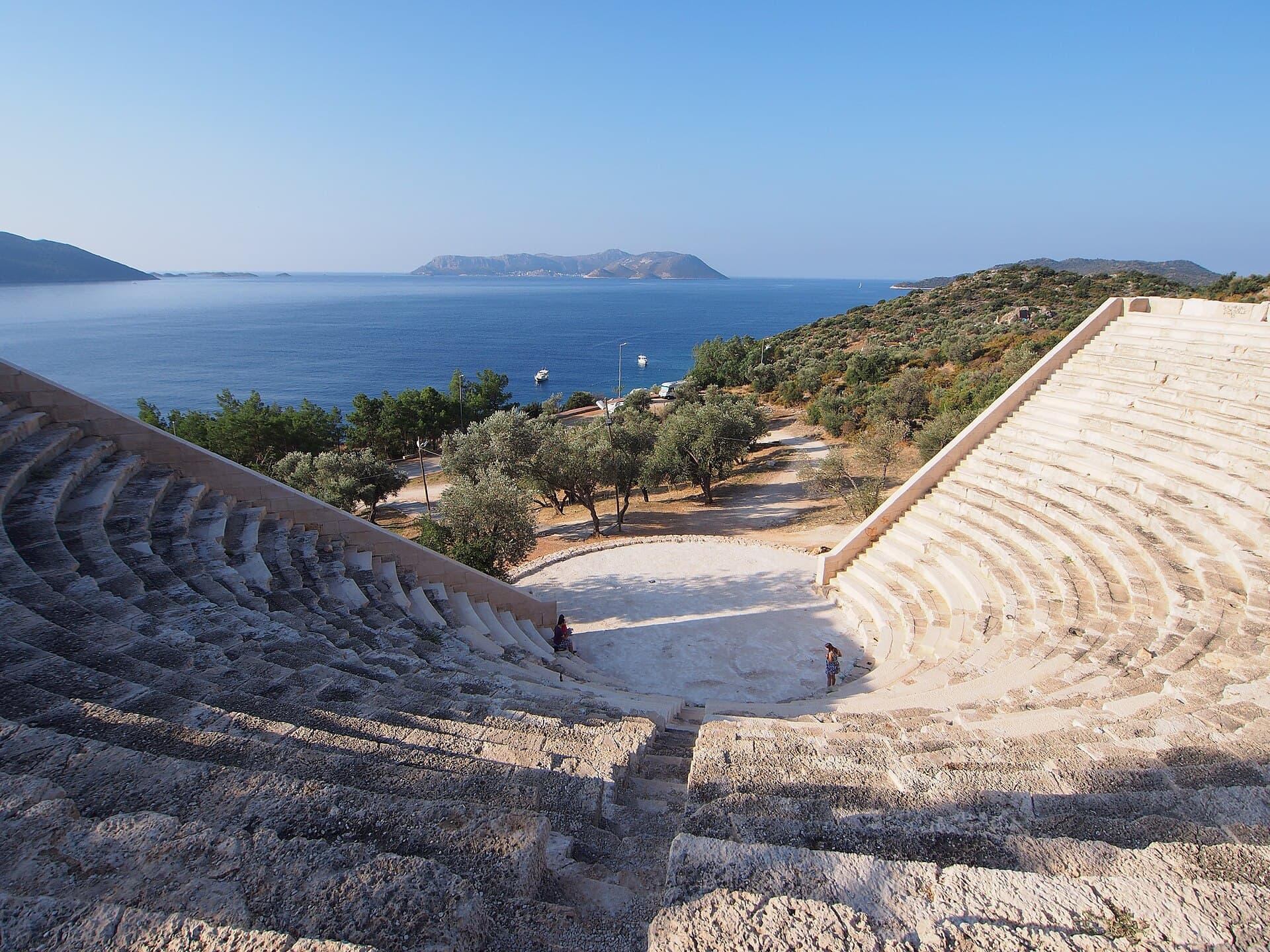
Two kilometres off the harbour wall sits an entire Greek island, Meis (Kastellorizo), and you can pick out its painted houses from a café table on the Kaş waterfront. That view tells you what kind of town this is: a small fishing and yachting port some 170 km west of Antalya that escaped the mega-hotels and stayed low-rise. From Cumhuriyet Meydanı, the harbour square with its Atatürk statue and small mosque, narrow lanes run between whitewashed Ottoman-Greek houses smothered in purple bougainvillea, with cats asleep on the shop steps. Start with Uzun Çarşı, the 'Long Bazaar', a paved street climbing from the harbour past handmade jewellery, linen, kilims and shaded cafés. At the top comes the surprise nobody expects: a Lycian stone sarcophagus from the 4th century BC, its lid carved with two lion heads, standing among the restaurant tables and shopfronts as if it were part of the décor. Locals call it the King's Tomb or the Lion Tomb, and its Lycian inscription has still not been fully deciphered. It takes minutes, yet it is the thing you remember about Kaş. Everything here is free and always open, and the hour to come is dusk onwards, when the summer heat eases, the shops light up and the harbour fills with strollers. Some lanes are steep, so a pushchair is happier on the square and the quay than in the upper streets. The Friday market near the bus station is small and pleasant: olives, cheese, honey, olive-oil soap and peshtemal towels. In season, daily boat trips leave the harbour for Kekova and Simena and for Limanağzı beach, and the ferry to Meis takes about twenty minutes, with a passport and a Schengen visa or exemption required and tickets running roughly 20 to 40 euros one way depending on season and operator, plus a few euros of port tax paid in cash. To be plain about it: there is no sandy beach in the centre. Küçükçakıl and Büyükçakıl are pebble coves 5 to 15 minutes on foot, and sand means driving about 20 km to Kaputaş. In July and August the town is packed and pricier than Antalya; from November to March many shops and hotels shut and it all goes quiet. Antalya airport is about three hours by road, Dalaman two and a half. Before you leave, the small Hellenistic theatre about 500 metres west of the centre is free and open, and its sunset over the sea is the one everybody talks about.
A 4th-century-BC Lycian sarcophagus standing among café tables at the top of the Long Bazaar.
Cumhuriyet Meydanı and the quay when the heat drops, the shops light up and Meis glows offshore.
Daily trips in season to the sunken city at Kekova and Simena, and a twenty-minute ferry to a Greek island with passport and Schengen visa.
Uzun Çarşı Caddesi, Andifli Mahallesi, Kaş, Antalya
For a pure beach week with a resort, a pool and sand, Antalya or Belek win without argument. Kaş is a town of steep lanes, pebble coves and small hotels, and its charm is the evening stroll and the boat trip. It suits families whose children walk without a pushchair and enjoy a day at sea; it is not the place for waterslides.
Kaş is a real town with a bazaar, a harbour, boat trips, the Meis ferry and an evening scene, and it is a little cheaper. Kalkan, about 27 km away, is quieter and steeper, built around private-pool villas and rooftop restaurants, and suits those who want seclusion and a pool. The one sandy beach between them is Kaputaş, which is closer to Kalkan (about 7 km from it against 20 from Kaş).
Sign in to write your review of this place.
No reviews yet — be the first.