Statues among stalagmites
A temple in a natural hall.
Marufish from Alor Setar, Malaysia — CC BY-SA 2.0 · Cerevisae — CC BY-SA 4.0 · Marufish from Alor Setar, Malaysia — CC BY-SA 2.0 · Marufish from Alor Setar, Malaysia — CC BY-SA 2.0 · Cerevisae — CC BY-SA 4.0
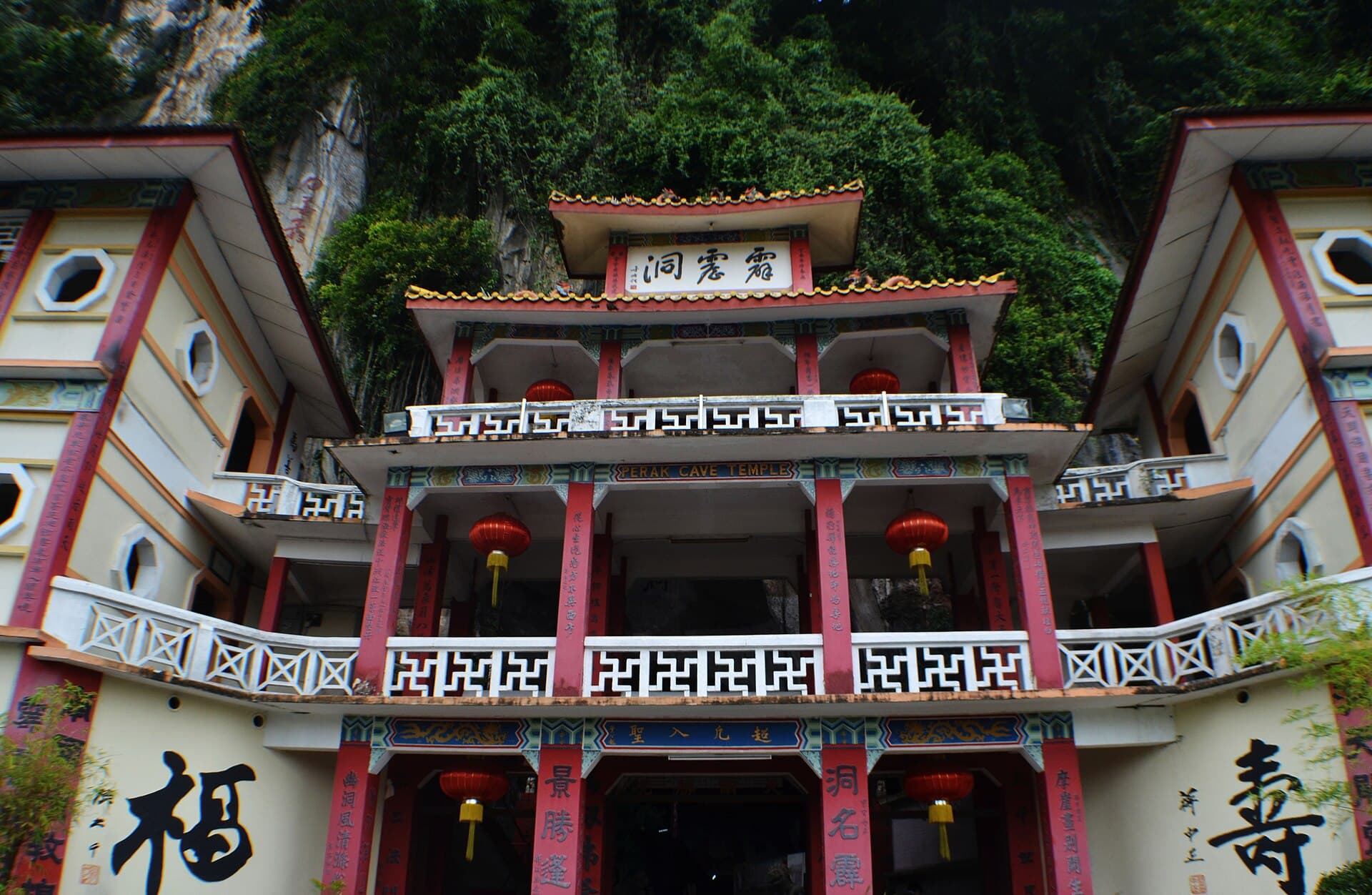
A Chinese Buddhist temple inside a large cave in the limestone hills south-east of Ipoh, and one of the finest cave temples in a city famous for them. You step into a lofty natural hall hung with stalactites and rising stalagmites, with gilded statues of the Buddha and Chinese deities standing among them on marble plinths. The cave runs right through the hill and brings you out on the far side into a surprisingly large garden: a lake ringed by tall, green-clad cliffs, with paths, little bridges, pavilions and a pebble path for foot reflexology, and pedal boats for hire on the lake. Entry is free, and it usually opens from the morning until mid-afternoon, though times can vary, so check before going. The cave is damp and fairly cool, and the floor can be slippery in places. The best time to visit is early morning, when the light is soft on the lake and hills and the air is cooler. It is about a quarter of an hour by car from central Ipoh, so pair it with Sam Poh Tong and Perak Tong on a tour of the cave temples.
A temple in a natural hall.
A garden among cliffs.
A short spin on the water.
Gunung Rapat, on the south-eastern edge of Ipoh
Both are cave temples, but Kek Look Tong is known for its broad, well-lit hall and the garden and lake behind the cave, while Sam Poh Tong is known for its turtle pond and Japanese-style garden within the rock walls.