The central pavilion
Octagonal over the river.
Ninara — CC BY 2.0 · Ninara — CC BY 2.0 · Գարվիք — CC BY-SA 4.0 · Soltani.ast — CC BY-SA 4.0 · Գարվիք — CC BY-SA 4.0
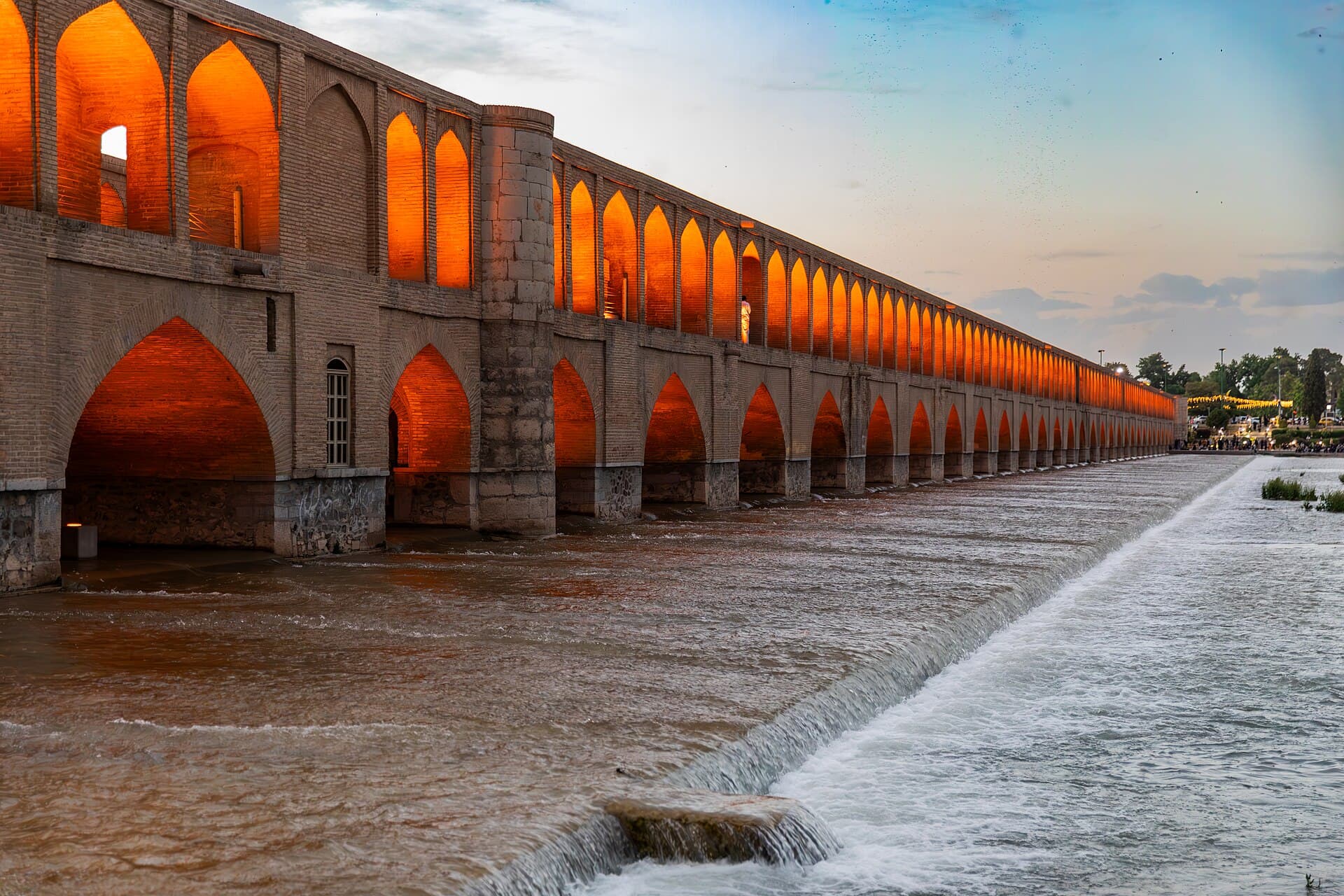
Khaju Bridge is a historic bridge on the Zayanderud in Isfahan, serving as both bridge and weir and linking the Khaju quarter on the north bank with the Zoroastrian quarter across the river. It has been described as the finest bridge in the city. It was once a place for public meetings, and locals still sit on its steps today, so it feels more alive than photos suggest. It was built about 1650 under Shah Abbas II on the foundations of an older bridge. It is about 133 m long and 12 m wide, with 23 arches. Old stone lions stand by it. The scholars of Persian art Arthur Upham Pope and Phyllis Ackerman are buried in a mausoleum nearby, in recognition of their role in reviving interest in this heritage. At the middle of the bridge is an octagonal pavilion, once reserved for the shah to view the river, with tiles and arches along its sides. Below are broad stone steps where the water falls, when the river runs, and people sit on them. You may sometimes hear someone singing beneath the arches to use the echo, so listen with respect. It is about 1.7 km in a straight line from Si-o-se-pol and about 2 km from the Shah Mosque. The finest times are sunset and early evening. The river may be dry, so do not count on water. The UK Foreign Office currently advises against all travel to Iran and warns that British nationals risk detention, so check official guidance before making any plans. We could not confirm the current state of this site.
Octagonal over the river.
Where locals sit by the water.
Singing beneath at times.
Zayanderud River, end of Kamal Ismail Street, Isfahan, Iran
Sunset and early evening, when people gather and the arches light up.
About 1.7 km in a straight line, and you can walk between them along the bank.