
El-Fishawi café
Open since the late eighteenth century and Naguib Mahfouz's seat — expensive, worth it once.
V Manninen from Funland — CC BY 2.0 · Sarbast.T.Hameed — CC BY-SA 4.0 · Sarbast.T.Hameed — CC BY-SA 4.0 · Ahmed.aldahshoury — CC BY-SA 4.0
Cairo's great bazaar since the fourteenth century, and still a working market rather than a display for visitors. It began under the Mamluks as a merchants' khan — inn, warehouse and shop in one — and spread until it became a whole web of lanes between the Hussein Mosque and Al-Azhar. The lanes are narrow and tangled and do not read on a map; the only method is to walk in, get lost, and come out the other side. The goods divide into two kinds and almost no third: tourist souvenirs on the main streets near Hussein, and real crafts in the inner lanes — copper, silver, spices and perfume oils, blown glass. Stay on the main street and you will buy what any airport sells. Haggling is expected, not optional. The opening price to a foreigner is usually about triple; getting to a third is not rudeness, it is the custom. El-Fishawi café at the heart of the khan has been open since the late eighteenth century and was Naguib Mahfouz's regular seat. It charges more than anywhere around it and knows it, but sitting there is part of the visit. The place is more alive at night than by day; after the evening prayer it fills with Egyptians rather than tourists.
Open since the late eighteenth century and Naguib Mahfouz's seat — expensive, worth it once.
A whole alley of beaten copper, a craft still practised in front of you rather than displayed.
A major place of visitation for Egyptians, and the square before it is the quarter's heart at night.
Al-Hussein, Historic Cairo
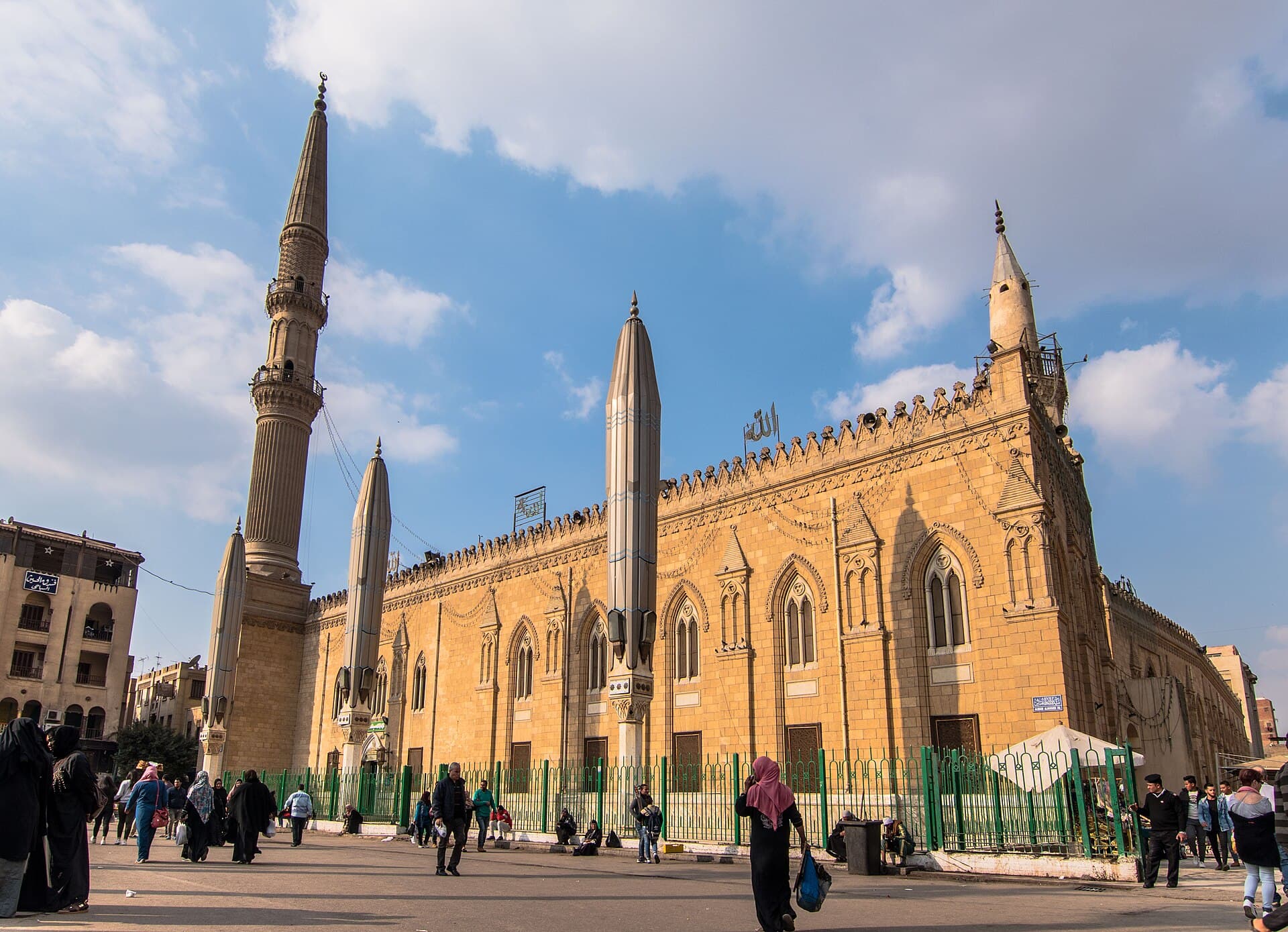 Al-Hussein MosqueOne of the holiest and best-loved mosques in Egypt, on al-Hussein Square at the 1 minute walk4.9
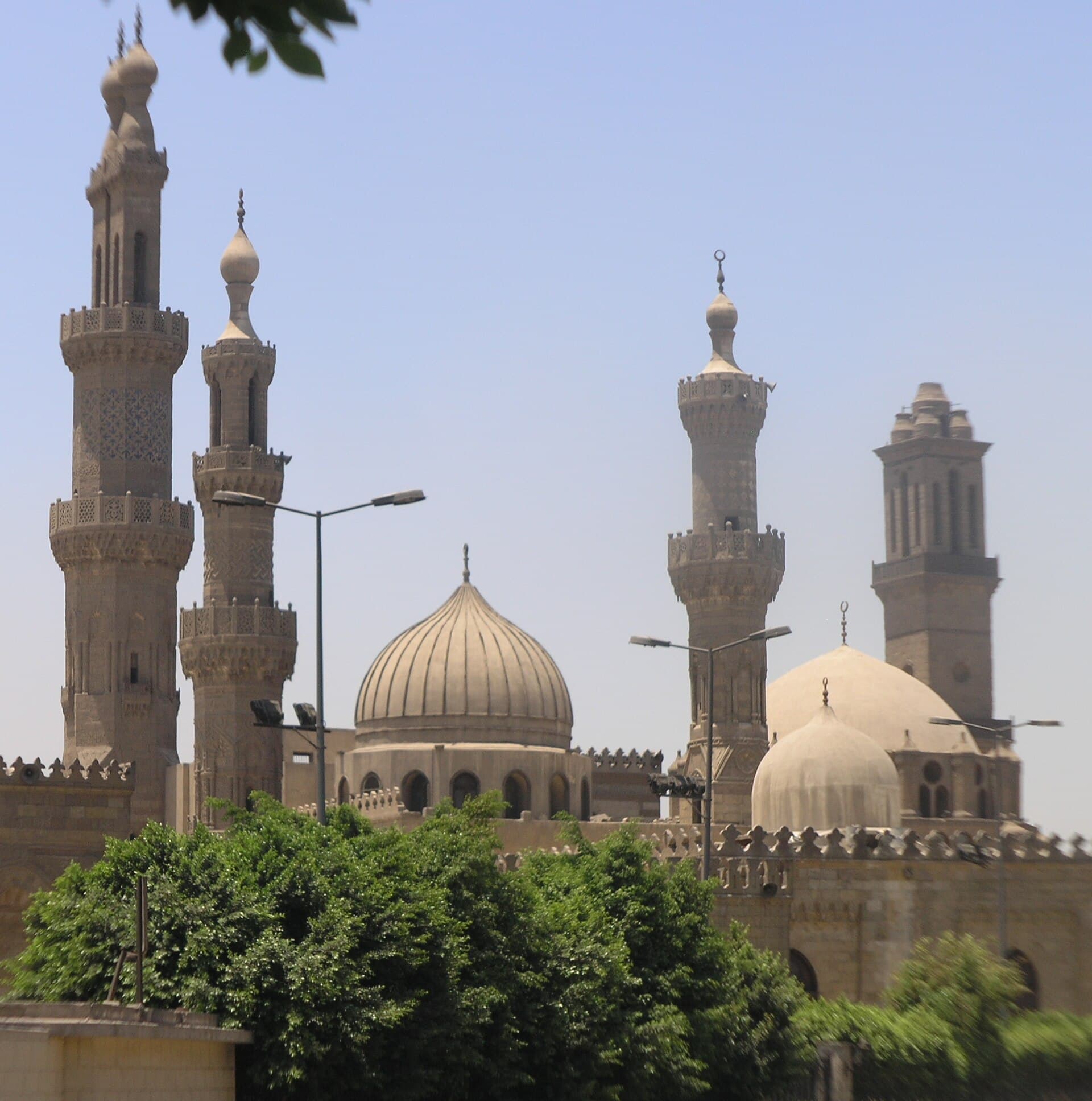 Al-Azhar MosqueThe oldest working university in the world and one of the oldest mosques in Egyp2 minutes walk4.7
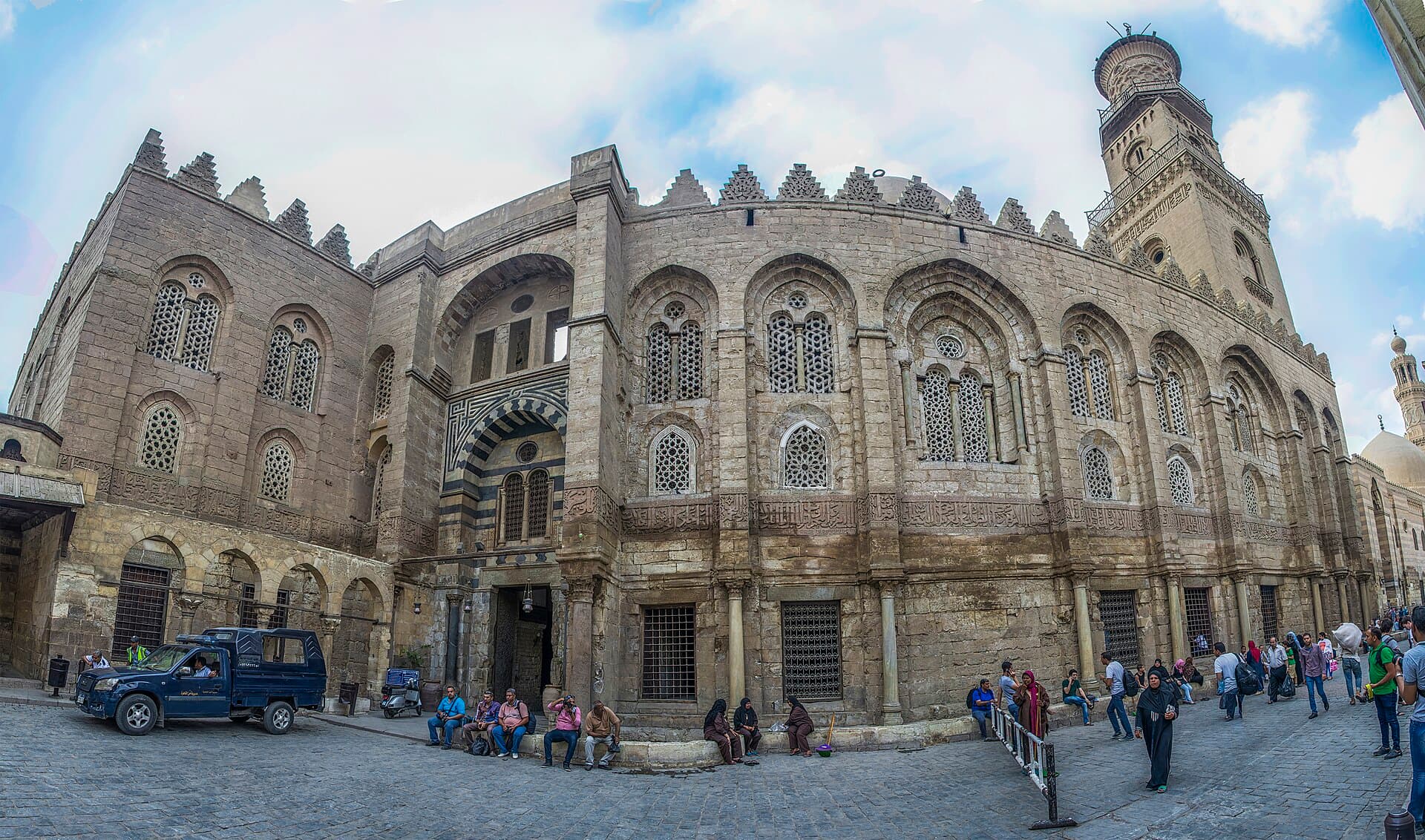 Qalawun ComplexA huge Mamluk complex in the heart of al-Muizz Street, built by Sultan al-Mansur3 minutes walk4.6
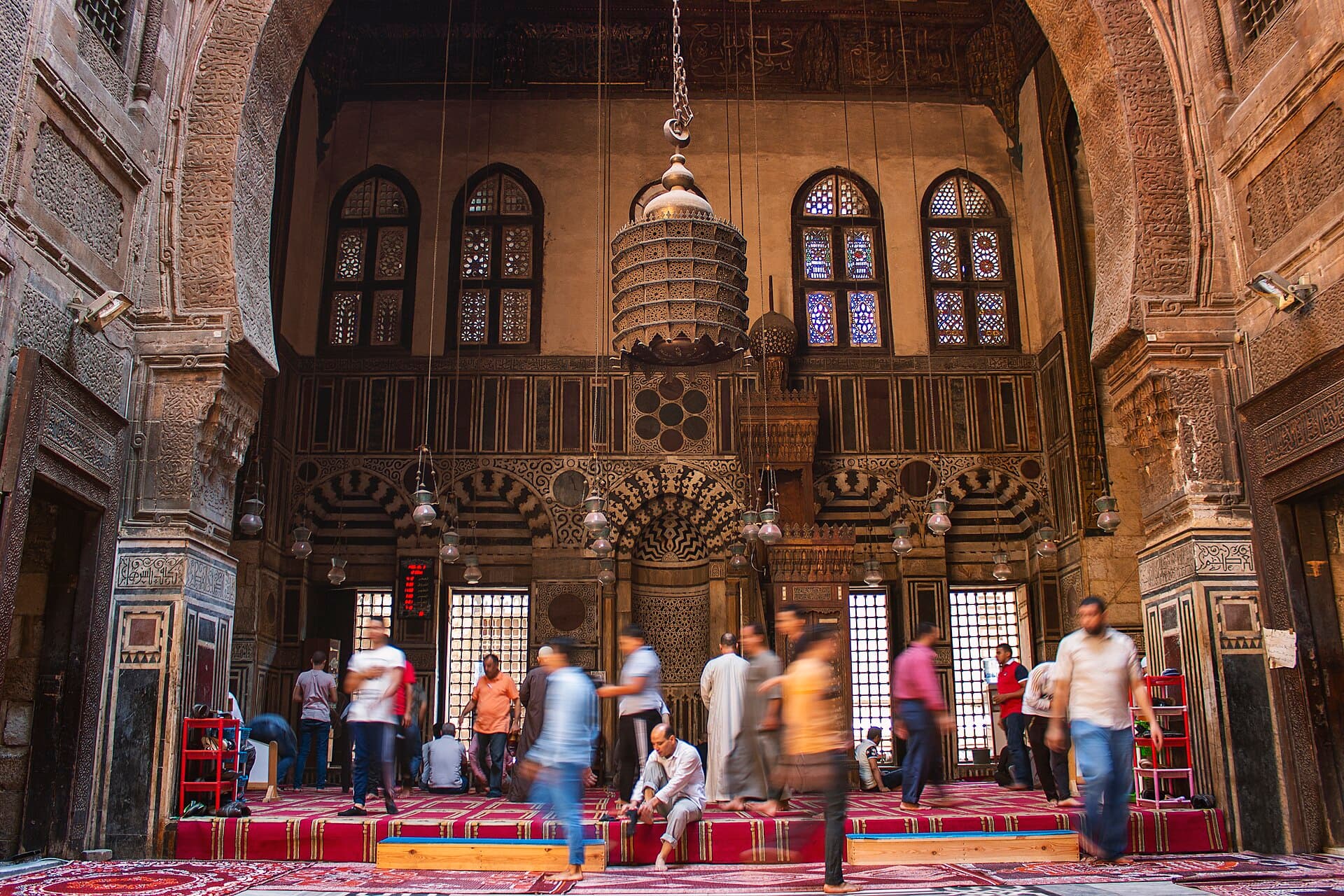 Al-Ghuri ComplexA Mamluk complex built by Sultan Qansuh al-Ghuri, the second-to-last Mamluk sult3 minutes walk4.6
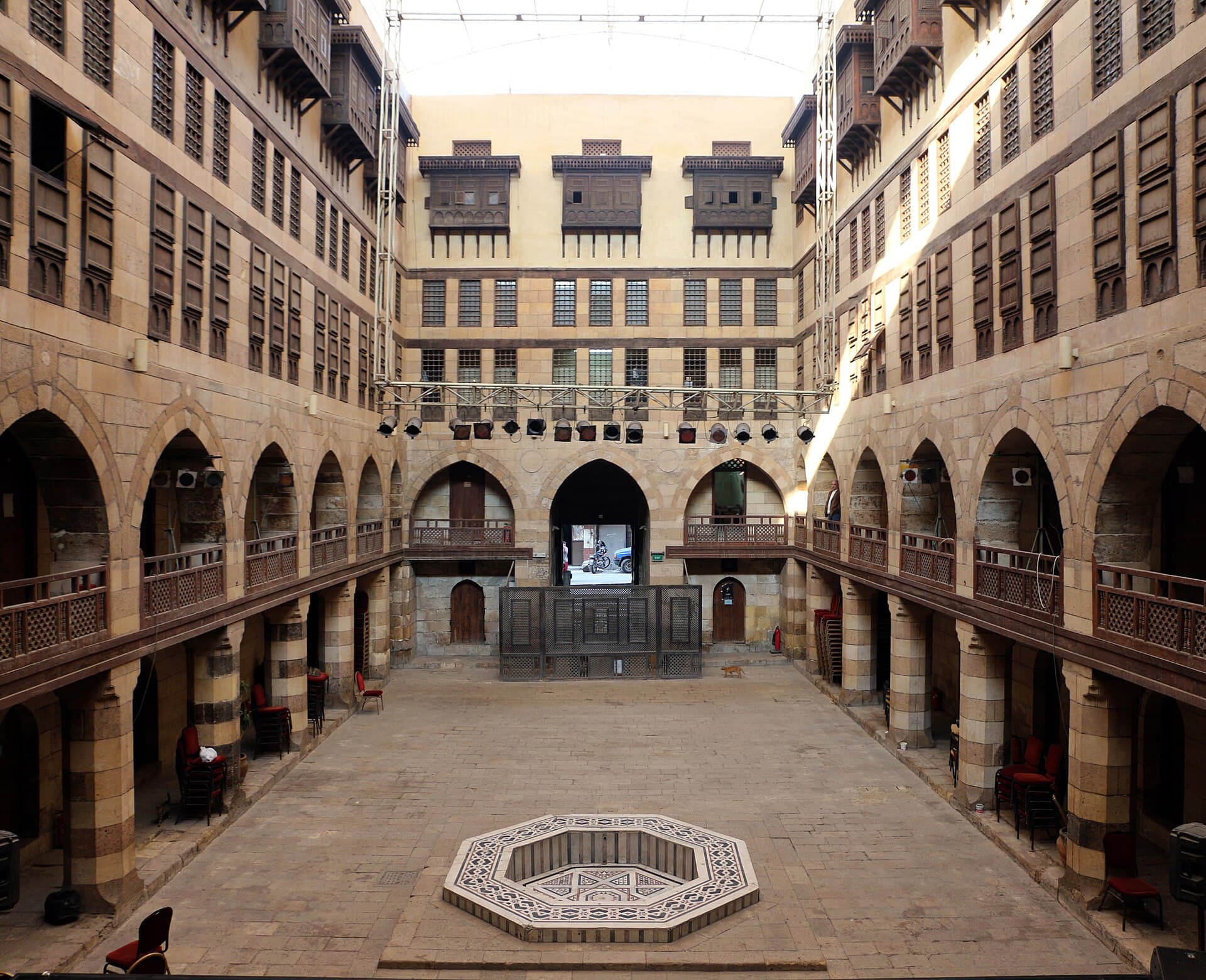 Wikala of al-GhuriA Mamluk merchants' inn built by Sultan Qansuh al-Ghuri in 1504 and 1505, counte4 minutes walk4.8
Late afternoon through the evening. Mornings are quiet with half the shops shut, midday is hot. Night is its real hour, especially in Ramadan when it runs until dawn.
Cafés and restaurants are. Everything else is negotiable without exception, gold and silver included — though there you haggle over the workmanship, not the metal weight.
Yes; the area is well trodden and has tourist police. The nuisance is commercial rather than criminal: persistent sellers and self-appointed guides working for commission. «No thank you» while continuing to walk is enough.