Wooden shopfronts
Timber fronts and shutters along the cobbles.
SualdoDino — CC BY-SA 4.0 · Klodi Daci — CC BY-SA 4.0 · Avi1111 dr. avishai teicher — CC BY-SA 4.0 · Rakoon — CC0 · Inac123 — CC BY-SA 4.0
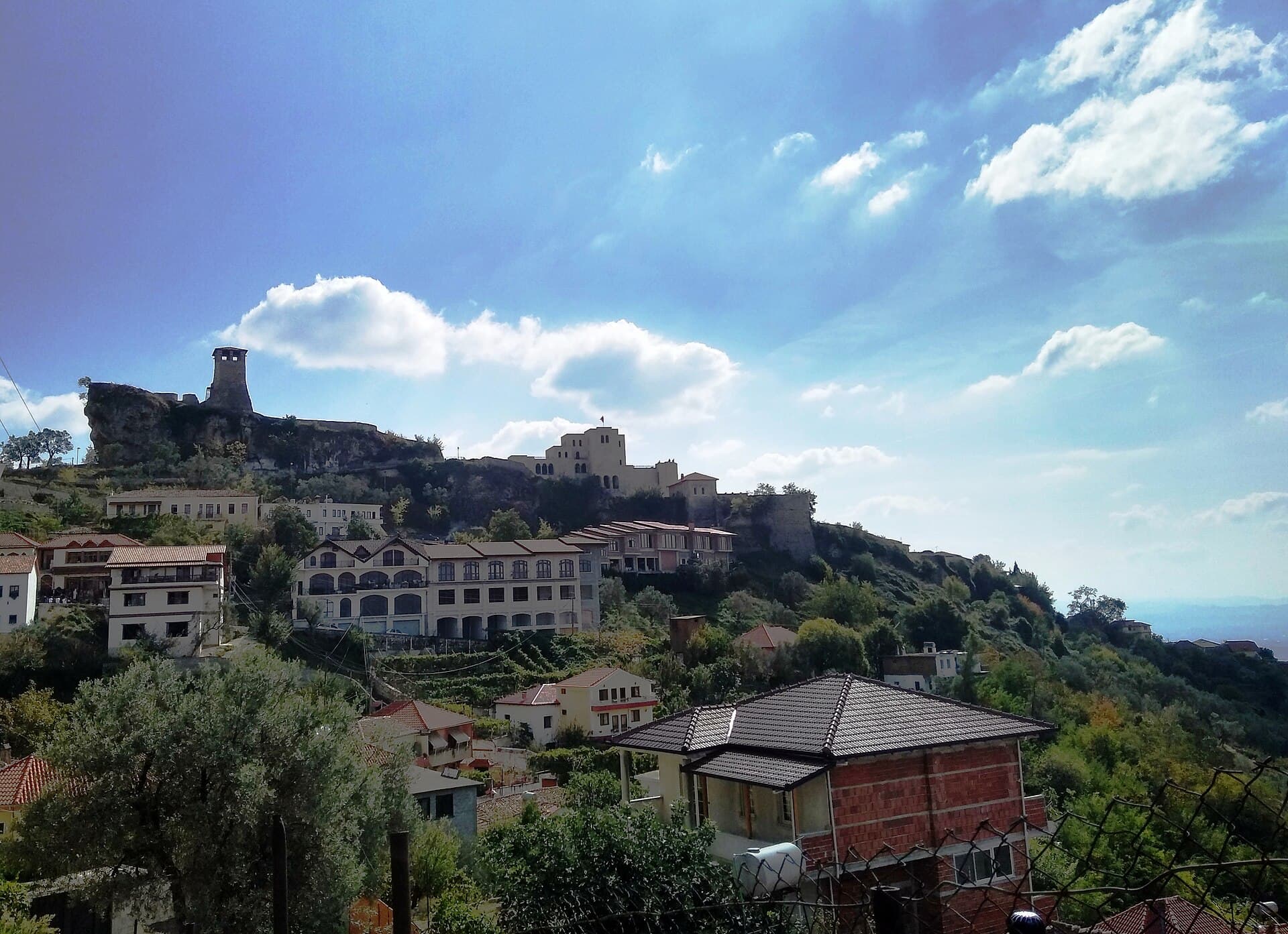
Krujë's Old Bazaar is a cobbled pedestrian lane a few hundred metres long, running from the town centre to the castle gate between wooden-fronted shops under tiled roofs. Albania's national tourism agency counts it among the country's oldest and best-preserved traditional markets; protected since 1961, it is a first-category cultural monument. The agency dates it to the 17th century, under Ottoman rule; locals also call it the Derexhik Bazaar. By various accounts it had about 150 shops in the early 1900s; by the 1960s only a muddy alley with a few remained. Drawn by Krujë's place in the Skanderbeg story, the communist state rebuilt the shops and stone paving from about 1966; they were outlets for state craft enterprises until privatisation in the 1990s. The shops now sell kilims and carpets, embroidered costumes and slippers, copper, silver filigree, carved wooden eagles, antiques and souvenirs. A few workshops let you watch kilims woven on the loom, or wool loosened with a bow and mallet, then felted into the qeleshe, Albania's traditional white felt cap. Toward the castle end rises the Bazaar Mosque, built in 1533–34 by Murad Bey, closed in 1967 and reopened in 1991. Krujë lies about 20 km north of Tirana's Skanderbeg Square as the crow flies, 34 to 39 km by road: a half-day trip pairing the bazaar with the castle and its Skanderbeg Museum, a few minutes' walk up the lane. At the mosque, dress modestly, covering shoulders and knees; women cover their hair. Remove your shoes at the door and avoid prayer times, especially Friday midday.
Timber fronts and shutters along the cobbles.
Wool loosened with a bow and mallet, shaped by hand.
Built by Murad Bey in 1533–34.
Old town, on the lane up to Krujë Castle, Krujë
Yes, minibuses leave Tirana's regional bus terminal for the north and south about hourly in the daytime, take under an hour and cost about 200 lek, but the last one back from Krujë may leave as early as 16:00, per visitor guides. Check that the sign says Krujë, not Fushë-Krujë, a different town.
Some are: kilims are still woven and felt caps made by hand in a few shops, but many souvenirs are imported, often from Turkey or China. For a genuine rug, ask for handwoven wool, which has a tighter weave than the factory-made cotton and polyester rugs often hung outside.