Plantation House
Colonial architecture.
David Stanley from Nanaimo, Canada — CC BY 2.0 · Radosław Botev — CC BY 3.0 pl · Bjørn Christian Tørrissen — CC BY-SA 4.0 · Radosław Botev — CC BY-SA 4.0
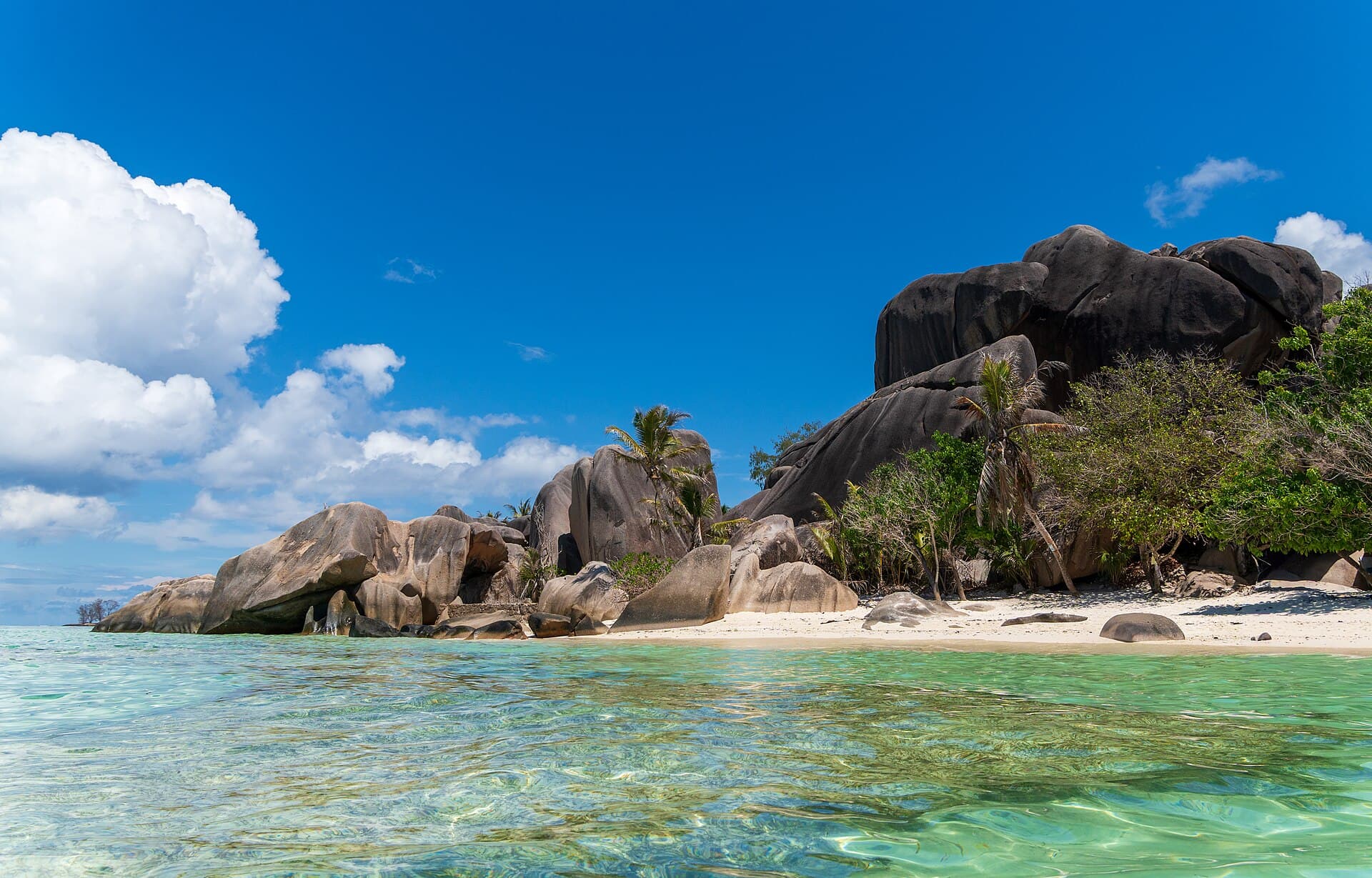
A historic plantation on the west coast of La Digue dating from the eighteenth century, which grew coconuts for copra and oil, and vanilla, whose flowers had to be pollinated by hand one by one because the islands lack the insects that do it naturally. At its heart stands the Plantation House, one of the finest examples of French colonial architecture in the Seychelles, built of hardwood under a thatched roof, and around it the traditional coconut mill, driven by oxen until the 1980s, and the copra drying kiln. The estate also has a large pen of giant tortoises, the cemetery of the first settlers, vanilla plantations and one of the island's best-known giant granite boulders, and it has been declared a national monument. Tickets are about SCR 150, including the path to Anse Source d'Argent, and are valid all day, per visitor guides. The estate road suits bicycles, the main way of getting around La Digue.
Colonial architecture.
In their pen.
The first settlers.
West coast of La Digue, south of La Passe harbour
Yes, the ticket of about SCR 150 covers the estate and the path to the beach all day, per visitor guides.