The turquoise water
From glacial rock flour.
rheins — CC BY 3.0 · Pseudopanax at English Wikipedia — Public domain · Edward Koorey kooreye16 — CC0 · Bernard Spragg. NZ from Christchurch, New Zealand — CC0 · W. Bulach — CC BY-SA 4.0
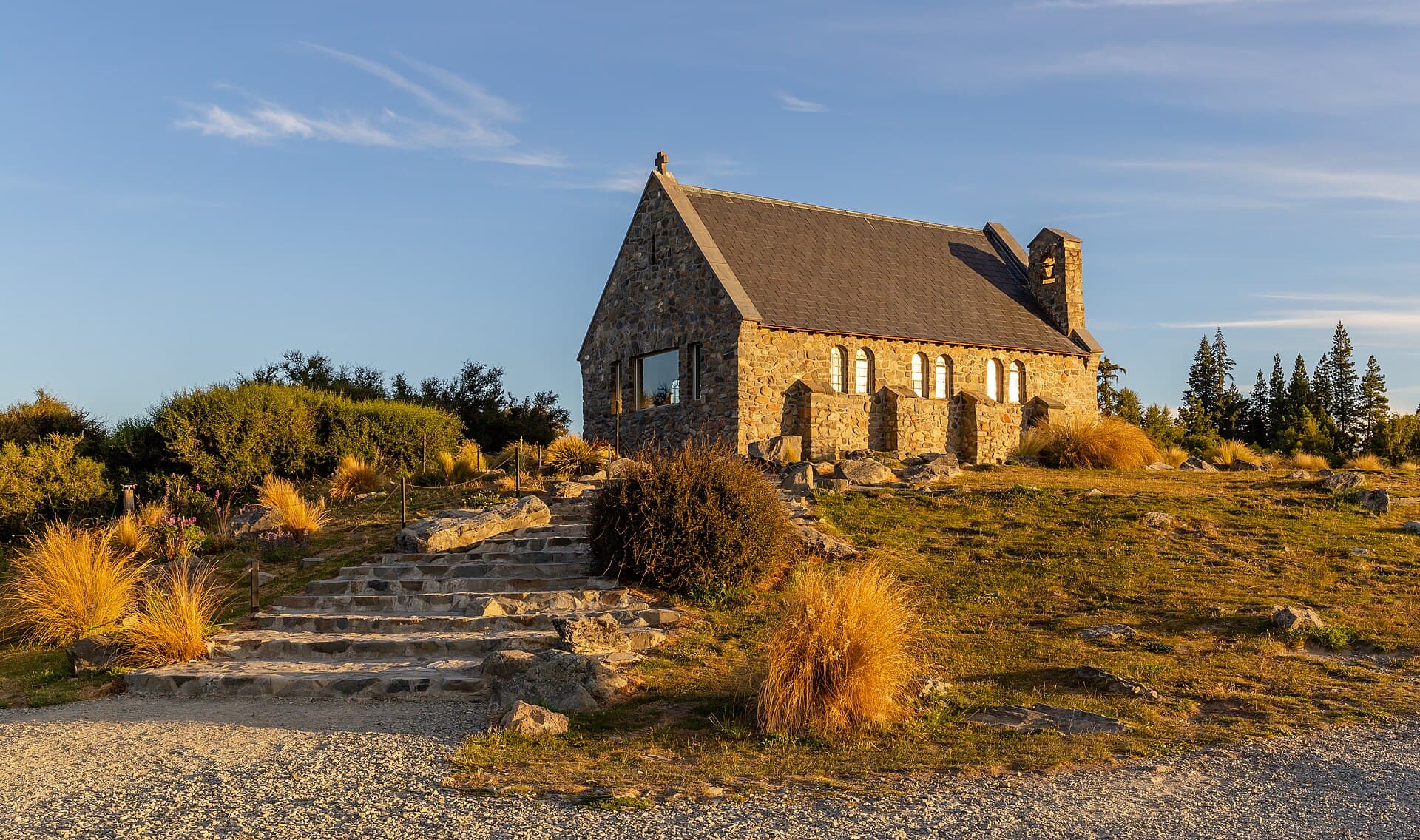
Lake Tekapo, or Takapō, is a turquoise alpine lake in the Mackenzie Basin of the South Island, the second largest of three parallel lakes in the north of the basin. It covers 83 square kilometres at 710 m above sea level, and is one of the finest sights on the road between Christchurch and Queenstown. Tekapo is a misspelling of the Māori name Takapō, meaning to leave in haste at night. Ngāi Tahu legend says the explorer Rākaihautū dug the lakes with his digging stick. The small island of Motuariki lies in the middle. Its milky blue-green colour comes from fine rock flour carried by glacial water. The shore has rocks, gravel and very clear water, with the small stone Church of the Good Shepherd at the edge. In autumn the trees turn a strong gold, in late spring purple lupins appear along the banks, and a line of snowy mountains rises behind the water. It lies far from the cities and is 26 km in a straight line from Lake Pukaki, so both fit one drive. The sky here is dark at night and famous for stargazing, so stay a night if you can. Bring warm clothes, as nights are cold even in summer. Do not pick the flowers, use marked parking and respect the church as a place of worship.
From glacial rock flour.
Strong gold on the shore.
Famous for stars.
Mackenzie Basin, Canterbury, South Island
Because of fine rock flour carried by glacial water.
Lupins usually come in late spring, varying by year.