Found before Darwin
The bones were found in 1856, three years before On the Origin of Species.
Raimond Spekking — CC BY-SA 4.0 · Axel Kirch — CC BY-SA 4.0 · Wolkenkratzer — CC BY-SA 4.0 · Raimond Spekking — CC BY-SA 4.0
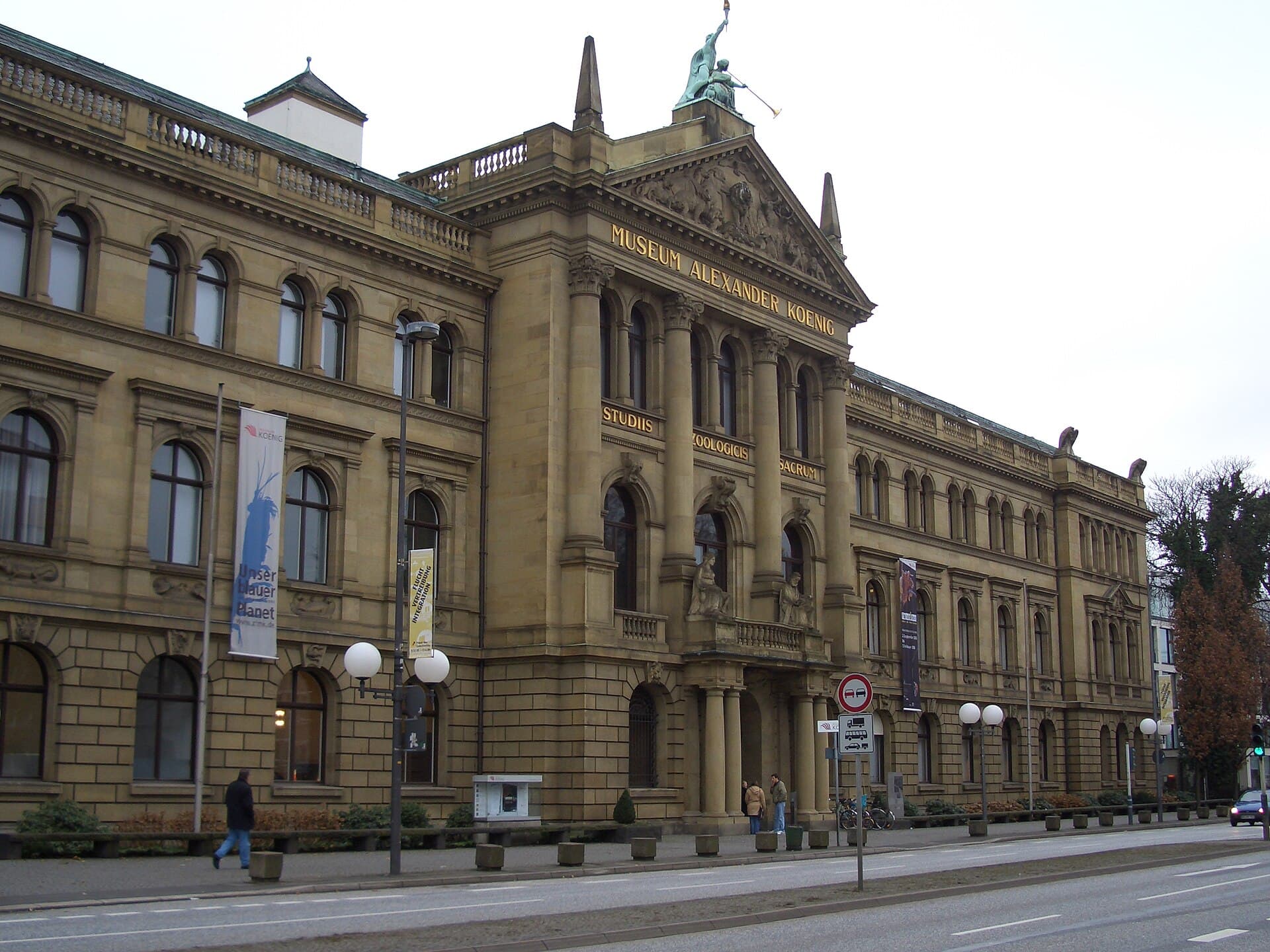
A regional museum in Bonn covering a hundred thousand years of the history of the Rhineland, and among Germany's oldest museums, dating from 1820. Its most famous and scientifically most important holding is the original: the Neanderthal skull found in 1856 in the Neander valley near Düsseldorf. This specimen is the one on which the entire species was defined — everything said about Neanderthals anywhere traces its definition back to these particular bones. They were found three years before Darwin published On the Origin of Species, and their meaning was not understood at once. Alongside them is a rich Roman collection: the Rhineland was the northern frontier of the Roman Empire, with camps, towns and roads. The display includes mosaics, soldiers' gravestones and altars. Then medieval material and Rhineland art through to the twentieth century. This museum explains why the Rhineland looks as it does, from the Romans to today.
The bones were found in 1856, three years before On the Origin of Species.
Mosaics, soldiers' gravestones and altars from the Rhine camps.
From the Neanderthals to the twentieth century in one museum.
Colmantstraße, Bonn
After the Neander valley near Düsseldorf where the bones were found in 1856 during limestone quarrying. The valley itself was named after Joachim Neander, a seventeenth-century hymn writer who used to walk there. So the name of the best-known extinct human species traces back, in the end, to a German poet who liked walking in a valley.
It sits slightly off the Museum Mile, north of the centre. With one day in Bonn, the House of History comes first. With two days, or an interest in archaeology and prehistory, this deserves a visit of its own — the original skull alone is reason enough.