Neither erased nor honoured
The statues were not destroyed or restored — shown as objects out of context.
HartOve — CC BY-SA 4.0 · Unknown authorUnknown author — CC BY-SA 4.0 · A.Palu — CC BY-SA 3.0 ee · BeshevI — CC BY-SA 4.0
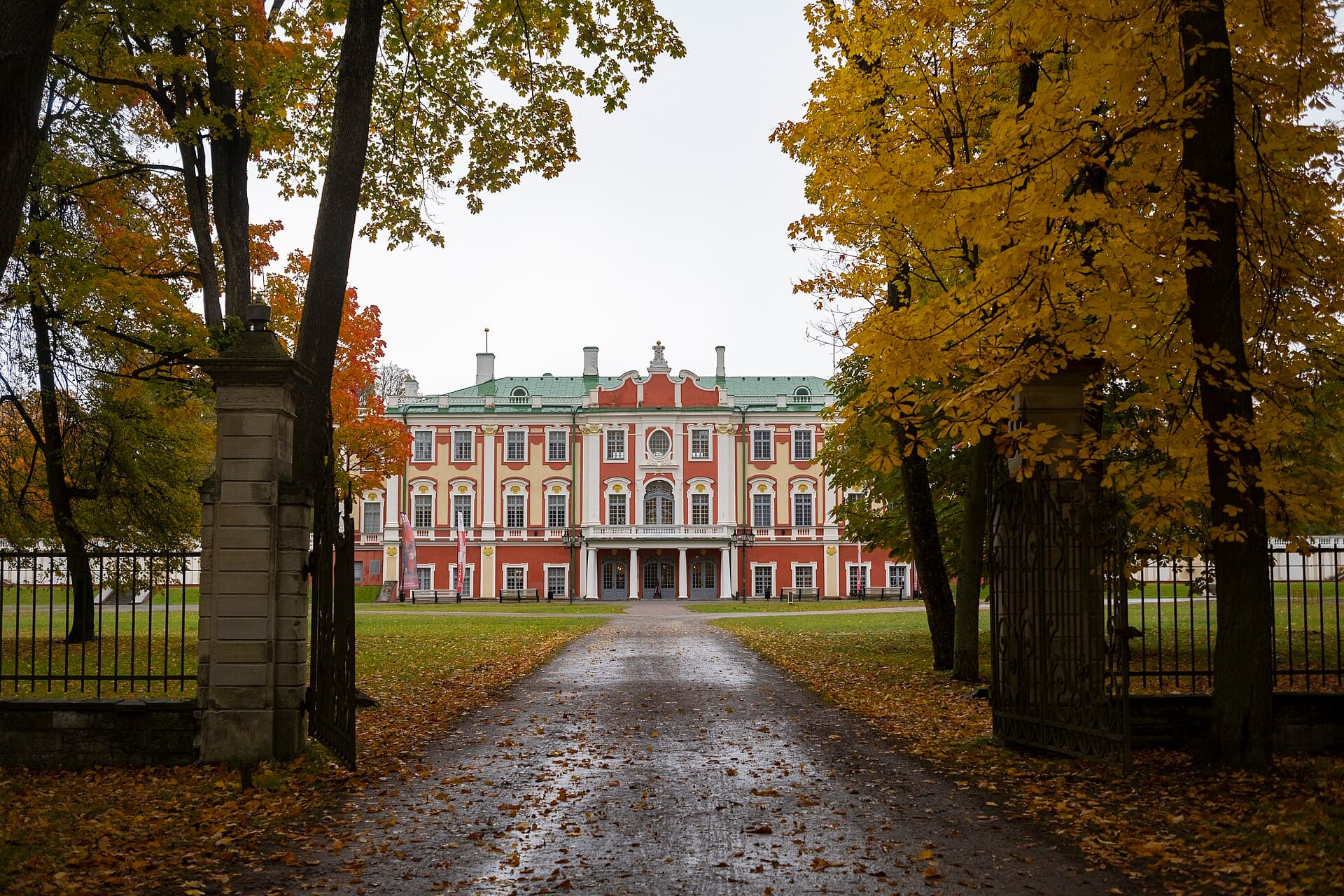
A nineteenth-century summer palace on the coast east of Tallinn, housing the modern history branch of the Estonian History Museum, and standing on a site that gathers the successive occupations in one place. The building was put up by a Russian aristocrat in the 1860s as a summer house, then became a hotel, then a military headquarters, then a museum. That succession is itself the museum's subject: Estonia's twentieth century — independence, Soviet occupation, Nazi occupation, the Soviet return, and the restoration of independence in 1991. What makes the visit unusual is what stands outside. Behind the palace is a monumental Soviet-era memorial, and in the adjoining grounds are gathered the statues of Lenin, Stalin and others removed from Estonia's squares after independence. They were neither destroyed nor put back: they were placed here, lined up in the open, some of them broken. That is a deliberate decision about how to handle the symbols of a rejected period — neither erasure nor honour, but display as historical objects outside their context. Practical points: entry is ticketed and may be combined with the Great Guild Hall. The statue park is outside and can normally be seen without a ticket. The site is east of the city — about twenty minutes by tram or bus.
The statues were not destroyed or restored — shown as objects out of context.
Summer house, hotel, military headquarters, museum — the succession itself.
Independence, two occupations, a Soviet return, and restoration in 1991.
Pirita, east Tallinn
Because destruction erases the evidence. The Estonian decision was to remove them from public space — where they meant honour — and put them in one place where they are seen as what they are: large objects made for a political purpose that has gone. Some are broken and were left broken. Several eastern European countries take this approach, and it differs from renaming or complete concealment.
Yes if twentieth-century history interests you — it explains modern Estonia more than anything else does. Twenty minutes by tram, and it combines with Pirita beach and the nearby ruins of St Bridget's convent. If you have only one day, the Vabamu Museum in the centre covers the same subject more compactly.