Down the tunnel
With helmet and guide.
Mugikun — CC BY-SA 4.0 · Syurida — CC BY-SA 4.0 · Syurida — CC BY-SA 4.0
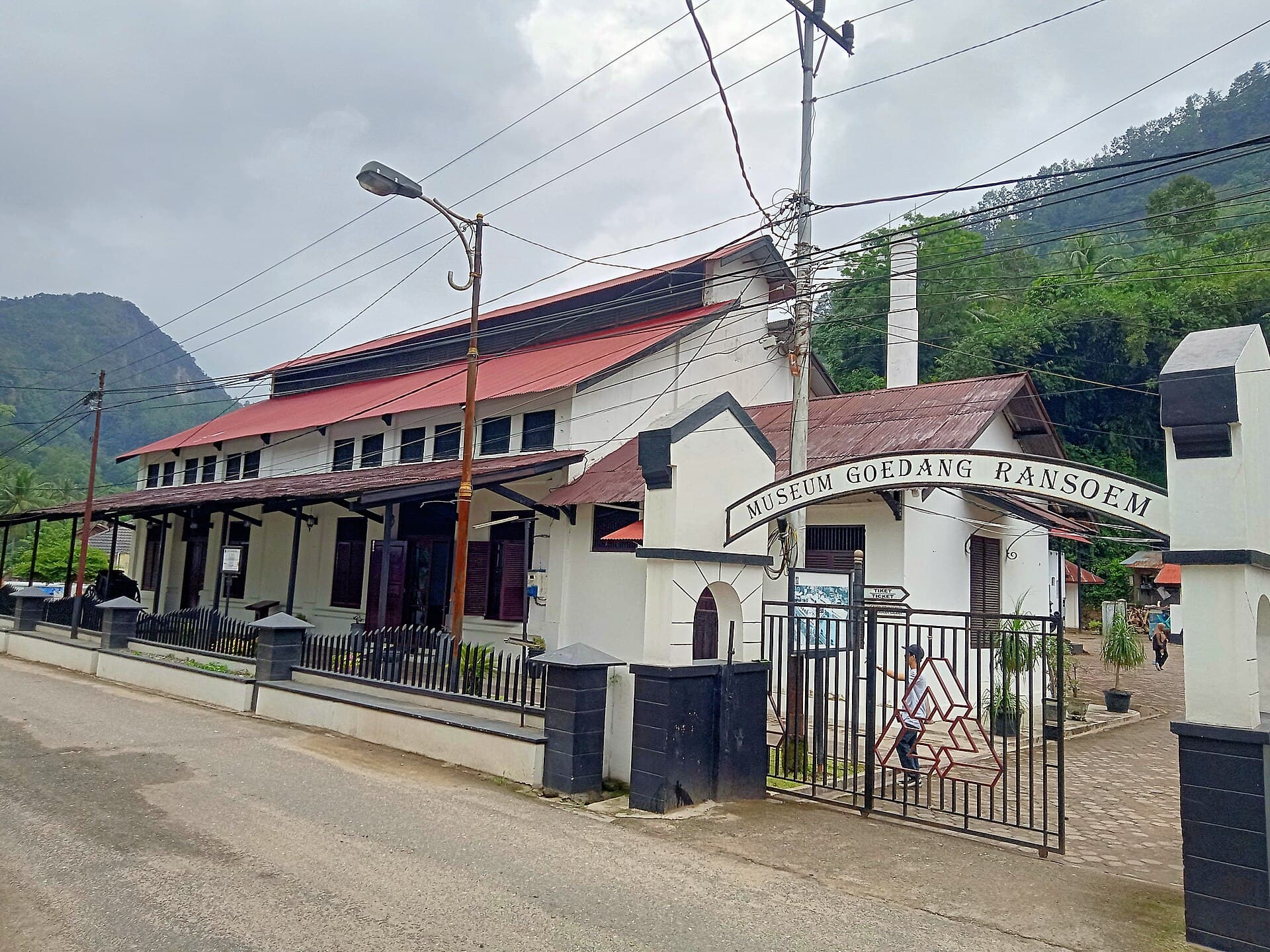
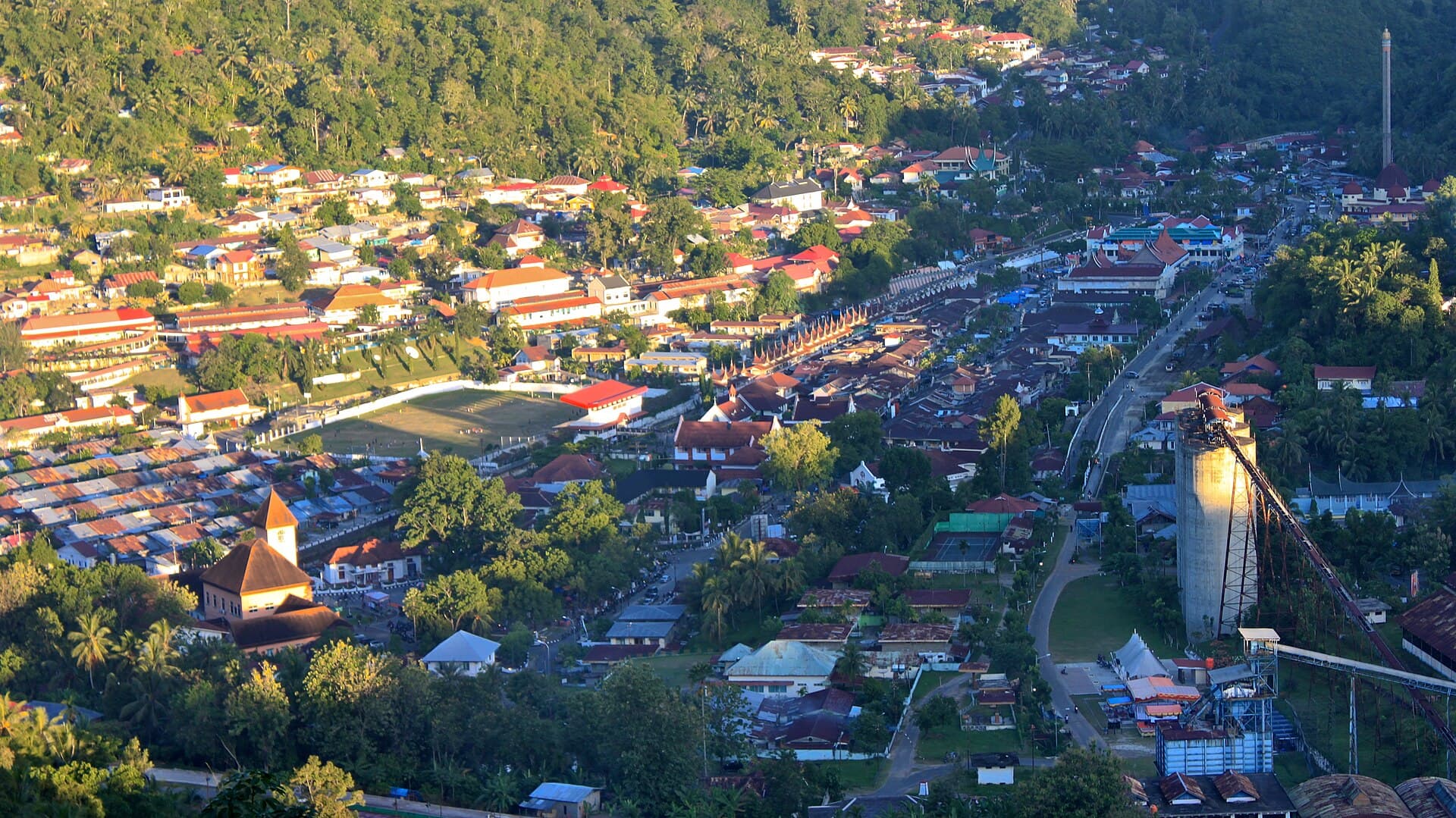
A coal-mine tunnel the Dutch dug in 1898 in the heart of Sawahlunto, named after Mbah Soero, the foreman who oversaw it. It closed in 1930 after water from the nearby river flooded it, and reopened in 2007 as a museum; it is part of the Ombilin Coal Mining Heritage of Sawahlunto, added to UNESCO's World Heritage list in 2019. Visitors put on a helmet and boots and descend with a guide some 185 metres into the narrow, timber-propped tunnel, seeing coal seams in the walls and hearing the story of the orang rantai, the chained people, prisoners the Dutch brought in chains from across the archipelago to work the mines in harsh conditions. The entrance building holds a small exhibition on mining history. The ticket is about IDR 15,000 for Indonesians and 50,000 for foreigners, including helmet and guide. The tunnel is damp and narrow, so it does not suit anyone afraid of confined spaces. A hundred metres away are the Goedang Ransoem museum, the miners' old kitchen, and the Ombilin mine museum, so combine them on foot.
With helmet and guide.
The story of chained miners.
On UNESCO's list.
Central Sawahlunto, West Sumatra
Yes: it has been shored up and fitted with lighting and ventilation, and you go down only with a guide. But it is narrow, low and damp, so it does not suit those afraid of confined spaces or who struggle to stoop.