Elephant Road
Huge stone animals.
钉钉 — CC BY-SA 4.0 · 西安兵马俑 — CC BY-SA 4.0 · 钉钉 — CC BY-SA 4.0 · xiquinhosilva — CC BY 2.0 · User:Vmenkov — CC BY-SA 3.0 · xiquinhosilva — CC BY 2.0 · helkonig — CC BY 3.0 · 董辰兴 — CC BY-SA 4.0
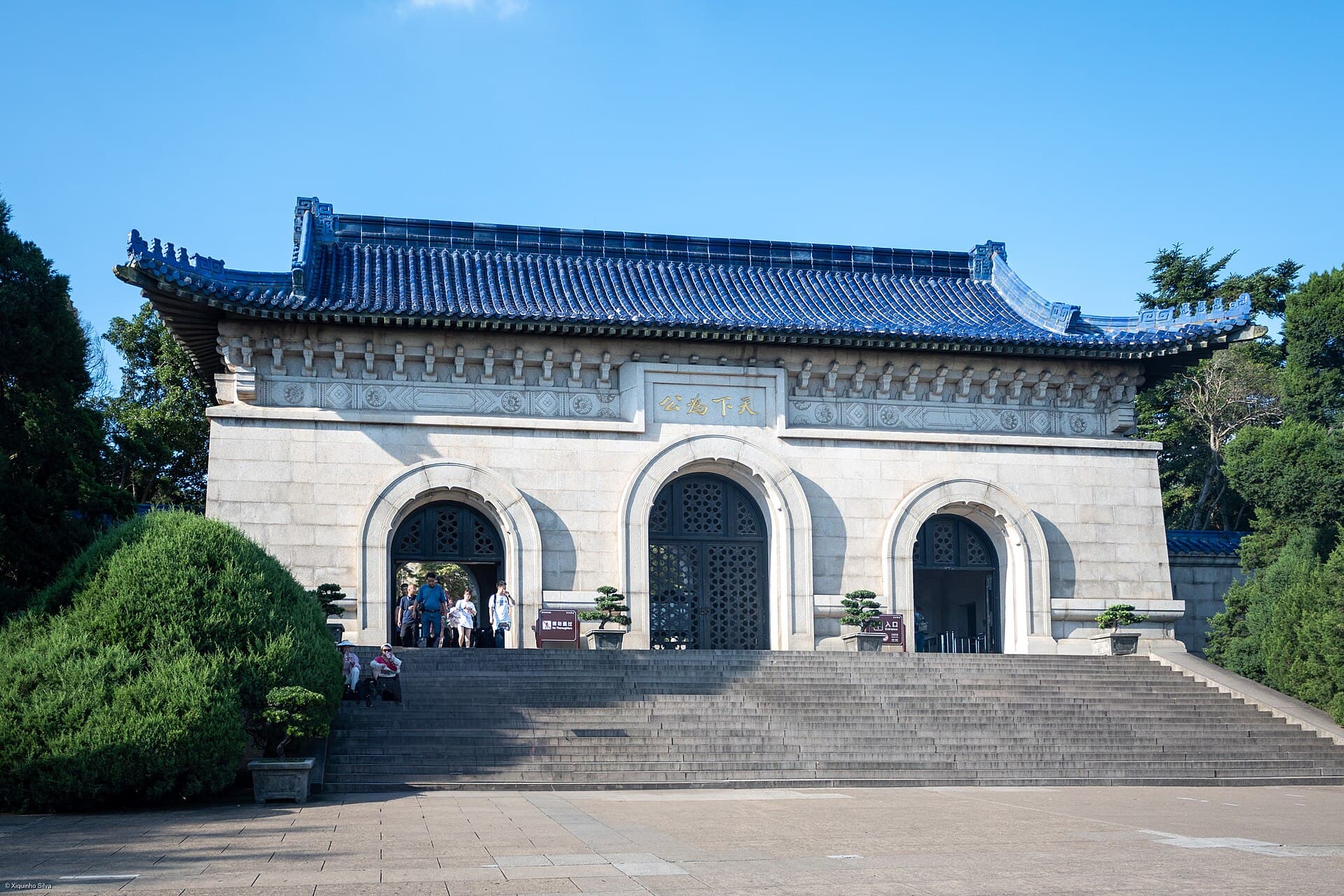
The tomb of the Hongwu Emperor, founder of the Ming dynasty, on the southern slope of Purple Mountain east of Nanjing; building began in his lifetime in 1381 and was finished in 1405 under his son with some 100,000 labourers, and it has been part of the «Imperial Tombs of the Ming and Qing Dynasties» World Heritage Site since 2003. Its best-known feature is the Sacred Way, winding about 1,800 metres through the trees; it opens with the Elephant Road, lined with huge stone lions, camels, elephants, horses and mythical beasts, sitting and standing, followed by statues of ministers and generals. At the entrance a giant stone tortoise carries a stele carved with the emperor's deeds, and at the end of the way stand gates and red walls before the wooded burial mound itself; legend says 13 identical funeral processions left from 13 city gates on the day of the burial to hide the true site. Tickets are about CNY 70, and a combined ticket for the mountain area about CNY 100, per visitor guides. The Elephant Road is loveliest in autumn when the leaves turn gold, and nearby Plum Blossom Hill is famous in early spring.
Huge stone animals.
Bearing the stele.
Before the mound.
Southern slope of Purple Mountain, east Nanjing
About CNY 70, and a combined ticket for the Purple Mountain area about CNY 100, per visitor guides.